Head of pin ca. 8th-7th century B.C. Iran This is the head of a bronze pin in the form of an ibex in the round. The ibex stands with its feet together on a small plinth, perhaps in imitation of a mountain peak. It has tall, curved horns emerging from the top of its head.This pinhead was excavated at Surkh Dum, a settlement site in Luristan in the Zagros Mountains of western Iran. It was found in a structure interpreted as a sanctuary and was thus probably an offering to a god. Such pins were probably used to fasten clothing and as objects of adornment in their own right.The ibex is a distinctly Iranian motif, as they are native to the Zagros Mountains of western Iran, but did not live, for example, on the plains of Mesopotamia. Thus they are a marker of the unique, mountain identity of the people living in western Iran during the Iron Age.. Head of pin 323969
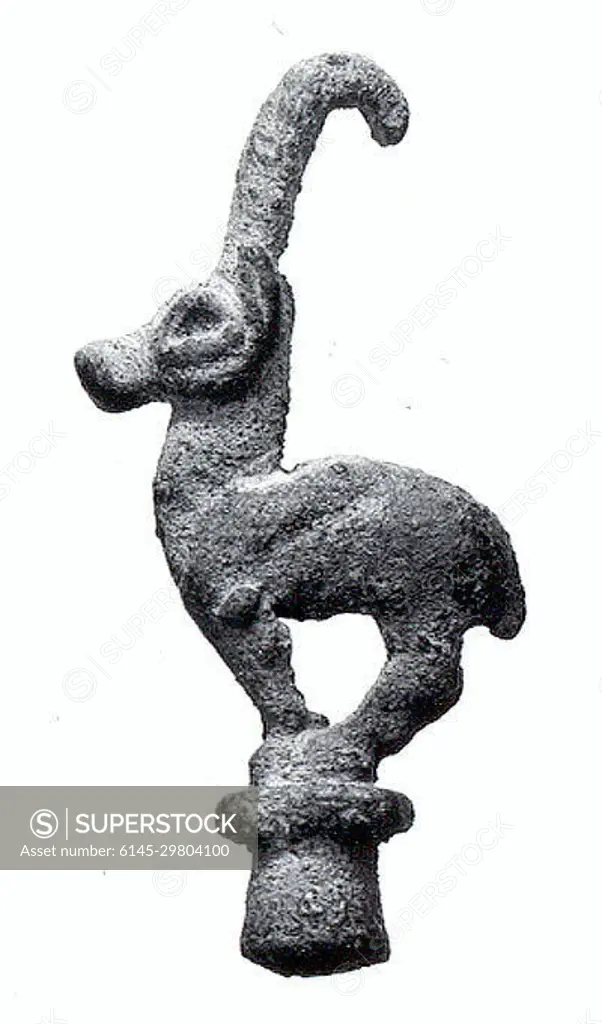
SuperStock offers millions of photos, videos, and stock assets to creatives around the world. This image of Head of pin ca. 8th-7th century B.C. Iran This is the head of a bronze pin in the form of an ibex in the round. The ibex stands with its feet together on a small plinth, perhaps in imitation of a mountain peak. It has tall, curved horns emerging from the top of its head.This pinhead was excavated at Surkh Dum, a settlement site in Luristan in the Zagros Mountains of western Iran. It was found in a structure interpreted as a sanctuary and was thus probably an offering to a god. Such pins were probably used to fasten clothing and as objects of adornment in their own right.The ibex is a distinctly Iranian motif, as they are native to the Zagros Mountains of western Iran, but did not live, for example, on the plains of Mesopotamia. Thus they are a marker of the unique, mountain identity of the people living in western Iran during the Iron Age.. Head of pin 323969 by Piemags/PL Photography Limited is available for licensing today.
Looking for a license?
Click here, and we'll help you find it! Questions? Just ask!
Click here, and we'll help you find it! Questions? Just ask!
DETAILS
Image Number: 6145-29804100Royalty FreeCredit Line:Piemags/PL Photography Limited/SuperStockCollection:PL Photography Limited Contributor:Piemags Model Release:NoProperty Release:NoResolution:400×680