Head of a male figure. Culture: Assyrian. Dimensions: 1.73 x 1.06 in. (4.39 x 2.69 cm). Date: ca. 8th-7th century B.C..This carved head of a male figure was found with several other ivory heads in the Throne Room of the Burnt Palace at Nimrud, including that of a female figure also in the Metropolitan Museum's collection (MMA 54.117.8). It was probably blackened through exposure to fire when the palace complexes at Nimrud were sacked during the final defeat of Assyria at the end of the seventh century B.C. Originally, this piece may have been part of a composite statuette made of various materials and overlaid with gold foil. The man's long hair, parted at the center, falls in thick braids and is wrapped by a thin, double fillet. His small mouth and large eyes, which are drilled to receive inlays in colored glass or semiprecious stones, resemble those frequently found on North Syrian ivories. Built by the Assyrian king Ashurnasirpal II, the palaces and storerooms of Nimrud housed tho
This asset has restrictions and cannot be purchased online. Get in touch for more details.
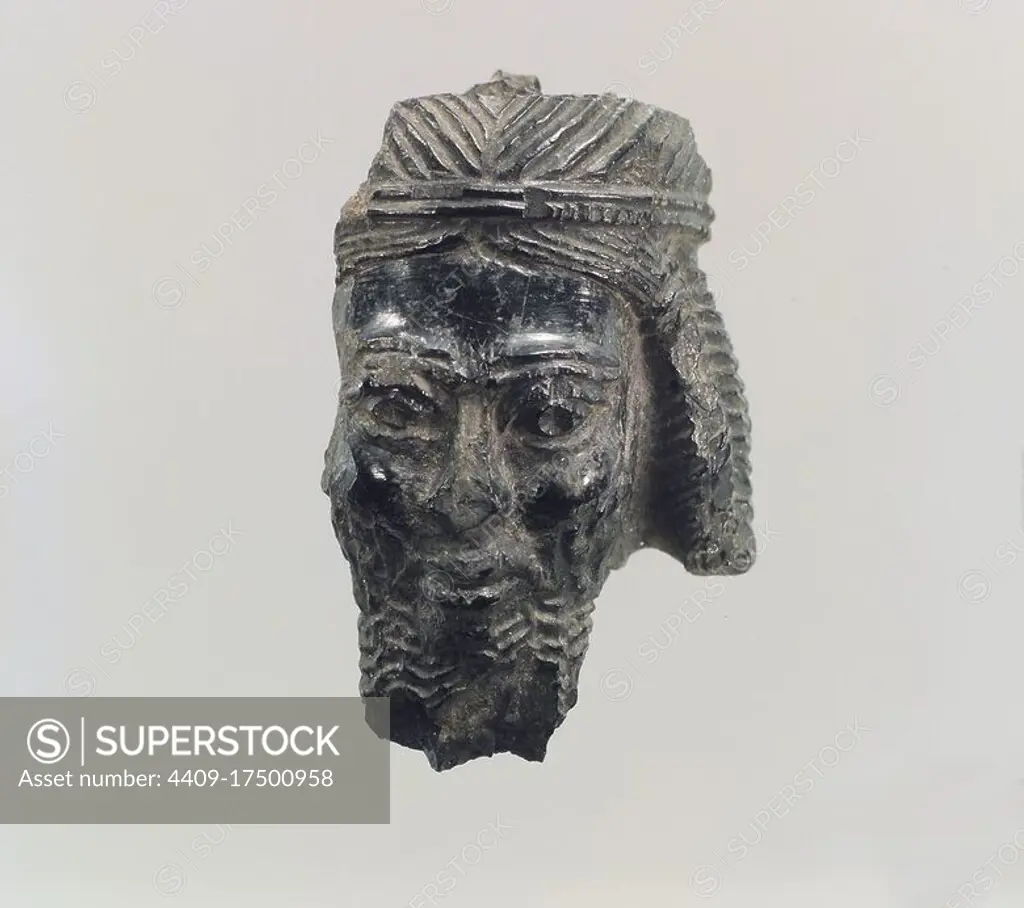
SuperStock offers millions of photos, videos, and stock assets to creatives around the world. This image of Head of a male figure. Culture: Assyrian. Dimensions: 1.73 x 1.06 in. (4.39 x 2.69 cm). Date: ca. 8th-7th century B.C..This carved head of a male figure was found with several other ivory heads in the Throne Room of the Burnt Palace at Nimrud, including that of a female figure also in the Metropolitan Museum's collection (MMA 54.117.8). It was probably blackened through exposure to fire when the palace complexes at Nimrud were sacked during the final defeat of Assyria at the end of the seventh century B.C. Originally, this piece may have been part of a composite statuette made of various materials and overlaid with gold foil. The man's long hair, parted at the center, falls in thick braids and is wrapped by a thin, double fillet. His small mouth and large eyes, which are drilled to receive inlays in colored glass or semiprecious stones, resemble those frequently found on North Syrian ivories. Built by the Assyrian king Ashurnasirpal II, the palaces and storerooms of Nimrud housed tho by Album/Metropolitan Museum of Art, NY/Album Archivo is available for licensing today.
Looking for a license?
Click here, and we'll help you find it! Questions? Just ask!
Click here, and we'll help you find it! Questions? Just ask!
DETAILS
Image Number: 4409-17500958Rights ManagedCredit Line:Album/Metropolitan Museum of Art, NY/Album Archivo/SuperStockCollection:Album Archivo Contributor:Album / Metropolitan Museum of Art, NY Model Release:NoProperty Release:NoResolution:4200×3725