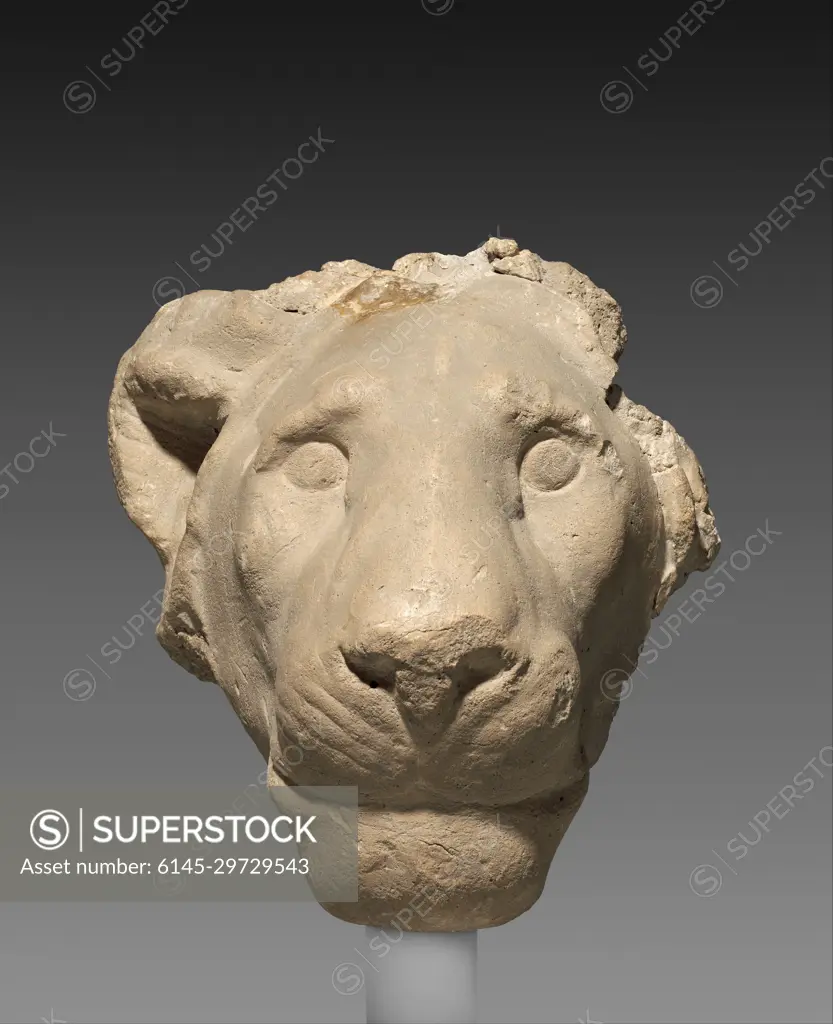
Head of a lion 400-300 B.C. Late Period-Ptolemaic Period This imposing head is unique for its artistic quality, size, and the insights it gives the viewer into the creative process of an Egyptian sculptors workshop. At the time this model was made, sculptures of lions drew on the animals true appearance rather than the stylized interpretations that are seen in both earlier and later Egyptian art. Here the realism of the animal is found in the small, eyes overshadowed by heavy brows, fleshy facial features, and indications of loose fur and tufts of hair.This model used in the creation of a plaster prototype that would have been copied in stone to make the waterspouts needed for a new temple. Located on a temple wall just under the roof, the image of the lion functioned as a guardian over the spout located between his paws. If that cavity was left unprotected, then negative forces could potentially enter sacred space. This lion is cast in plaster from a clay model, now lost, and the de
SuperStock offers millions of photos, videos, and stock assets to creatives around the world. This image of Head of a lion 400-300 B.C. Late Period-Ptolemaic Period This imposing head is unique for its artistic quality, size, and the insights it gives the viewer into the creative process of an Egyptian sculptors workshop. At the time this model was made, sculptures of lions drew on the animals true appearance rather than the stylized interpretations that are seen in both earlier and later Egyptian art. Here the realism of the animal is found in the small, eyes overshadowed by heavy brows, fleshy facial features, and indications of loose fur and tufts of hair.This model used in the creation of a plaster prototype that would have been copied in stone to make the waterspouts needed for a new temple. Located on a temple wall just under the roof, the image of the lion functioned as a guardian over the spout located between his paws. If that cavity was left unprotected, then negative forces could potentially enter sacred space. This lion is cast in plaster from a clay model, now lost, and the de by Piemags/PL Photography Limited is available for licensing today.
Looking for a license?
Click here, and we'll help you find it! Questions? Just ask!
Click here, and we'll help you find it! Questions? Just ask!
DETAILS
Image Number: 6145-29729543Royalty FreeCredit Line:Piemags/PL Photography Limited/SuperStockCollection:PL Photography Limited Contributor:Piemags Model Release:NoProperty Release:NoResolution:3136×3854