Head of a Canid, possibly a Jackal 664-332 B.C. Late Period The classification of wild canids, for instance, the Egyptian jackal, Canis lupaster, and the wild dog living at the margins of the Egyptian desert, causes problems even for zoologists. It is not surprising, therefore, that the ancient Egyptians did not distinguish particular canid species in their representations of gods, such as the necropolis god Anubis; Duamutef, one of the four sons of Horus; or Wepwawet, the god of Asyut, a town in Middle Egypt. This sensitively modeled plaster head could have served to depict any of these deities. The use of plaster and the rough, unmodeled area around the ears indicate that the head was cast in a mold. Recent research has shown that Egyptian artists used a variety of finely graded plaster materials for trial pieces and finished works of art.This small head is in a class with Old Kingdom "reserve" heads and the famous New Kingdom plaster portraits from an artist's studio at Amarna. In t
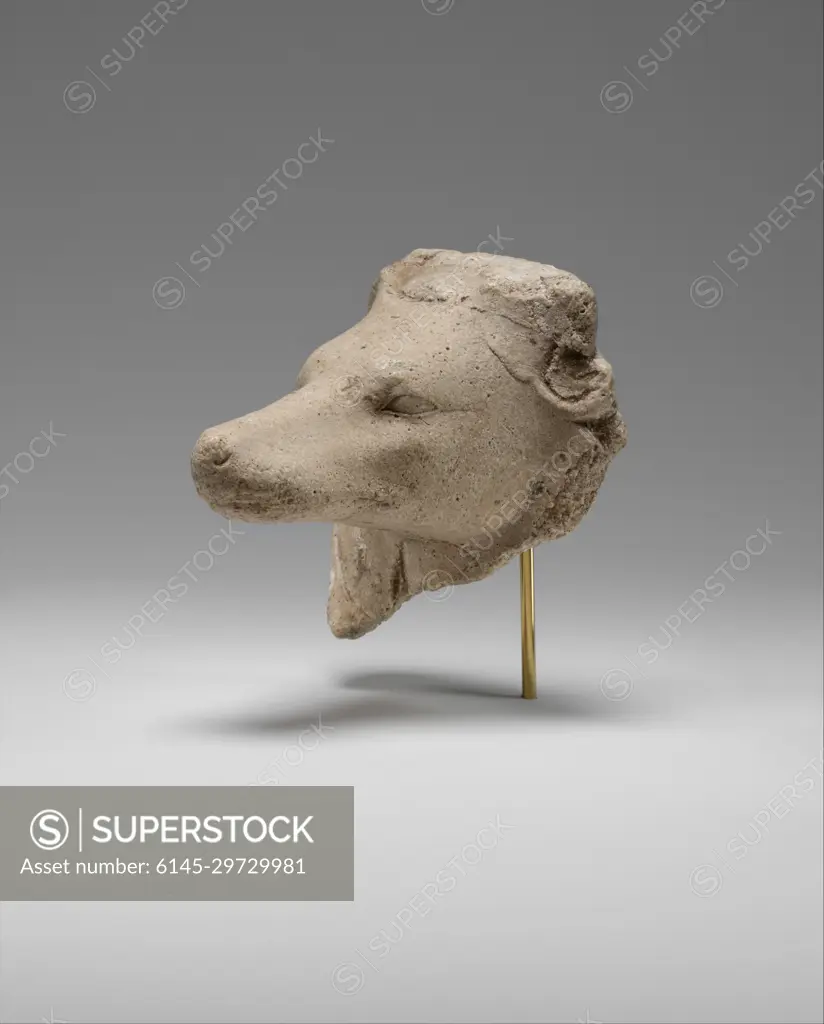
SuperStock offers millions of photos, videos, and stock assets to creatives around the world. This image of Head of a Canid, possibly a Jackal 664-332 B.C. Late Period The classification of wild canids, for instance, the Egyptian jackal, Canis lupaster, and the wild dog living at the margins of the Egyptian desert, causes problems even for zoologists. It is not surprising, therefore, that the ancient Egyptians did not distinguish particular canid species in their representations of gods, such as the necropolis god Anubis; Duamutef, one of the four sons of Horus; or Wepwawet, the god of Asyut, a town in Middle Egypt. This sensitively modeled plaster head could have served to depict any of these deities. The use of plaster and the rough, unmodeled area around the ears indicate that the head was cast in a mold. Recent research has shown that Egyptian artists used a variety of finely graded plaster materials for trial pieces and finished works of art.This small head is in a class with Old Kingdom "reserve" heads and the famous New Kingdom plaster portraits from an artist's studio at Amarna. In t by Piemags/PL Photography Limited is available for licensing today.
Looking for a license?
Click here, and we'll help you find it! Questions? Just ask!
Click here, and we'll help you find it! Questions? Just ask!
DETAILS
Image Number: 6145-29729981Royalty FreeCredit Line:Piemags/PL Photography Limited/SuperStockCollection:PL Photography Limited Contributor:Piemags Model Release:NoProperty Release:NoResolution:3105×3854