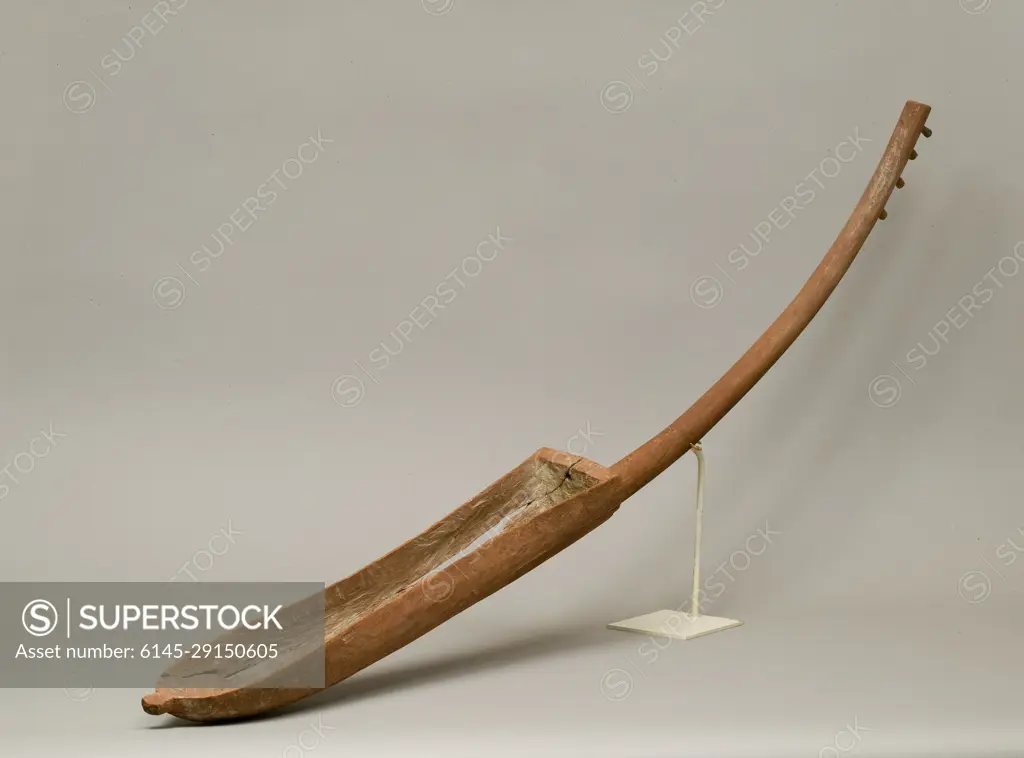
Harp ca. 1700-1450 B.C. Second Intermediate Period-early New Kingdom Arched harps of this type were already in use during the Old Kingdom and remained the foremost string instruments until the end of the Middle Kingdom. From the New Kingdom onward, Egyptian arched harps co-existed with a great variety of harps in different shapes and sizes. Unlike modern European versions, ancient Egyptian harps have no forepillar to strengthen and support the neck. Skin, now missing, covered the open top of the soundbox. Older forms of arched harps like this had four or five strings; during the later New Kingdom musicians experimented with newer forms that accommodated many strings. Harp players accompanied a singer; harps, flute players and singers formed the most common type of musical ensemble that performed during festivals and banquets, funerals, and temple rituals.. Harp. ca. 1700-1450 B.C.. Wood. Second Intermediate Period-early New Kingdom. From Egypt, Upper Egypt, Thebes, Asasif, Carnarvon Ex
SuperStock offers millions of photos, videos, and stock assets to creatives around the world. This image of Antique Bowed Lute from Armenia: Explore Traditional Armenian Music Instrument Craftsmanship by Piemags/PL Photography Limited is available for licensing today.
Looking for a license?
Click here, and we'll help you find it! Questions? Just ask!
Click here, and we'll help you find it! Questions? Just ask!
DETAILS
Image Number: 6145-29150605Royalty FreeCredit Line:Piemags/PL Photography Limited/SuperStockCollection:PL Photography Limited Contributor:Piemags Model Release:NoProperty Release:NoResolution:3484×2581