Hair Comb Decorated with Rows of Wild Animals ca. 3200-3100 B.C. Predynastic, Late Naqada III Finely carved ivory combs and knife handles produced toward the end of Egypt's prehistory demonstrate the high standards Egyptian artists had achieved, even before the Old Kingdom. This comb may have been part of the funeral equipment of an elite person who lived about 5,200 years ago. Parts of the comb's teeth, now missing, can be seen along the bottom edge. The detailed decoration suggests that it was a ceremonial object, not just an instrument for arranging the hair. On both sides are figures of animals in horizontal rows, a spatial organization familiar from later Egyptian art. The animals include elephants and snakes; wading birds and a giraffe; hyenas; cattle; and perhaps boars. Similar arrangements of these creatures on other carved ivory implements suggest that the arrangement and choice of animals were not haphazard. Elephants treading on snakes suggest that this part of the scene was
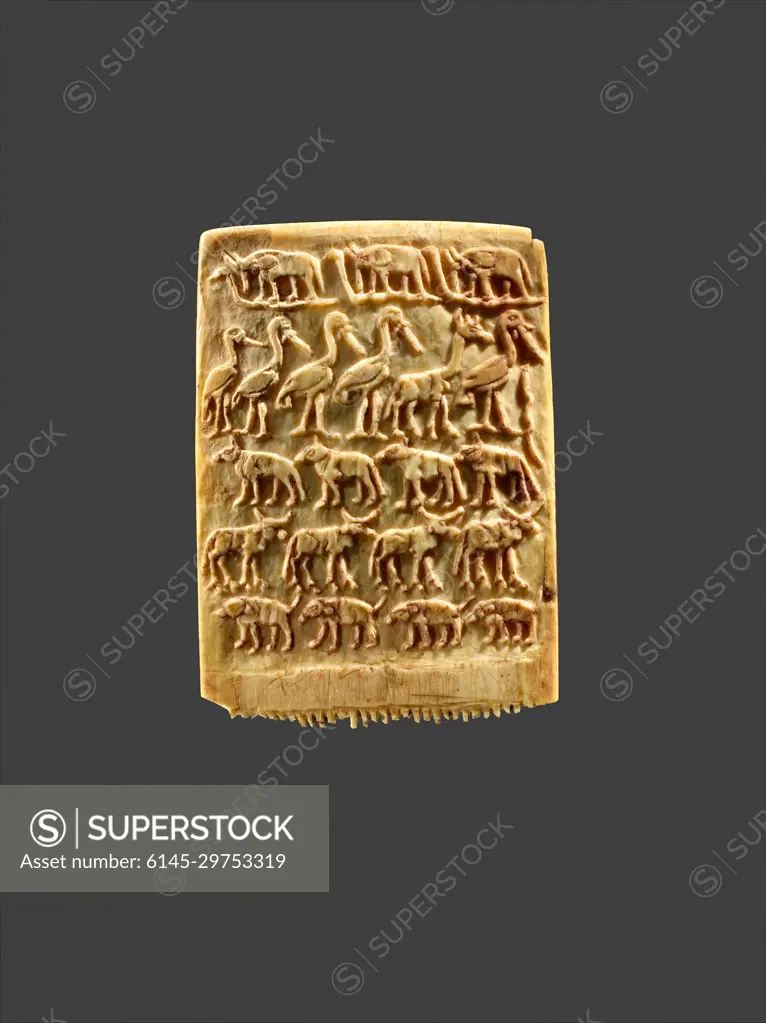
SuperStock offers millions of photos, videos, and stock assets to creatives around the world. This image of Hair Comb Decorated with Rows of Wild Animals ca. 3200-3100 B.C. Predynastic, Late Naqada III Finely carved ivory combs and knife handles produced toward the end of Egypt's prehistory demonstrate the high standards Egyptian artists had achieved, even before the Old Kingdom. This comb may have been part of the funeral equipment of an elite person who lived about 5,200 years ago. Parts of the comb's teeth, now missing, can be seen along the bottom edge. The detailed decoration suggests that it was a ceremonial object, not just an instrument for arranging the hair. On both sides are figures of animals in horizontal rows, a spatial organization familiar from later Egyptian art. The animals include elephants and snakes; wading birds and a giraffe; hyenas; cattle; and perhaps boars. Similar arrangements of these creatures on other carved ivory implements suggest that the arrangement and choice of animals were not haphazard. Elephants treading on snakes suggest that this part of the scene was by Piemags/PL Photography Limited is available for licensing today.
Looking for a license?
Click here, and we'll help you find it! Questions? Just ask!
Click here, and we'll help you find it! Questions? Just ask!
DETAILS
Image Number: 6145-29753319Royalty FreeCredit Line:Piemags/PL Photography Limited/SuperStockCollection:PL Photography Limited Contributor:Piemags Model Release:NoProperty Release:NoResolution:1449×1935