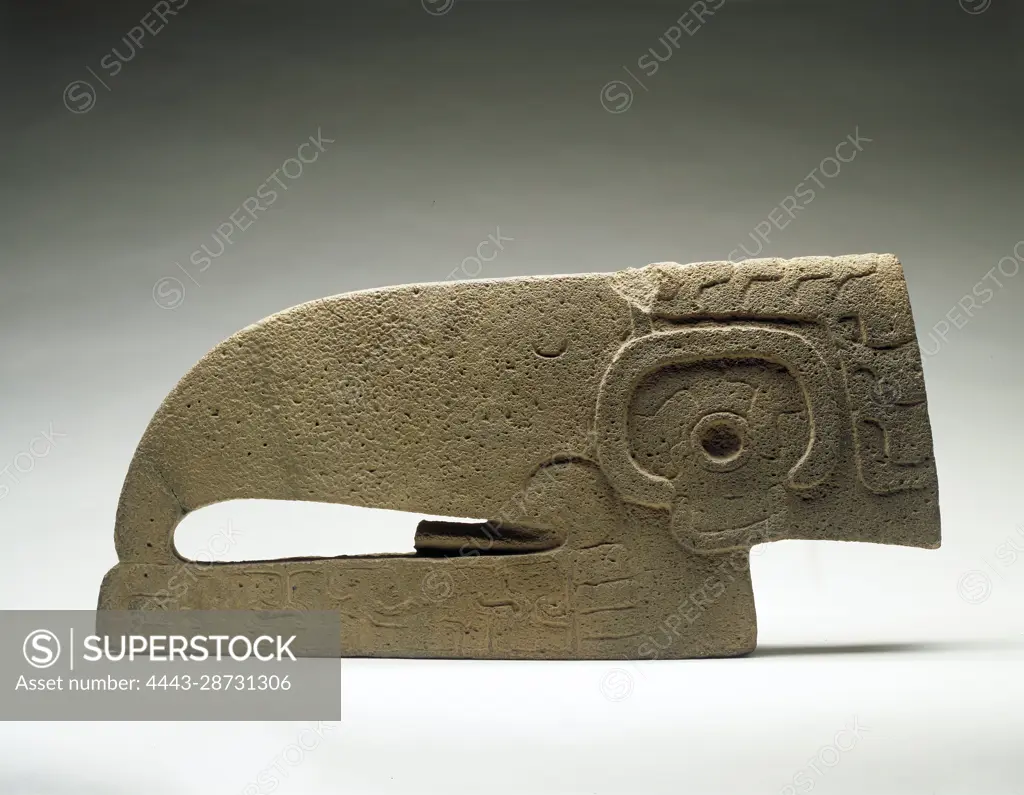
Hacha, c. 600-900 CE, 10 x 21 x 2 1/2 in. (25.4 x 53.34 x 6.35 cm) (depth varied), Stone, 7th-10th century, Players of Mesoamerican ballgames wore u-shaped yokes around their hips made of cotton, wood, or leather to deflect the rubber ball in this no-hands team sport. Yokes made of carved stone were worn in opening and closing ceremonies for the game. Hachas were ornaments that attached to players' yokes during these ceremonies. The notch at the bottom of the hacha allowed it to sit atop the yoke encircling the player's hips. The ring around the eye of this bird hacha identifies it as a parrot or macaw, a possible reference to the supreme ball players known as the Hero Twins. They are the main characters of the Popol Vuh, the Maya creation story. The Popol Vuh is an important source of information on many ballgame-related objects throughout Mesoamerica.
SuperStock offers millions of photos, videos, and stock assets to creatives around the world. This image of Hacha, c. 600-900 CE, 10 x 21 x 2 1/2 in. (25.4 x 53.34 x 6.35 cm) (depth varied), Stone, 7th-10th century, Players of Mesoamerican ballgames wore u-shaped yokes around their hips made of cotton, wood, or leather to deflect the rubber ball in this no-hands team sport. Yokes made of carved stone were worn in opening and closing ceremonies for the game. Hachas were ornaments that attached to players' yokes during these ceremonies. The notch at the bottom of the hacha allowed it to sit atop the yoke encircling the player's hips. The ring around the eye of this bird hacha identifies it as a parrot or macaw, a possible reference to the supreme ball players known as the Hero Twins. They are the main characters of the Popol Vuh, the Maya creation story. The Popol Vuh is an important source of information on many ballgame-related objects throughout Mesoamerica. by Artokoloro is available for licensing today.
Looking for a license?
Click here, and we'll help you find it! Questions? Just ask!
Click here, and we'll help you find it! Questions? Just ask!
DETAILS
Image Number: 4443-28731306Rights ManagedCredit Line:Artokoloro/SuperStockCollection:Artokoloro Model Release:NoProperty Release:NoResolution:5094×3957