Grapevine after 1790 Matsumura Goshun Japanese An endearing and small work attributed to Maruyama kyo’s follower Matsumura Goshun. Grapes carried various symbolic meanings that stem from the abundance of its fruit, for instance fecundity, a rich harvest or leading a long life. In poetry, it signifies autumn, hence one would expect to the scroll on display in a tokonoma decorative alcove during that season. The signature style and seal suggest that it was painted in the 1790s or later, when Goshun had shed off his literati roots and fully transitioned into a member of kyo’s school. Grapevine. Matsumura Goshun (Japanese, 1752-1811). Japan. after 1790. Hanging scroll; ink on silk. Edo period (1615-1868). Paintings
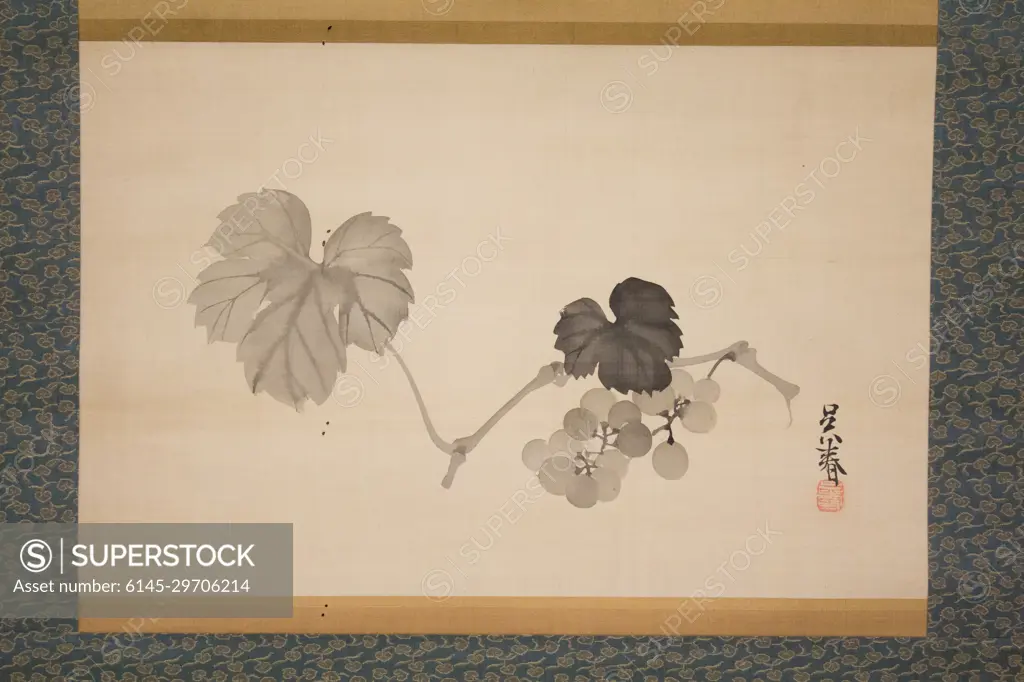
SuperStock offers millions of photos, videos, and stock assets to creatives around the world. This image of Grapevine after 1790 Matsumura Goshun Japanese An endearing and small work attributed to Maruyama kyo’s follower Matsumura Goshun. Grapes carried various symbolic meanings that stem from the abundance of its fruit, for instance fecundity, a rich harvest or leading a long life. In poetry, it signifies autumn, hence one would expect to the scroll on display in a tokonoma decorative alcove during that season. The signature style and seal suggest that it was painted in the 1790s or later, when Goshun had shed off his literati roots and fully transitioned into a member of kyo’s school. Grapevine. Matsumura Goshun (Japanese, 1752-1811). Japan. after 1790. Hanging scroll; ink on silk. Edo period (1615-1868). Paintings by Piemags/PL Photography Limited is available for licensing today.
Looking for a license?
Click here, and we'll help you find it! Questions? Just ask!
Click here, and we'll help you find it! Questions? Just ask!
DETAILS
Image Number: 6145-29706214Royalty FreeCredit Line:Piemags/PL Photography Limited/SuperStockCollection:PL Photography Limited Contributor:Piemags Model Release:NoProperty Release:NoResolution:4000×2667