Gold Weight: Sword 18th-19th century Akan peoples Cast brass gold weights, known as abrammuo (sing. mrammuo), were developed by Akan merchants and rulers to standardize the trade in gold dust from mines in present-day Ghana in networks of exchange that extended beyond the Sahara Desert. Domestically, gold was valued by the Akan kings for its decorative and symbolic qualities. Aside from bringing enormous wealth to the Akan kingdoms through trade, gold was considered the earthly counterpart to the sun and an incarnation of kra, or life force, and was incorporated into a wide spectrum of courtly paraphernalia. While the earliest gold weights from the fifteenth century displayed abstract or geometric motifs inspired by North African Islamic traditions, later weights from the seventeenth century onward were figurative in design. Some take their imagery from royal accoutrements, likely in reference to the Akan kings' increasing involvement in the regulation of the trade at this time.The wei
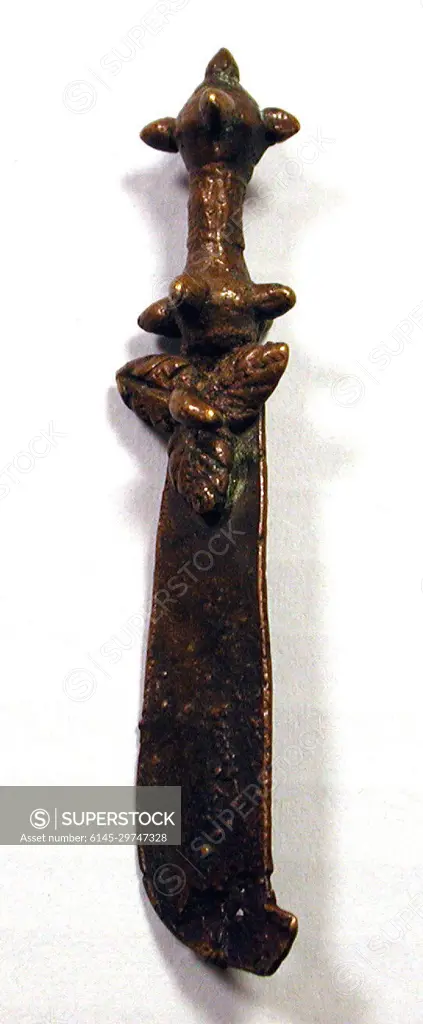
SuperStock offers millions of photos, videos, and stock assets to creatives around the world. This image of Gold Weight: Sword 18th-19th century Akan peoples Cast brass gold weights, known as abrammuo (sing. mrammuo), were developed by Akan merchants and rulers to standardize the trade in gold dust from mines in present-day Ghana in networks of exchange that extended beyond the Sahara Desert. Domestically, gold was valued by the Akan kings for its decorative and symbolic qualities. Aside from bringing enormous wealth to the Akan kingdoms through trade, gold was considered the earthly counterpart to the sun and an incarnation of kra, or life force, and was incorporated into a wide spectrum of courtly paraphernalia. While the earliest gold weights from the fifteenth century displayed abstract or geometric motifs inspired by North African Islamic traditions, later weights from the seventeenth century onward were figurative in design. Some take their imagery from royal accoutrements, likely in reference to the Akan kings' increasing involvement in the regulation of the trade at this time.The wei by Piemags/PL Photography Limited is available for licensing today.
Looking for a license?
Click here, and we'll help you find it! Questions? Just ask!
Click here, and we'll help you find it! Questions? Just ask!
DETAILS
Image Number: 6145-29747328Royalty FreeCredit Line:Piemags/PL Photography Limited/SuperStockCollection:PL Photography Limited Contributor:Piemags Model Release:NoProperty Release:NoResolution:542×1311