Gold Weight: Geometric 16th-17th century Akan peoples In the fifteenth century, cast Akan gold weights (brass figurines used to measure units of gold dust) were developed in response to the extensive trade in gold mined in Kumasi that was initially transported across Saharan trade routes. Locally, gold was prized for its decorative qualities, status, and because of a strong belief in its inherent power and mystery. The earliest treatment of gold weights was probably in the style seen in these examplesgraphic, abstractas a result of the Islamic influence in the gold trade at this time. This heavy rectangular form has very faint surface designs that were engraved or punched into the metal. Its edges are rounded, indicating extensive human wear. The motif with two comblike forms on either side of a spiral, has been called "ram's horn," or Dwanimen, referring to the spiral shape of a ram's horn.While these miniature artifacts, created as weights, were commonly melted down and recast, his
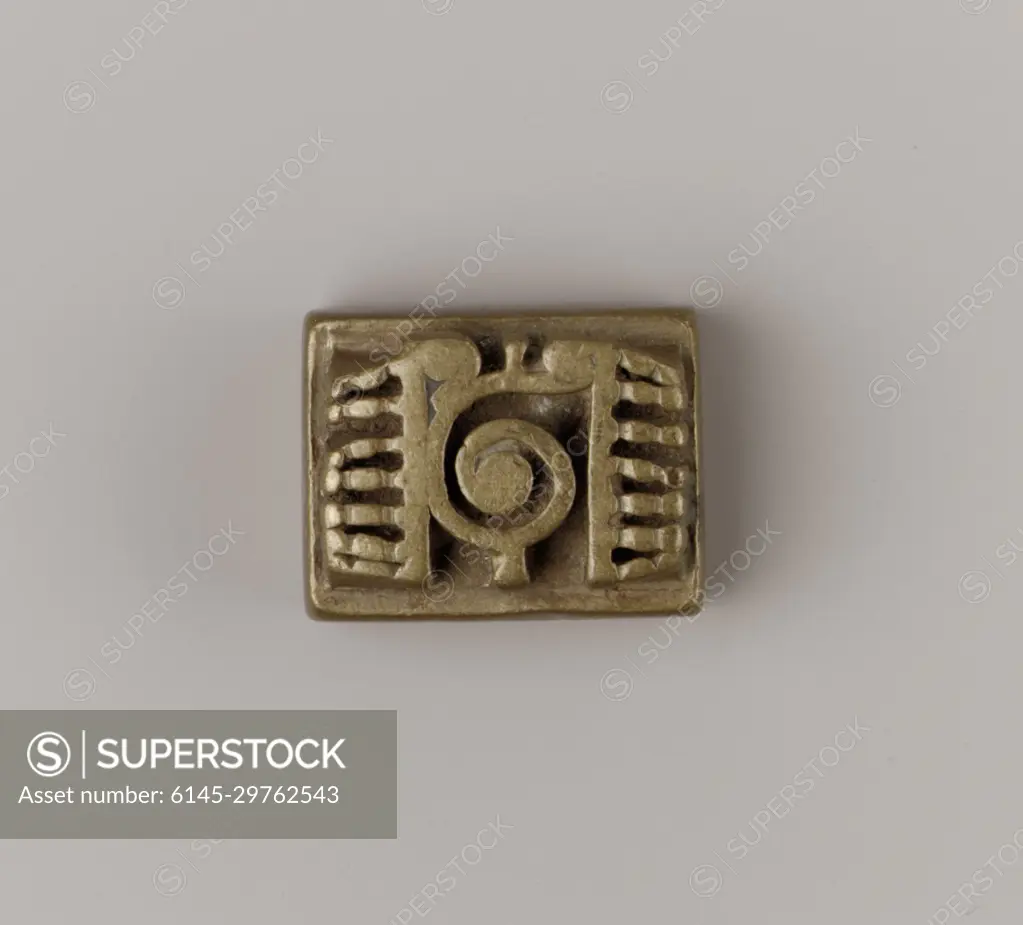
SuperStock offers millions of photos, videos, and stock assets to creatives around the world. This image of Gold Weight: Geometric 16th-17th century Akan peoples In the fifteenth century, cast Akan gold weights (brass figurines used to measure units of gold dust) were developed in response to the extensive trade in gold mined in Kumasi that was initially transported across Saharan trade routes. Locally, gold was prized for its decorative qualities, status, and because of a strong belief in its inherent power and mystery. The earliest treatment of gold weights was probably in the style seen in these examplesgraphic, abstractas a result of the Islamic influence in the gold trade at this time. This heavy rectangular form has very faint surface designs that were engraved or punched into the metal. Its edges are rounded, indicating extensive human wear. The motif with two comblike forms on either side of a spiral, has been called "ram's horn," or Dwanimen, referring to the spiral shape of a ram's horn.While these miniature artifacts, created as weights, were commonly melted down and recast, his by Piemags/PL Photography Limited is available for licensing today.
Looking for a license?
Click here, and we'll help you find it! Questions? Just ask!
Click here, and we'll help you find it! Questions? Just ask!
DETAILS
Image Number: 6145-29762543Royalty FreeCredit Line:Piemags/PL Photography Limited/SuperStockCollection:PL Photography Limited Contributor:Piemags Model Release:NoProperty Release:NoResolution:1708×1544