Glass alabastron (perfumebottle) ca. 625-600 B.C. Probably Phoenician Coloress with pale greenish tinge.Rim with everted, beveled, horizontal lip; short, funnel-shaped neck; rounded shoulder; elongated ovoid body; round bottom; on upper body, two solid projecting, semicircular handles, tapering outward, carved from body of vessel.Broken and repaired with several areas of fill in body; pinprick bubbles; dulling, pitting, and small patches of thick, white weathering.The alabastron was cast and then ground to its present shape. The Phoenicians were probably important intermediaries in the introduction of glass objects and technology from the Near East and Egypt into Cyprus.. Glass alabastron (perfumebottle). Probably Phoenician. ca. 625-600 B.C.. Glass; cast and cut. Archaic. Glass
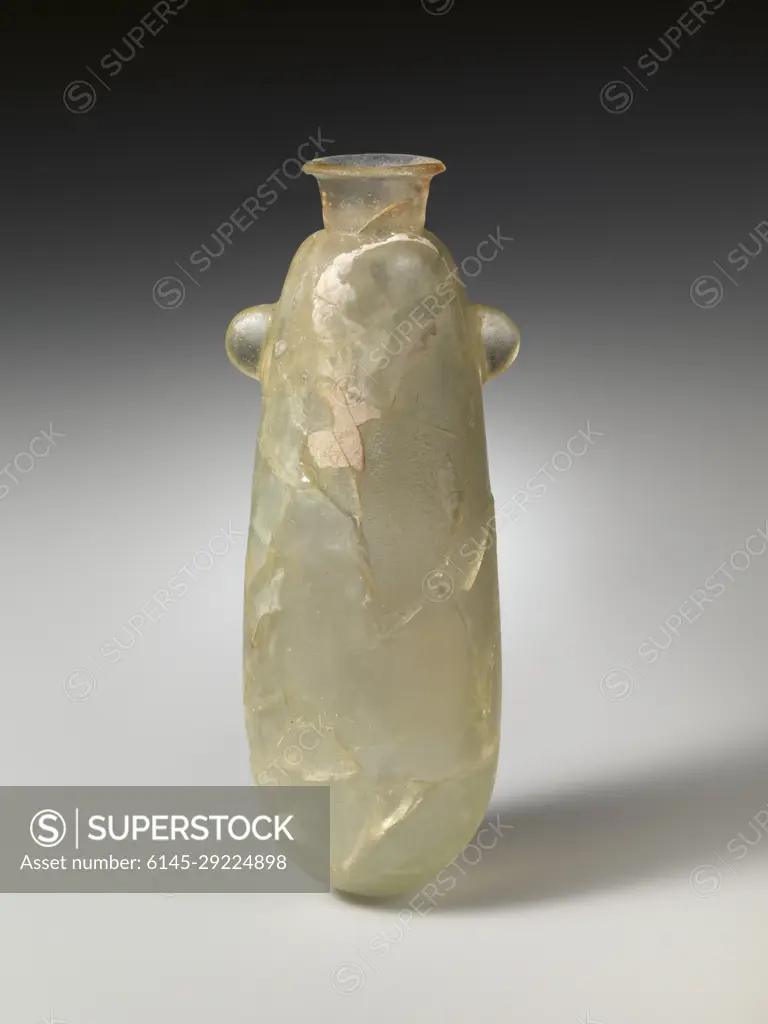
SuperStock offers millions of photos, videos, and stock assets to creatives around the world. This image of Glass alabastron (perfumebottle) ca. 625-600 B.C. Probably Phoenician Coloress with pale greenish tinge.Rim with everted, beveled, horizontal lip; short, funnel-shaped neck; rounded shoulder; elongated ovoid body; round bottom; on upper body, two solid projecting, semicircular handles, tapering outward, carved from body of vessel.Broken and repaired with several areas of fill in body; pinprick bubbles; dulling, pitting, and small patches of thick, white weathering.The alabastron was cast and then ground to its present shape. The Phoenicians were probably important intermediaries in the introduction of glass objects and technology from the Near East and Egypt into Cyprus.. Glass alabastron (perfumebottle). Probably Phoenician. ca. 625-600 B.C.. Glass; cast and cut. Archaic. Glass by Piemags/PL Photography Limited is available for licensing today.
Looking for a license?
Click here, and we'll help you find it! Questions? Just ask!
Click here, and we'll help you find it! Questions? Just ask!
DETAILS
Image Number: 6145-29224898Royalty FreeCredit Line:Piemags/PL Photography Limited/SuperStockCollection:PL Photography Limited Contributor:Piemags Model Release:NoProperty Release:NoResolution:3000×4000