Gandhāra is noted for the distinctive Gandhāra style of Buddhist art, which developed out of a merger of Greek, Syrian, Persian, and Indian artistic influence. This development began during the Parthian Period (50 BCE - 75 CE). Gandhāran style flourished and achieved its peak during the Kushan period, from the 1st to the 5th century. It declined and suffered destruction after invasion of the White Huns in the 5th century. Stucco as well as stone was widely used by sculptors in Gandhara for the decoration of monastic and cult buildings. Stucco provided the artist with a medium of great plasticity, enabling a high degree of expresivness to be given to the sculpture. Sculpting in stucco was popular wherever Buddhism spread from Gandhara - India, Afghanistan, Central Asia and China.
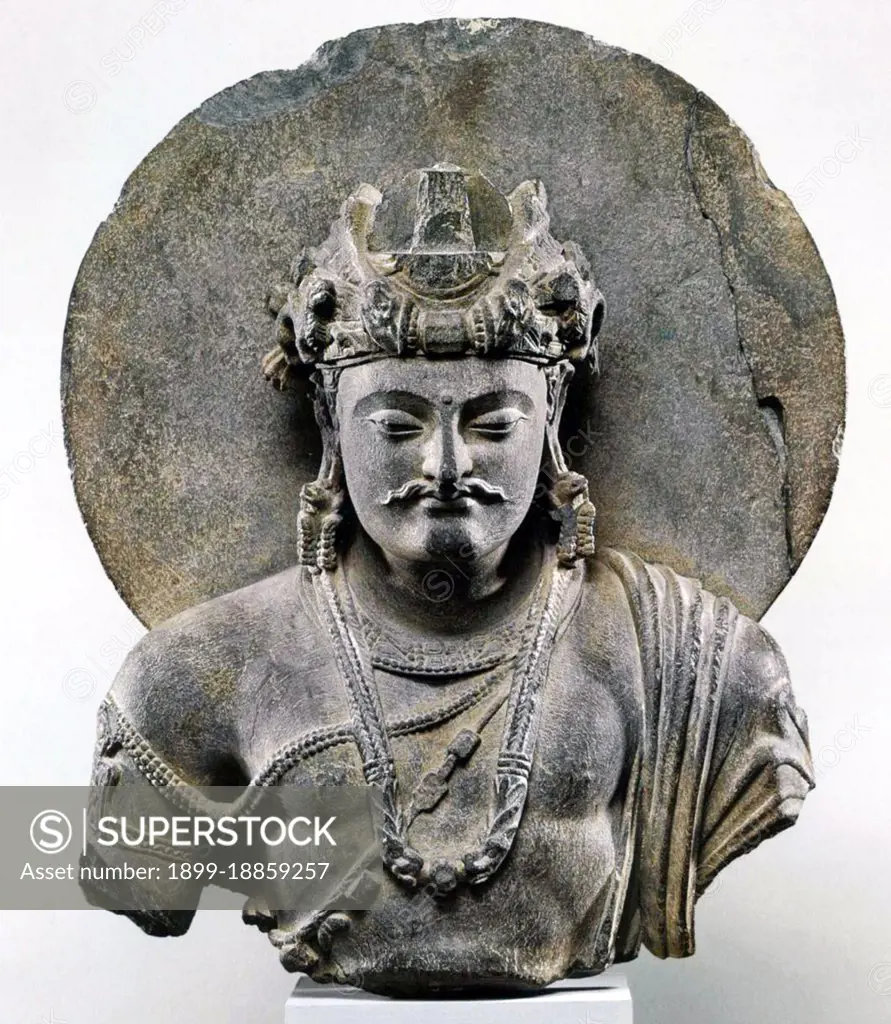
SuperStock offers millions of photos, videos, and stock assets to creatives around the world. This image of Gandhāra is noted for the distinctive Gandhāra style of Buddhist art, which developed out of a merger of Greek, Syrian, Persian, and Indian artistic influence. This development began during the Parthian Period (50 BCE - 75 CE). Gandhāran style flourished and achieved its peak during the Kushan period, from the 1st to the 5th century. It declined and suffered destruction after invasion of the White Huns in the 5th century. Stucco as well as stone was widely used by sculptors in Gandhara for the decoration of monastic and cult buildings. Stucco provided the artist with a medium of great plasticity, enabling a high degree of expresivness to be given to the sculpture. Sculpting in stucco was popular wherever Buddhism spread from Gandhara - India, Afghanistan, Central Asia and China. by Pictures From History/Universal Images is available for licensing today.
Looking for a license?
Click here, and we'll help you find it! Questions? Just ask!
Click here, and we'll help you find it! Questions? Just ask!
DETAILS
Image Number: 1899-18859257Rights ManagedCredit Line:Pictures From History/Universal Images/SuperStockCollection:Universal Images Contributor:Pictures From History Model Release:NoProperty Release:NoResolution:4000×4593