Galle was for centuries Sri Lankas main port, a position which strengthened during the periods of Portuguese and Dutch colonial rule. Galle only lost its primacy in the late 19th century, when the British expanded and developed the harbour at Colombo to become the islands major port. Perhaps the earliest recorded reference to Galle comes from the great Arab traveller Ibn Battuta, who visited the port—which he calls Qali—in the mid-14th century. The Portuguese first arrived in 1505, when a fleet commanded by Lorenzo de Almeida took shelter from a storm in the lee of the town. Clearly the strategic significance of the harbour impressed the Portuguese, for 82 years later, in 1587, they seized control of the town from the Sinhala kings and began the construction of Galle Fort. This event marked the beginning of almost four centuries of European domination of the city, resulting in the fascinating hybrid—architecturally, culturally and ethnically—which Galle is today. The Dutch captured t
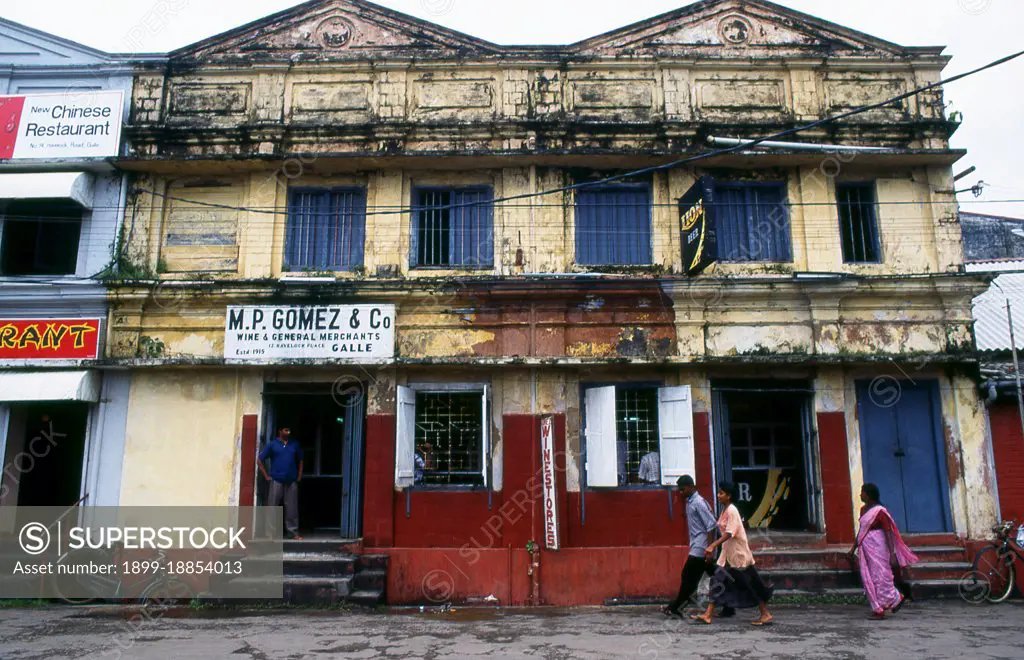
SuperStock offers millions of photos, videos, and stock assets to creatives around the world. This image of Galle was for centuries Sri Lankas main port, a position which strengthened during the periods of Portuguese and Dutch colonial rule. Galle only lost its primacy in the late 19th century, when the British expanded and developed the harbour at Colombo to become the islands major port. Perhaps the earliest recorded reference to Galle comes from the great Arab traveller Ibn Battuta, who visited the port—which he calls Qali—in the mid-14th century. The Portuguese first arrived in 1505, when a fleet commanded by Lorenzo de Almeida took shelter from a storm in the lee of the town. Clearly the strategic significance of the harbour impressed the Portuguese, for 82 years later, in 1587, they seized control of the town from the Sinhala kings and began the construction of Galle Fort. This event marked the beginning of almost four centuries of European domination of the city, resulting in the fascinating hybrid—architecturally, culturally and ethnically—which Galle is today. The Dutch captured t by Rainer Krack/Pictures from History/Universal Images is available for licensing today.
Looking for a license?
Click here, and we'll help you find it! Questions? Just ask!
Click here, and we'll help you find it! Questions? Just ask!
DETAILS
Image Number: 1899-18854013Rights ManagedCredit Line:Rainer Krack/Pictures from History/Universal Images/SuperStockCollection:Universal Images Contributor:Rainer Krack/Pictures from History Model Release:NoProperty Release:NoResolution:5100×3292