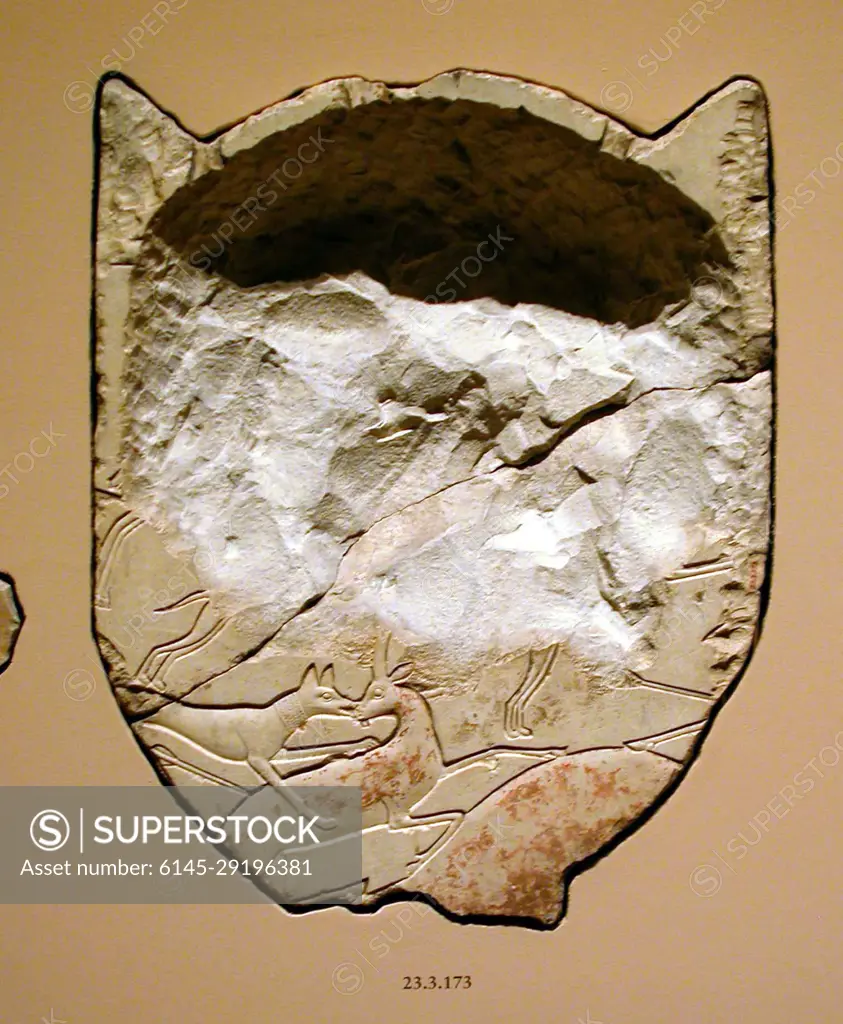
Fragment of a desert hunt - see 26.3.354-5-related ca. 2051-2000 B.C. Middle Kingdom Scenes of hunting animals in the desert became a standard part of tomb decoration during the Old Kingdom (see, for example, 08.201.1g, from the Tomb of Raemkai). During the third and into the early second millennium B.C., the Egyptian deserts still had the character of a hilly savannah filled with hardy plants and populated by a multitude of wild animals such as gazelle, antelope, rabbits, hyenas, and the occasional lion or cheetah. Located at the fringes of the floodplain, and thus at the edges of the ordered world, the deserts became symbolic of the chaos that constantly threatened the Egyptian cosmos. By defeating the wild creatures of this liminal area, the king and his elite helped the gods to maintain order over chaos. Only fragments of decoration of Khety's desert hunt (see 26.3.354-5-related) remain, but they provide a glimpse into the lively animal representations seen in a few tombs dating to
SuperStock offers millions of photos, videos, and stock assets to creatives around the world. This image of Fragment of a desert hunt - see 26.3.354-5-related ca. 2051-2000 B.C. Middle Kingdom Scenes of hunting animals in the desert became a standard part of tomb decoration during the Old Kingdom (see, for example, 08.201.1g, from the Tomb of Raemkai). During the third and into the early second millennium B.C., the Egyptian deserts still had the character of a hilly savannah filled with hardy plants and populated by a multitude of wild animals such as gazelle, antelope, rabbits, hyenas, and the occasional lion or cheetah. Located at the fringes of the floodplain, and thus at the edges of the ordered world, the deserts became symbolic of the chaos that constantly threatened the Egyptian cosmos. By defeating the wild creatures of this liminal area, the king and his elite helped the gods to maintain order over chaos. Only fragments of decoration of Khety's desert hunt (see 26.3.354-5-related) remain, but they provide a glimpse into the lively animal representations seen in a few tombs dating to by Piemags/PL Photography Limited is available for licensing today.
Looking for a license?
Click here, and we'll help you find it! Questions? Just ask!
Click here, and we'll help you find it! Questions? Just ask!
DETAILS
Image Number: 6145-29196381Royalty FreeCredit Line:Piemags/PL Photography Limited/SuperStockCollection:PL Photography Limited Contributor:Piemags Model Release:NoProperty Release:NoResolution:1514×1838