Fragment of a Curb Bit 3rd-4th century Germanic, Saxony This element is one of the side rings of a Germanic curb bit, with the remains of one of its chain reins still attached to it. The T-shaped toggle on the ring was used for hanging the bit from the bridle's cheekpiece. The two large side rings would have been connected by a mouthpiece and a straight bar acting as a curb (passing underneath the horses chin and pressing it when the reins were pulled). The chains of the reins had the purpose of weighting them. Like today's western chain reins, they would prevent the vibrations of light leather reins from being misunderstood by the horses as a demand to change direction. Heavy reins also prevented them from passing over the horse's head if the rider needed both of his hands. Curb bits were actually an improvement in military technology, since they allowed riders to have a very good control of their horses with only one hand, freeing the other for holding a weapon.This kind of bit is a
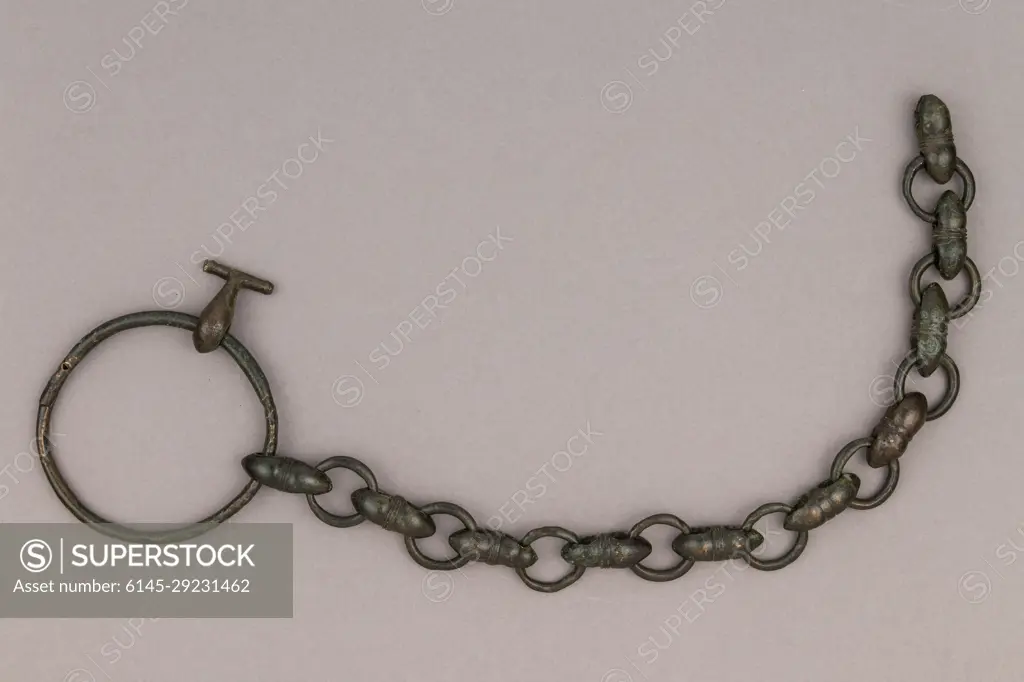
SuperStock offers millions of photos, videos, and stock assets to creatives around the world. This image of Fragment of a Curb Bit 3rd-4th century Germanic, Saxony This element is one of the side rings of a Germanic curb bit, with the remains of one of its chain reins still attached to it. The T-shaped toggle on the ring was used for hanging the bit from the bridle's cheekpiece. The two large side rings would have been connected by a mouthpiece and a straight bar acting as a curb (passing underneath the horses chin and pressing it when the reins were pulled). The chains of the reins had the purpose of weighting them. Like today's western chain reins, they would prevent the vibrations of light leather reins from being misunderstood by the horses as a demand to change direction. Heavy reins also prevented them from passing over the horse's head if the rider needed both of his hands. Curb bits were actually an improvement in military technology, since they allowed riders to have a very good control of their horses with only one hand, freeing the other for holding a weapon.This kind of bit is a by Piemags/PL Photography Limited is available for licensing today.
Looking for a license?
Click here, and we'll help you find it! Questions? Just ask!
Click here, and we'll help you find it! Questions? Just ask!
DETAILS
Image Number: 6145-29231462Royalty FreeCredit Line:Piemags/PL Photography Limited/SuperStockCollection:PL Photography Limited Contributor:Piemags Model Release:NoProperty Release:NoResolution:4000×2667