Five Pound Piece: Edward VII (obverse); St. George and the Dragon (reverse), 1902. Design by after Benedetto Pistrucci (Italian, 1784-1855), George Edward de Saulles (British). Gold; diameter: 3.7 cm (1 7/16 in.). Struck for inclusion in the proof commemorative sets of the new coinage of the reign, this piece was unusual in having a frosted or matte surface, produced by the application of acid. Non-proof five-pound pieces were also struck, but not for circulation. George Edward de Saulles was appointed chief engraver at the Royal Mint in 1892. At his death, the position was abolished for the sake of 'greater freedom in obtaining designs." There is still, however, a body of engravers at the mint to carry out the work necessary in adapting coin designs and making the dies.
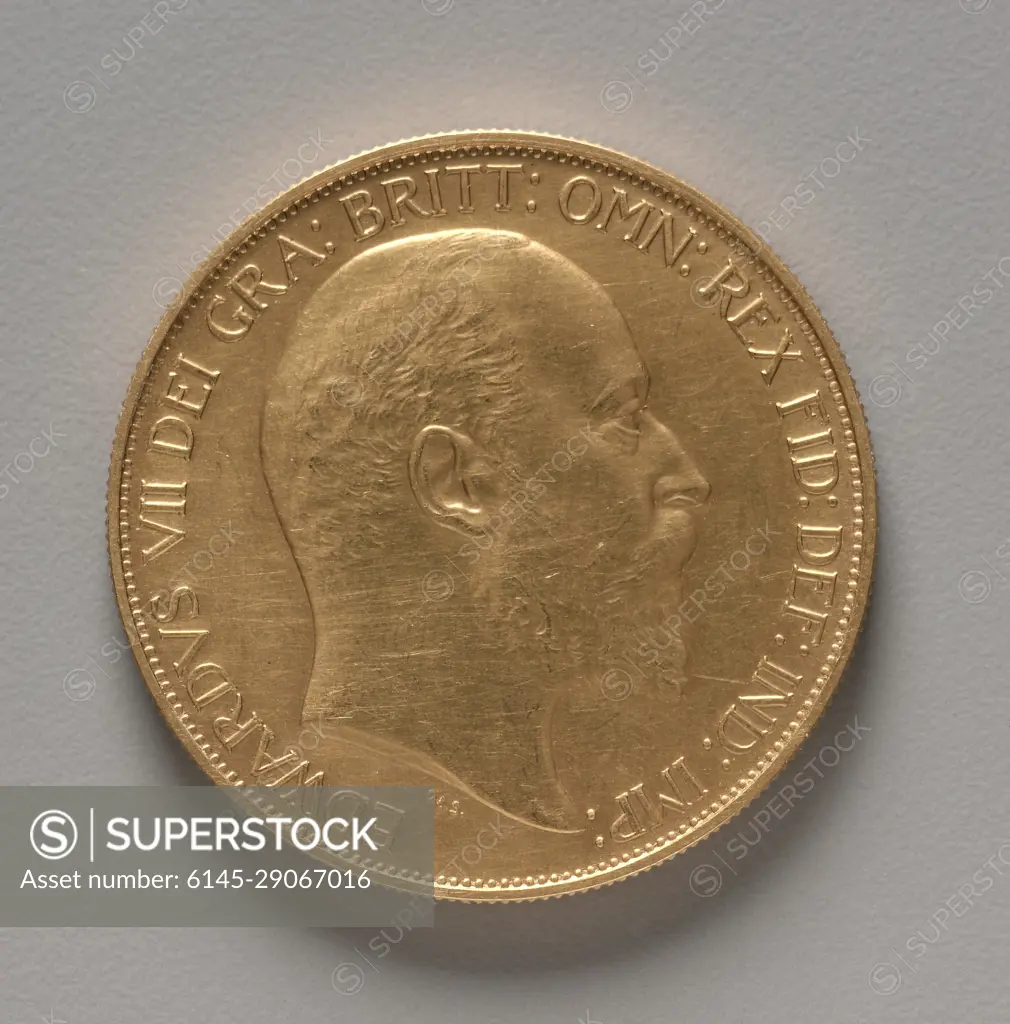
SuperStock offers millions of photos, videos, and stock assets to creatives around the world. This image of Explore the Historical Significance of an Edward VII Gold Sovereign Coin – A Prime Example of Valuable British Numismatic Treasures by Piemags/PL Photography Limited is available for licensing today.
Looking for a license?
Click here, and we'll help you find it! Questions? Just ask!
Click here, and we'll help you find it! Questions? Just ask!
DETAILS
Image Number: 6145-29067016Royalty FreeCredit Line:Piemags/PL Photography Limited/SuperStockCollection:PL Photography Limited Contributor:Piemags Model Release:NoProperty Release:NoResolution:2048×2076