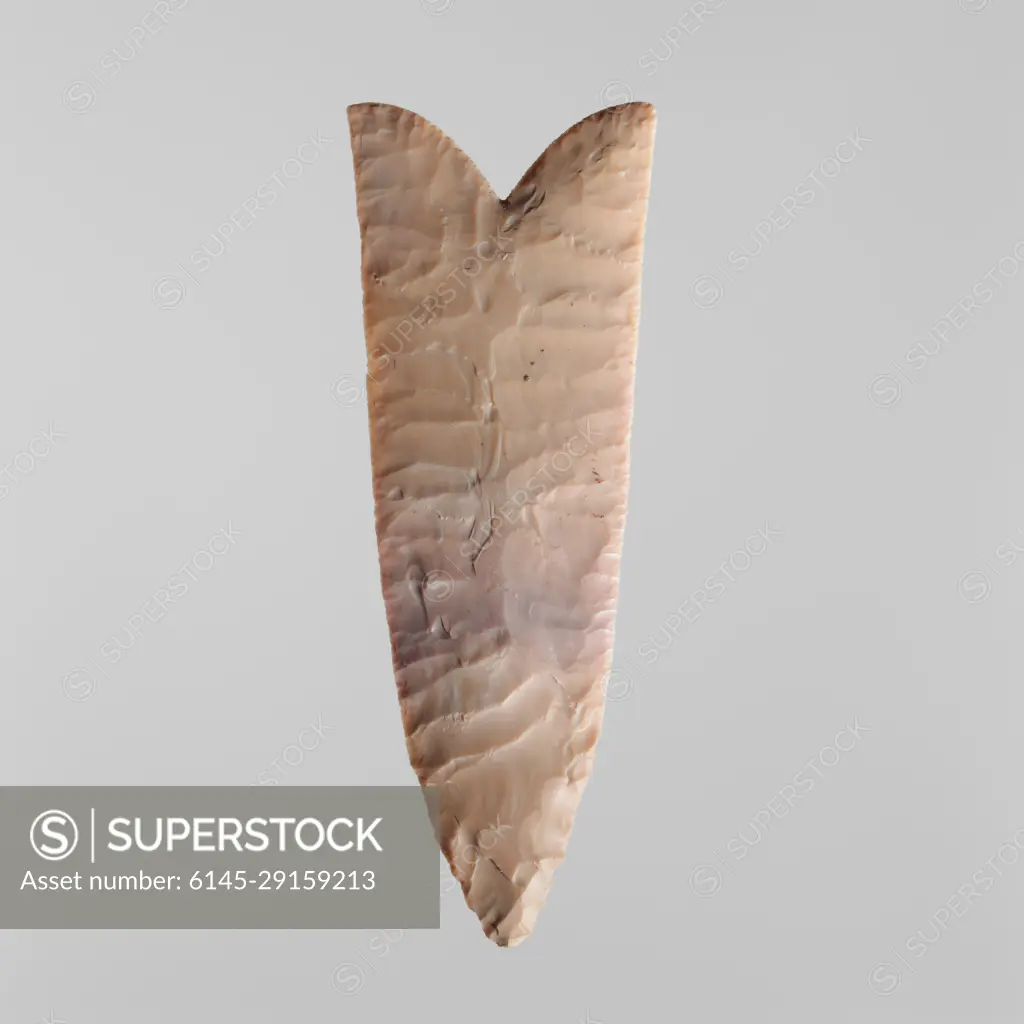
Fishtail Knife ca. 3650-3300 B.C. Predynastic, Naqada II Blades such as this one were included in burials throughout the Predynastic Period.The cutting edge is the V-shaped notch. Although the implement's exact purpose is unknown, there is persua-sive evidence that it was used at birth to cut the umbilical cord and was placed in the grave to assist its owner's rebirth into the afterlife. A similar instrument was used throughout Egyptian history in the funerary rite known as the "Opening of the Mouth": touched to the mouth of the deceased's mummy or statue, it symboli-cally restored the individual's capability of independent existence. In addition to the implement, this model set also contains replicas of the vessels with which the newly revived spirit was of-fered milk (a baby's first source of nourishment), salt water (used for cleansing), and fresh water.. Fishtail Knife. ca. 3650-3300 B.C.. Flint. Predynastic, Naqada II. From Egypt
SuperStock offers millions of photos, videos, and stock assets to creatives around the world. This image of Fishtail Knife ca. 3650-3300 B.C. Predynastic, Naqada II Blades such as this one were included in burials throughout the Predynastic Period.The cutting edge is the V-shaped notch. Although the implement's exact purpose is unknown, there is persua-sive evidence that it was used at birth to cut the umbilical cord and was placed in the grave to assist its owner's rebirth into the afterlife. A similar instrument was used throughout Egyptian history in the funerary rite known as the "Opening of the Mouth": touched to the mouth of the deceased's mummy or statue, it symboli-cally restored the individual's capability of independent existence. In addition to the implement, this model set also contains replicas of the vessels with which the newly revived spirit was of-fered milk (a baby's first source of nourishment), salt water (used for cleansing), and fresh water.. Fishtail Knife. ca. 3650-3300 B.C.. Flint. Predynastic, Naqada II. From Egypt by Piemags/PL Photography Limited is available for licensing today.
Looking for a license?
Click here, and we'll help you find it! Questions? Just ask!
Click here, and we'll help you find it! Questions? Just ask!
DETAILS
Image Number: 6145-29159213Royalty FreeCredit Line:Piemags/PL Photography Limited/SuperStockCollection:PL Photography Limited Contributor:Piemags Model Release:NoProperty Release:NoResolution:4000×4000