Figure of ibex ca. 5th century B.C. This bronze ibex stands on a base. Its distinctive long horns turn back to touch the upright ears. The ibex was the most widely represented animal in southwestern Arabian art. Ritual ibex hunts were an important feature of the cult practices of the southwestern Arabian kingdoms. Successfully capturing and killing these elusive creatures was believed to secure favors from the gods.This sculpture may have served as a handle for an incense burner similar to one in the Museums collection (MMA 49.71.2). From the middle of the first millennium B.C. until the sixth century A.D., the kingdoms of southwestern Arabia gained considerable wealth and power through their control of the trade in incense between Arabia and the lands of the Mediterranean seacoast. Frankincense and myrrh, gum resins that are native to southern Arabia, were widely valued in the ancient world for the preparation of incense, perfumes, cosmetics, and medicines, as well as for use in reli
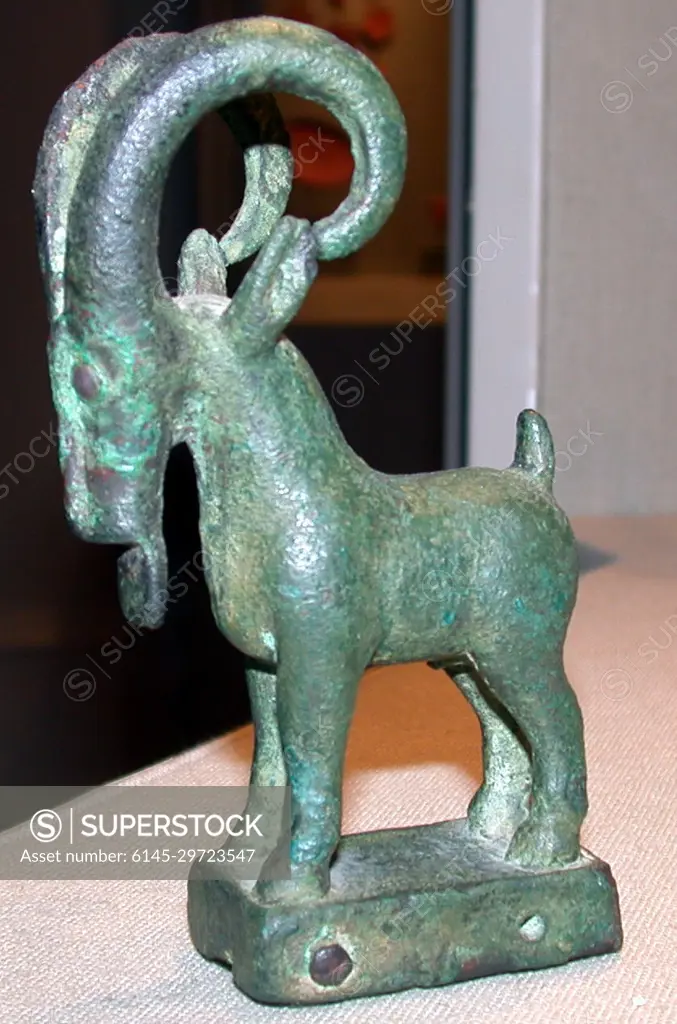
SuperStock offers millions of photos, videos, and stock assets to creatives around the world. This image of Figure of ibex ca. 5th century B.C. This bronze ibex stands on a base. Its distinctive long horns turn back to touch the upright ears. The ibex was the most widely represented animal in southwestern Arabian art. Ritual ibex hunts were an important feature of the cult practices of the southwestern Arabian kingdoms. Successfully capturing and killing these elusive creatures was believed to secure favors from the gods.This sculpture may have served as a handle for an incense burner similar to one in the Museums collection (MMA 49.71.2). From the middle of the first millennium B.C. until the sixth century A.D., the kingdoms of southwestern Arabia gained considerable wealth and power through their control of the trade in incense between Arabia and the lands of the Mediterranean seacoast. Frankincense and myrrh, gum resins that are native to southern Arabia, were widely valued in the ancient world for the preparation of incense, perfumes, cosmetics, and medicines, as well as for use in reli by Piemags/PL Photography Limited is available for licensing today.
Looking for a license?
Click here, and we'll help you find it! Questions? Just ask!
Click here, and we'll help you find it! Questions? Just ask!
DETAILS
Image Number: 6145-29723547Royalty FreeCredit Line:Piemags/PL Photography Limited/SuperStockCollection:PL Photography Limited Contributor:Piemags Model Release:NoProperty Release:NoResolution:837×1266