Figure of an Asiatic captive ca. 1295-1070 B.C. New Kingdom, Ramesside This ivory depicts a fettered captive. His pointed beard, facial creases, and elaborately patterned garment mark him as an Asiatic. He stands with bent legs, the lower body shown in profile facing to his left, the upper body and face presented in frontal view.Ivory inlays were often used to decorate thrones and chairs. However, the frontal depiction of the foreigner finds its closest comparison a footstool found in Tutankhamuns tomb (JdE 62044). There, a row of bound captives decorates the sides of the footstool, in which two are depicted frontally. Resting his feet on such images, the king would express in a visually brutal fashion his dominion over other lands.. Figure of an Asiatic captive. ca. 1295-1070 B.C.. Ivory, red and pink pigment, white ground. New Kingdom, Ramesside. From Egypt. Dynasty 19-20
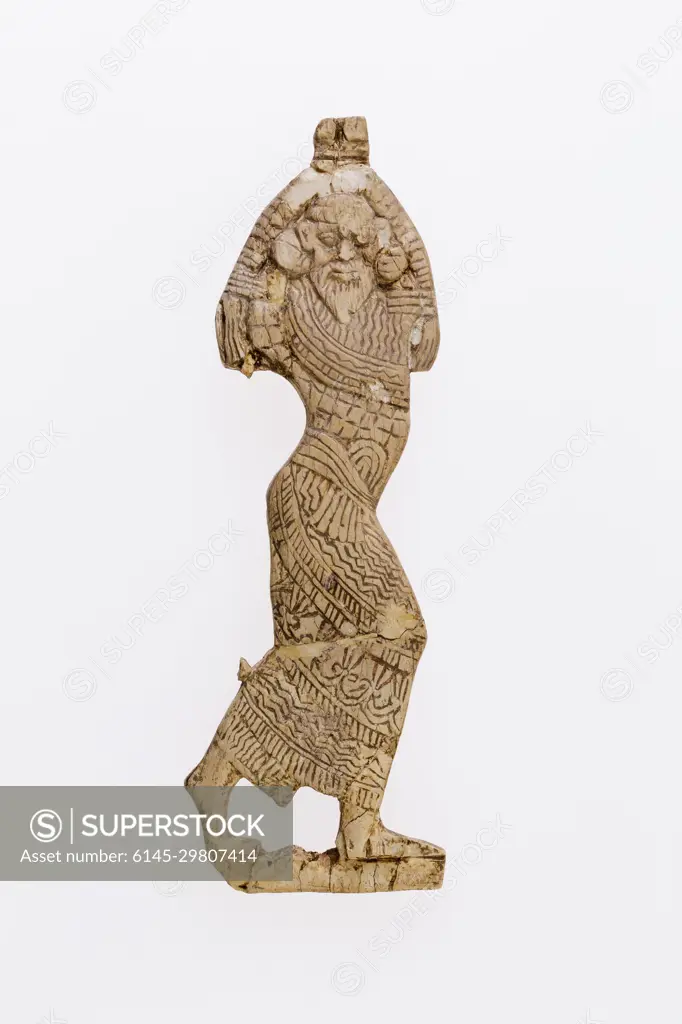
SuperStock offers millions of photos, videos, and stock assets to creatives around the world. This image of Figure of an Asiatic captive ca. 1295-1070 B.C. New Kingdom, Ramesside This ivory depicts a fettered captive. His pointed beard, facial creases, and elaborately patterned garment mark him as an Asiatic. He stands with bent legs, the lower body shown in profile facing to his left, the upper body and face presented in frontal view.Ivory inlays were often used to decorate thrones and chairs. However, the frontal depiction of the foreigner finds its closest comparison a footstool found in Tutankhamuns tomb (JdE 62044). There, a row of bound captives decorates the sides of the footstool, in which two are depicted frontally. Resting his feet on such images, the king would express in a visually brutal fashion his dominion over other lands.. Figure of an Asiatic captive. ca. 1295-1070 B.C.. Ivory, red and pink pigment, white ground. New Kingdom, Ramesside. From Egypt. Dynasty 19-20 by Piemags/PL Photography Limited is available for licensing today.
Looking for a license?
Click here, and we'll help you find it! Questions? Just ask!
Click here, and we'll help you find it! Questions? Just ask!
DETAILS
Image Number: 6145-29807414Royalty FreeCredit Line:Piemags/PL Photography Limited/SuperStockCollection:PL Photography Limited Contributor:Piemags Model Release:NoProperty Release:NoResolution:2667×4000