Female head ca. 8th-7th century B.C. Assyrian This carved head was found in a storage room in Fort Shalmaneser, a royal building at Nimrud that was used to store booty and tribute collected by the Assyrians while on military campaign. Originally, this piece may have been part of a composite statuette made of various materials and overlaid with gold foil. The surface is heavily worn and the ivory has split vertically down the face. The large eye sockets were intended to hold colored inlays, as were the rectangular cavities in the wig, although these no longer survive. Traces of a choker, a short necklace worn by women in ancient Near Eastern art, can be seen carved in relief on the neck. The figures beardlessness and the choker suggest this is a female depiction, although it is not clear whether a woman or a deity is represented.Built by the Assyrian king Ashurnasirpal II, the palaces and storerooms of Nimrud housed thousands of pieces of carved ivory. Most of the ivories served as fur
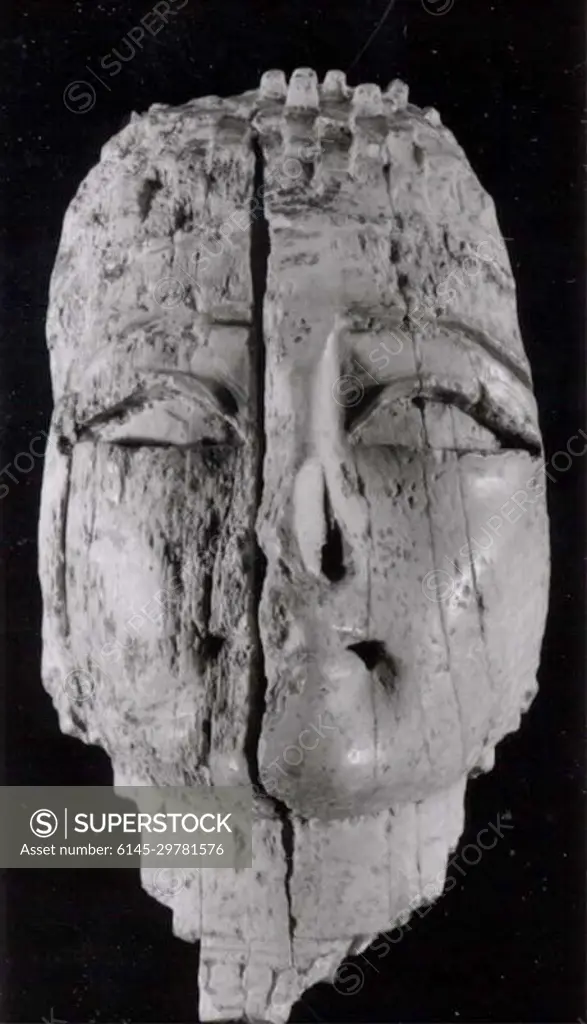
SuperStock offers millions of photos, videos, and stock assets to creatives around the world. This image of Female head ca. 8th-7th century B.C. Assyrian This carved head was found in a storage room in Fort Shalmaneser, a royal building at Nimrud that was used to store booty and tribute collected by the Assyrians while on military campaign. Originally, this piece may have been part of a composite statuette made of various materials and overlaid with gold foil. The surface is heavily worn and the ivory has split vertically down the face. The large eye sockets were intended to hold colored inlays, as were the rectangular cavities in the wig, although these no longer survive. Traces of a choker, a short necklace worn by women in ancient Near Eastern art, can be seen carved in relief on the neck. The figures beardlessness and the choker suggest this is a female depiction, although it is not clear whether a woman or a deity is represented.Built by the Assyrian king Ashurnasirpal II, the palaces and storerooms of Nimrud housed thousands of pieces of carved ivory. Most of the ivories served as fur by Piemags/PL Photography Limited is available for licensing today.
Looking for a license?
Click here, and we'll help you find it! Questions? Just ask!
Click here, and we'll help you find it! Questions? Just ask!
DETAILS
Image Number: 6145-29781576Royalty FreeCredit Line:Piemags/PL Photography Limited/SuperStockCollection:PL Photography Limited Contributor:Piemags Model Release:NoProperty Release:NoResolution:459×800