Ewer (water pitcher), late 12th-early 13th century, before 1220, 13 in. (33.02 cm), Glazed stonepaste with golden luster-painted decoration, Kashan ware, Iran, Seljuk period (1037- c. 1193), After the Seljuk Turks arrived from central Asia, Iranian ceramic production accelerated dramatically, resulting in a vast array of new shapes, styles, and techniques. Among the most spectacular Seljuk pottery was lusterware, which actually was a revival of the Abbasid luster painting that originated around Baghdad during the ninth century. Luster was used to imitate the dazzle of gold in ceramic decor. Themes based on the princely cycle enthroned personages, conversing couples, or riders incorporated with ornate background patterns and calligraphy typically decorated pieces such as this ewer.
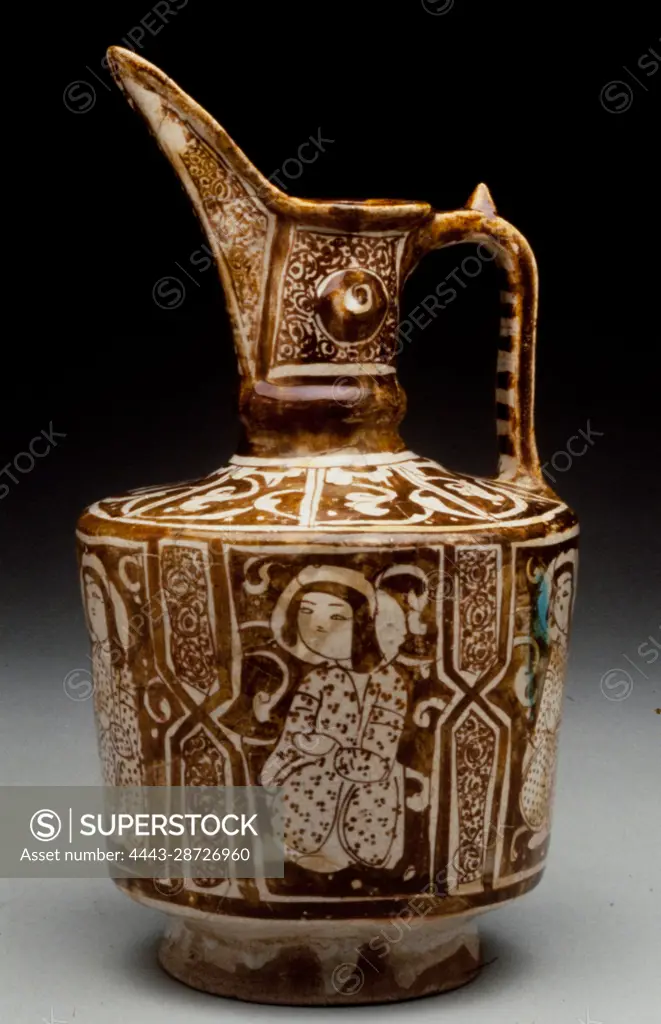
SuperStock offers millions of photos, videos, and stock assets to creatives around the world. This image of Ewer (water pitcher), late 12th-early 13th century, before 1220, 13 in. (33.02 cm), Glazed stonepaste with golden luster-painted decoration, Kashan ware, Iran, Seljuk period (1037- c. 1193), After the Seljuk Turks arrived from central Asia, Iranian ceramic production accelerated dramatically, resulting in a vast array of new shapes, styles, and techniques. Among the most spectacular Seljuk pottery was lusterware, which actually was a revival of the Abbasid luster painting that originated around Baghdad during the ninth century. Luster was used to imitate the dazzle of gold in ceramic decor. Themes based on the princely cycle enthroned personages, conversing couples, or riders incorporated with ornate background patterns and calligraphy typically decorated pieces such as this ewer. by Artokoloro is available for licensing today.
Looking for a license?
Click here, and we'll help you find it! Questions? Just ask!
Click here, and we'll help you find it! Questions? Just ask!
DETAILS
Image Number: 4443-28726960Rights ManagedCredit Line:Artokoloro/SuperStockCollection:Artokoloro Model Release:NoProperty Release:NoResolution:3409×5281