Ewer 12th-13th century This earthenware pitcher was excavated from Nishapur in eastern Iran along with several other unglazed vessels (including 36.20.7 and 36.20.8). It provides a good example of one technique used at the site to create vessels with complex shapes. Like the other unglazed pieces found alongside it, this piece was made in several parts. Its bulbous body is composed of casts from two hemispherical molds that had been stamped with impressions. These impressions created the raised repeat patterns that decorate this part of the surface. The two hemispherical parts were then joined with a binding medium of wet clay. This join is still clearly visible in the band of smoothed clay that runs across the center of the body. After these two pieces were connected, the undecorated neck and handle were thrown on the potters wheel and attached to the molded body.. Ewer 449058
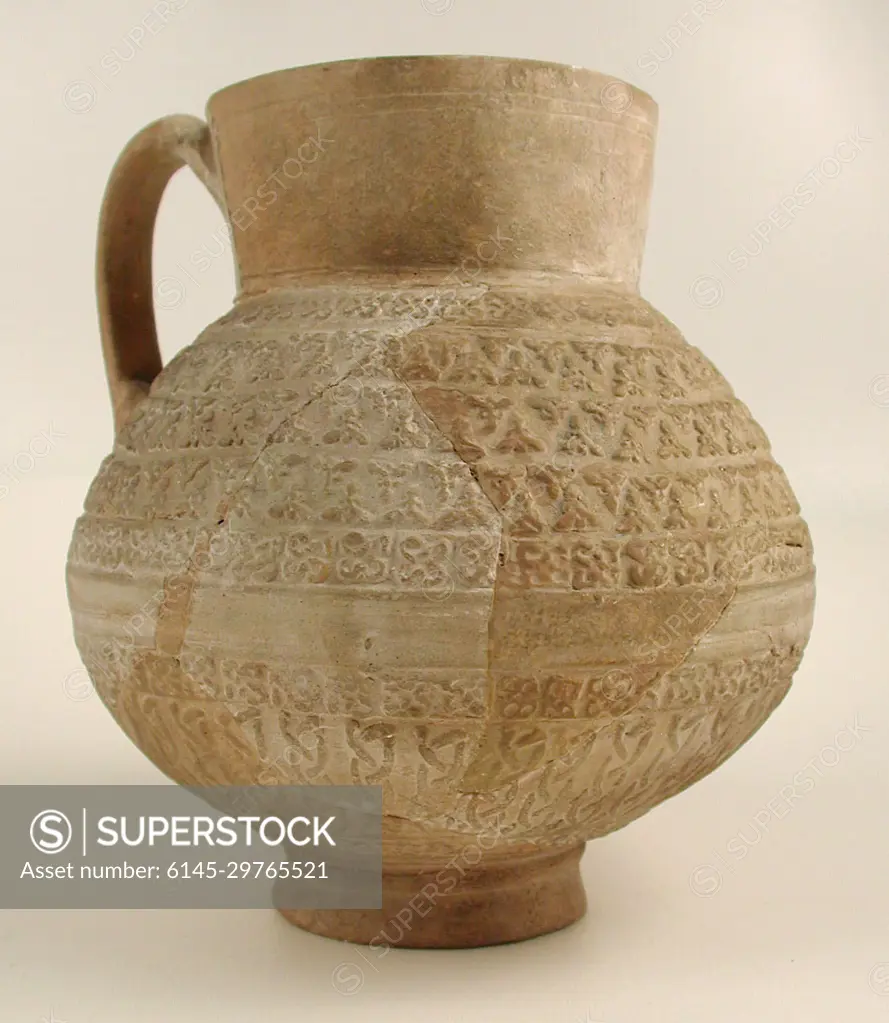
SuperStock offers millions of photos, videos, and stock assets to creatives around the world. This image of Ewer 12th-13th century This earthenware pitcher was excavated from Nishapur in eastern Iran along with several other unglazed vessels (including 36.20.7 and 36.20.8). It provides a good example of one technique used at the site to create vessels with complex shapes. Like the other unglazed pieces found alongside it, this piece was made in several parts. Its bulbous body is composed of casts from two hemispherical molds that had been stamped with impressions. These impressions created the raised repeat patterns that decorate this part of the surface. The two hemispherical parts were then joined with a binding medium of wet clay. This join is still clearly visible in the band of smoothed clay that runs across the center of the body. After these two pieces were connected, the undecorated neck and handle were thrown on the potters wheel and attached to the molded body.. Ewer 449058 by Piemags/PL Photography Limited is available for licensing today.
Looking for a license?
Click here, and we'll help you find it! Questions? Just ask!
Click here, and we'll help you find it! Questions? Just ask!
DETAILS
Image Number: 6145-29765521Royalty FreeCredit Line:Piemags/PL Photography Limited/SuperStockCollection:PL Photography Limited Contributor:Piemags Model Release:NoProperty Release:NoResolution:1380×1588