Ewer, 8th-9th century, 9-1/4 x 7-1/2 x 7-1/2 in. (23.5 x 19.1 x 19.1 cm), Huangpu ware Stoneware with dark-brown glaze, China, 8th-9th century, This well-proportioned, globular shaped ewer stands on a solid foot. It has a short, straight spout and a handle of joined double strands that arcs between shoulder and lip. The overall effect is pleasing: a simple robust shape combined with a thick, dark uniform glaze. Such ewers made their debut in the Sui dynasty (586-618), supplanting the 'chicken-head ewers' and their descendants. Some of these vessels were used in the making of tea which, by the late Tang dynasty (618-906), had become a popular beverage. The ewers were used not for steeping tea, but as pitchers for dispersing hot water into individual tea bowls where it was whisked with dried powdered tea leaves.
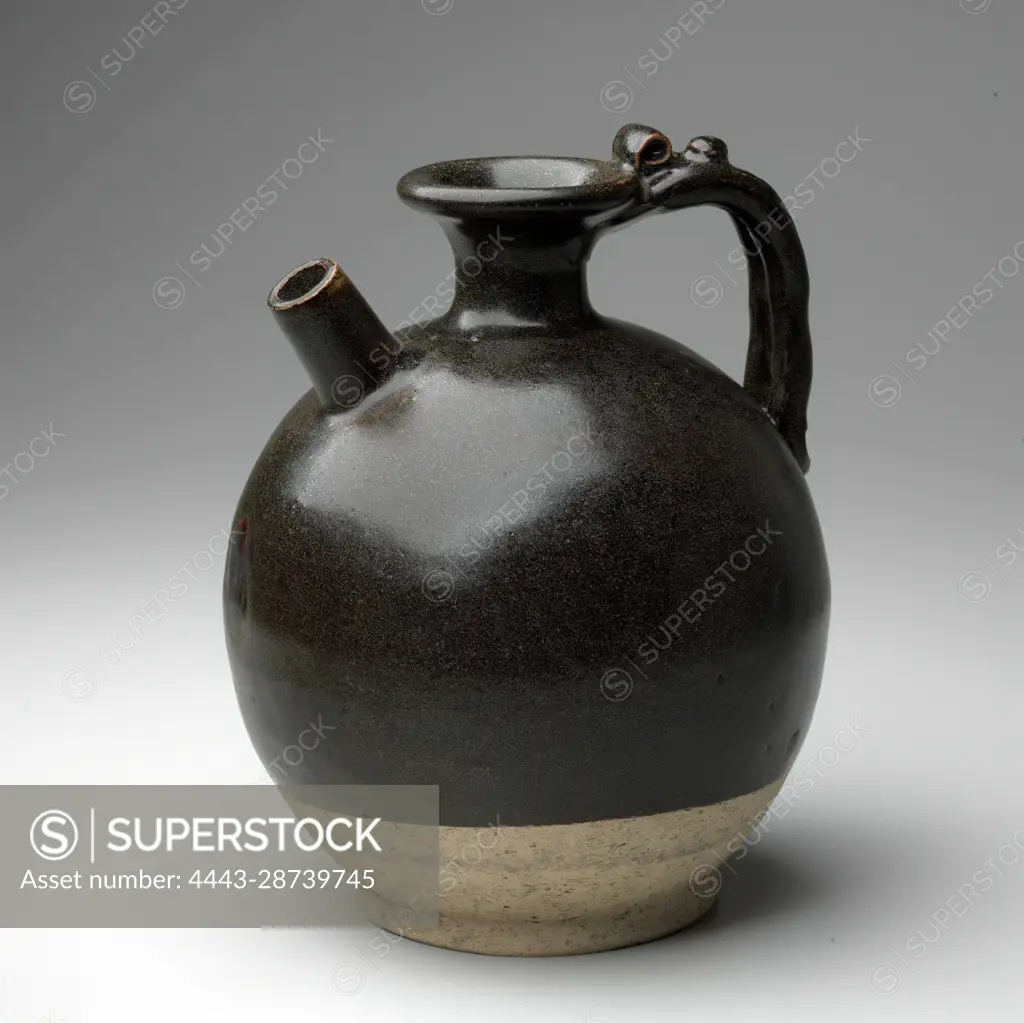
SuperStock offers millions of photos, videos, and stock assets to creatives around the world. This image of Ewer, 8th-9th century, 9-1/4 x 7-1/2 x 7-1/2 in. (23.5 x 19.1 x 19.1 cm), Huangpu ware Stoneware with dark-brown glaze, China, 8th-9th century, This well-proportioned, globular shaped ewer stands on a solid foot. It has a short, straight spout and a handle of joined double strands that arcs between shoulder and lip. The overall effect is pleasing: a simple robust shape combined with a thick, dark uniform glaze. Such ewers made their debut in the Sui dynasty (586-618), supplanting the 'chicken-head ewers' and their descendants. Some of these vessels were used in the making of tea which, by the late Tang dynasty (618-906), had become a popular beverage. The ewers were used not for steeping tea, but as pitchers for dispersing hot water into individual tea bowls where it was whisked with dried powdered tea leaves. by Artokoloro is available for licensing today.
Looking for a license?
Click here, and we'll help you find it! Questions? Just ask!
Click here, and we'll help you find it! Questions? Just ask!
DETAILS
Image Number: 4443-28739745Rights ManagedCredit Line:Artokoloro/SuperStockCollection:Artokoloro Model Release:NoProperty Release:NoResolution:4570×4567