Ewer with Molded Inscriptions, Animals, and Dancers last quarter 11th or 12th century The choral dance displayed on this ewer is not uncommon on Seljuq stonepaste molded wares. Choral dances performed at the time included the mystic dances of the Sufi practice of sama and those related to Zoroastrian worship rituals. This depiction, however, more probably evokes courtly scenes, where dances were performed as a mundane entertainment for prince and nobility. The inscription mentions the name of the potter, Abu Ahmad Qassai, which is an unusual occurrence on early monochrome stonepaste, and points to the fact that this was a specialized and highly regarded form of production.. Ewer with Molded Inscriptions, Animals, and Dancers. last quarter 11th or 12th century. Stonepaste; molded, monochrome glazed. Attributed to Iran. Ceramics
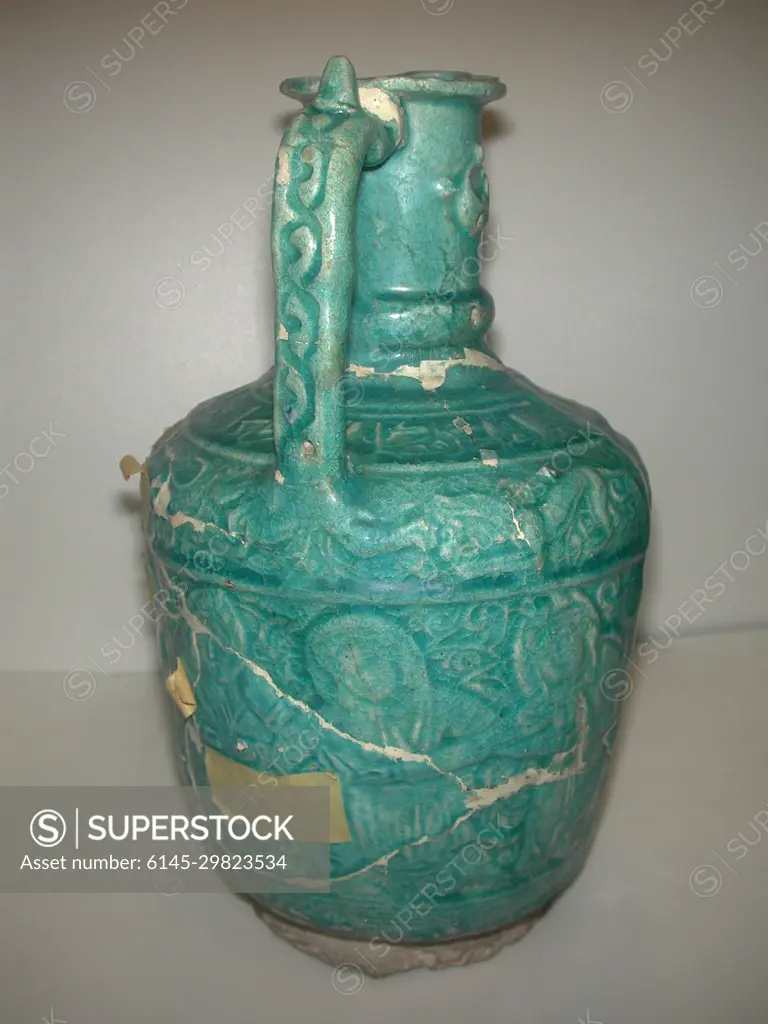
SuperStock offers millions of photos, videos, and stock assets to creatives around the world. This image of Ewer with Molded Inscriptions, Animals, and Dancers last quarter 11th or 12th century The choral dance displayed on this ewer is not uncommon on Seljuq stonepaste molded wares. Choral dances performed at the time included the mystic dances of the Sufi practice of sama and those related to Zoroastrian worship rituals. This depiction, however, more probably evokes courtly scenes, where dances were performed as a mundane entertainment for prince and nobility. The inscription mentions the name of the potter, Abu Ahmad Qassai, which is an unusual occurrence on early monochrome stonepaste, and points to the fact that this was a specialized and highly regarded form of production.. Ewer with Molded Inscriptions, Animals, and Dancers. last quarter 11th or 12th century. Stonepaste; molded, monochrome glazed. Attributed to Iran. Ceramics by Piemags/PL Photography Limited is available for licensing today.
Looking for a license?
Click here, and we'll help you find it! Questions? Just ask!
Click here, and we'll help you find it! Questions? Just ask!
DETAILS
Image Number: 6145-29823534Royalty FreeCredit Line:Piemags/PL Photography Limited/SuperStockCollection:PL Photography Limited Contributor:Piemags Model Release:NoProperty Release:NoResolution:1536×2048