Enthroned Vishnu second half of the 8th-early 9th century India This monumental sculpture—the largest in the Museum’s South Asian collection—is a rare example of the art of the Pandya dynasty, which, along with the Pallava dynasty, initiated the first great phase of temple building in South India. Vishnu sits on a lion throne in the relaxed, regal posture of lalitasana. His role in Hinduism is to restore order to the human world and to combat evils that threaten the stability of the universe. He originally held a conch (used as a battle trumpet) in his upper left hand and a war discus in his upper right, and his lower right hand was raised in abhaya-mudra. Listen to experts illuminate this artwork's story Listen Play or pause #7950. Seated Four-Armed Vishnu, Part 1 Play or pause #7950. Seated Four-Armed Vishnu, Part 2 Supported by Bloomberg Philanthropies We're sorry, the transcript for this audio track is not available at this time. We are working to make it available as soon as p
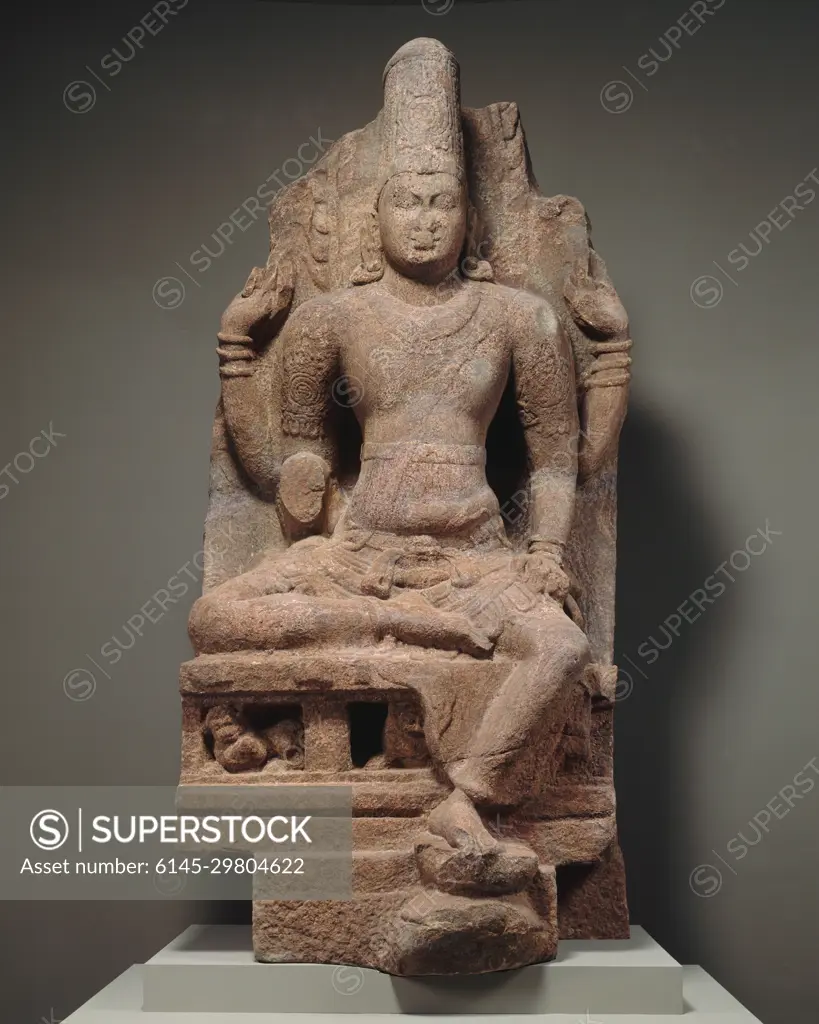
SuperStock offers millions of photos, videos, and stock assets to creatives around the world. This image of Enthroned Vishnu second half of the 8th-early 9th century India This monumental sculpture—the largest in the Museum’s South Asian collection—is a rare example of the art of the Pandya dynasty, which, along with the Pallava dynasty, initiated the first great phase of temple building in South India. Vishnu sits on a lion throne in the relaxed, regal posture of lalitasana. His role in Hinduism is to restore order to the human world and to combat evils that threaten the stability of the universe. He originally held a conch (used as a battle trumpet) in his upper left hand and a war discus in his upper right, and his lower right hand was raised in abhaya-mudra. Listen to experts illuminate this artwork's story Listen Play or pause #7950. Seated Four-Armed Vishnu, Part 1 Play or pause #7950. Seated Four-Armed Vishnu, Part 2 Supported by Bloomberg Philanthropies We're sorry, the transcript for this audio track is not available at this time. We are working to make it available as soon as p by Piemags/PL Photography Limited is available for licensing today.
Looking for a license?
Click here, and we'll help you find it! Questions? Just ask!
Click here, and we'll help you find it! Questions? Just ask!
DETAILS
Image Number: 6145-29804622Royalty FreeCredit Line:Piemags/PL Photography Limited/SuperStockCollection:PL Photography Limited Contributor:Piemags Model Release:NoProperty Release:NoResolution:1600×2000