Embroidered Patchwork Panel ca. 14th century China This patchwork panel comprises various silk textiles, mostly satins and damasks, exquisitely embroidered with the motifs of flowers, fruit, and the occasional butterfly in a technique called needle looping. Worked in silk over gilt paper, the technique allows the luminous gold to show where loops are intentionally skipped. The patches in this Chinese example seem to have been constructed and embroidered as self-contained units that were stitched together to form a larger panel. By contrast, Korean patchwork cloths are usually fashioned from fragments of unadorned, rather than embroidered fabrics, though there are non-patchwork bojagi fashioned from a single cloth with embroidered decoration. This textile was probably used in a Buddhist context but its precise function is unknown. A comparable example, traditionally associated with the Chinese monk Wuxue Zuyuan (1226-1286), resides in the collection of the Buddhist temple Engakuji in Ka
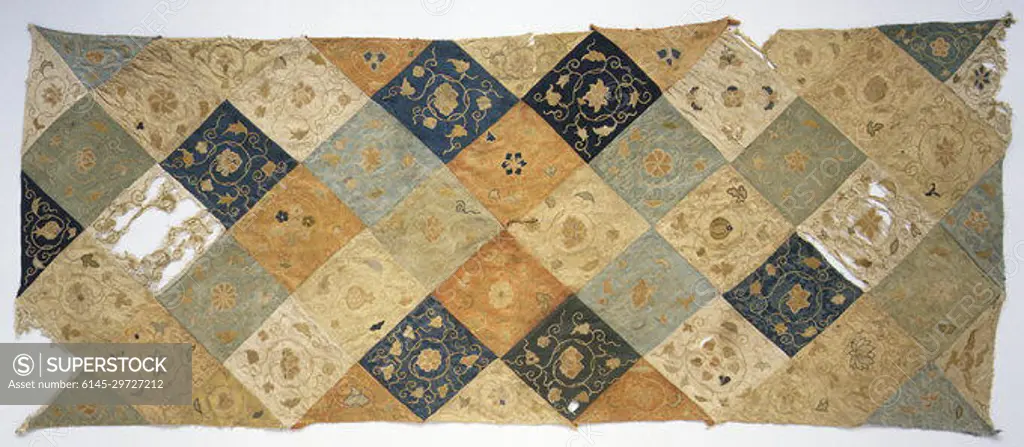
SuperStock offers millions of photos, videos, and stock assets to creatives around the world. This image of Embroidered Patchwork Panel ca. 14th century China This patchwork panel comprises various silk textiles, mostly satins and damasks, exquisitely embroidered with the motifs of flowers, fruit, and the occasional butterfly in a technique called needle looping. Worked in silk over gilt paper, the technique allows the luminous gold to show where loops are intentionally skipped. The patches in this Chinese example seem to have been constructed and embroidered as self-contained units that were stitched together to form a larger panel. By contrast, Korean patchwork cloths are usually fashioned from fragments of unadorned, rather than embroidered fabrics, though there are non-patchwork bojagi fashioned from a single cloth with embroidered decoration. This textile was probably used in a Buddhist context but its precise function is unknown. A comparable example, traditionally associated with the Chinese monk Wuxue Zuyuan (1226-1286), resides in the collection of the Buddhist temple Engakuji in Ka by Piemags/PL Photography Limited is available for licensing today.
Looking for a license?
Click here, and we'll help you find it! Questions? Just ask!
Click here, and we'll help you find it! Questions? Just ask!
DETAILS
Image Number: 6145-29727212Royalty FreeCredit Line:Piemags/PL Photography Limited/SuperStockCollection:PL Photography Limited Contributor:Piemags Model Release:NoProperty Release:NoResolution:680×297