Eight-Pointed Star Tunic 1460-1540 Inca Inca tunics, called unku in the Quechua language of the Andes, are usually longer than they are wide. They were made from a single piece of cloth, the loom length being the width of the shirt--that is, they were woven sideways, with the warp in the short direction, and then folded over. The sides were sewn together, leaving holes for the arms at the top. The slot for the neck was woven with discontinuous warps. Fine tapestry tunics like the present example were items of great prestige and value during Inca times. Their ownership and use were strictly controlled by the state. They were commonly bestowed as royal gifts by the emperor to reward military achievements or political service or to create bonds of loyalty. Inca tunics convey a strong sense of order and rigid organization in the layout of the designs and standardization in the choice of motifs. The grid arrangement on this example is very common, with squares containing eight-pointed stars
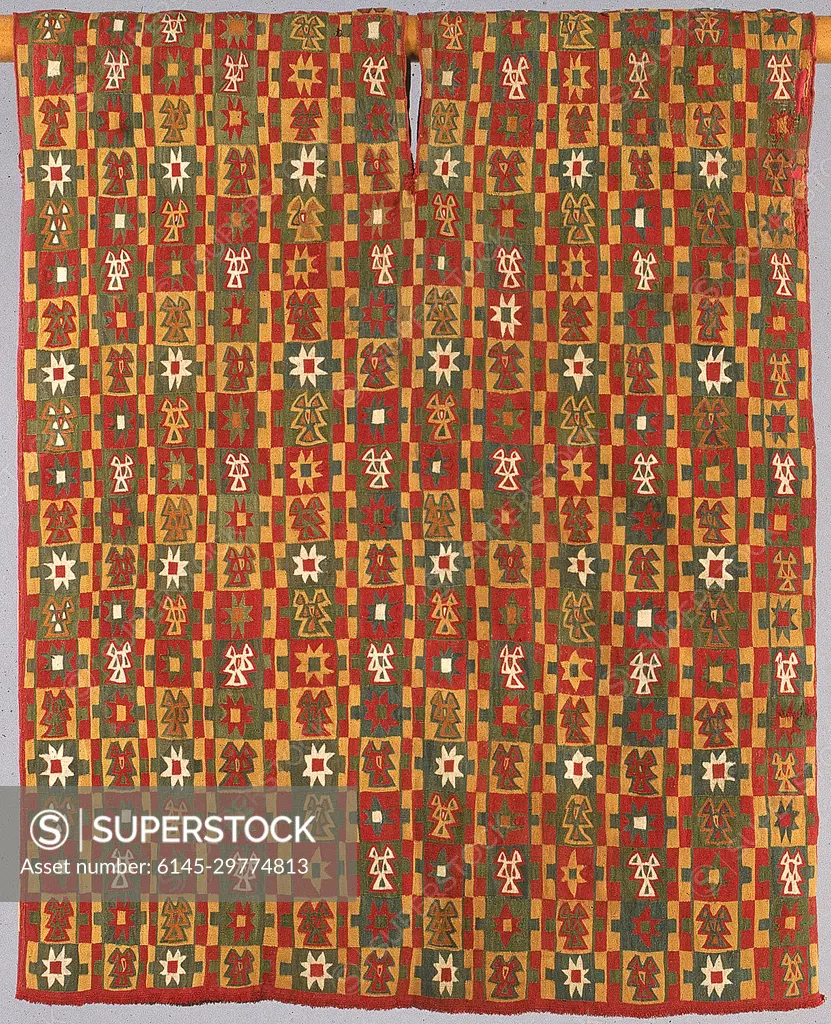
SuperStock offers millions of photos, videos, and stock assets to creatives around the world. This image of Eight-Pointed Star Tunic 1460-1540 Inca Inca tunics, called unku in the Quechua language of the Andes, are usually longer than they are wide. They were made from a single piece of cloth, the loom length being the width of the shirt--that is, they were woven sideways, with the warp in the short direction, and then folded over. The sides were sewn together, leaving holes for the arms at the top. The slot for the neck was woven with discontinuous warps. Fine tapestry tunics like the present example were items of great prestige and value during Inca times. Their ownership and use were strictly controlled by the state. They were commonly bestowed as royal gifts by the emperor to reward military achievements or political service or to create bonds of loyalty. Inca tunics convey a strong sense of order and rigid organization in the layout of the designs and standardization in the choice of motifs. The grid arrangement on this example is very common, with squares containing eight-pointed stars by Piemags/PL Photography Limited is available for licensing today.
Looking for a license?
Click here, and we'll help you find it! Questions? Just ask!
Click here, and we'll help you find it! Questions? Just ask!
DETAILS
Image Number: 6145-29774813Royalty FreeCredit Line:Piemags/PL Photography Limited/SuperStockCollection:PL Photography Limited Contributor:Piemags Model Release:NoProperty Release:NoResolution:1624×2000