The earliest archaeological evidence of swastika-shaped ornaments dates back to the Indus Valley Civilization of Ancient India as well as Classical Antiquity. Swastikas have also been used in various other ancient civilizations around the world. The swastika remains widely used in Indian religions, specifically in Hinduism, Buddhism, and Jainism, primarily as a tantric symbol to evoke shakti or the sacred symbol of auspiciousness. The word 'swastika' comes from the Sanskrit, literally meaning 'to be good'. Despite the use of the name swastika for the Nazi hakenkreuz or 'hook cross', the South Asian swastika has nothing to do with National Socialism or Fascism.
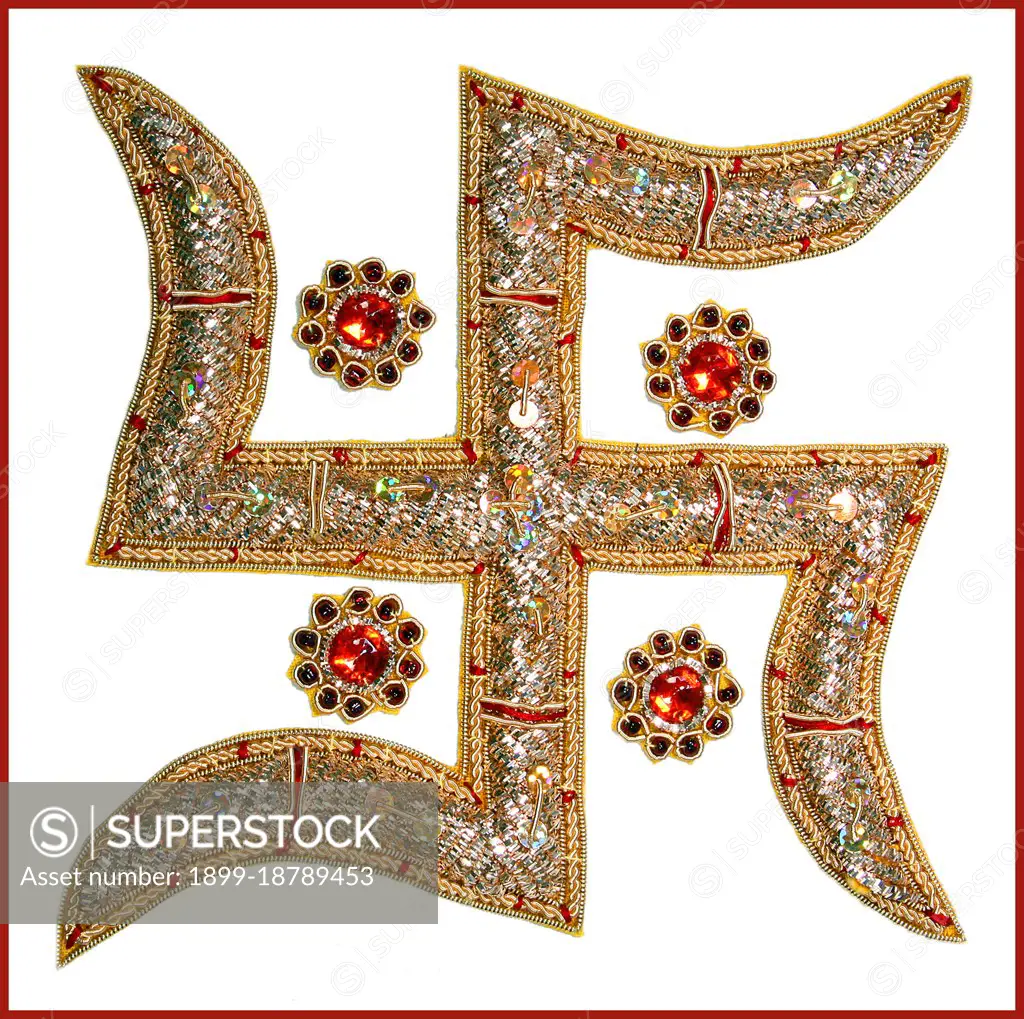
SuperStock offers millions of photos, videos, and stock assets to creatives around the world. This image of The earliest archaeological evidence of swastika-shaped ornaments dates back to the Indus Valley Civilization of Ancient India as well as Classical Antiquity. Swastikas have also been used in various other ancient civilizations around the world. The swastika remains widely used in Indian religions, specifically in Hinduism, Buddhism, and Jainism, primarily as a tantric symbol to evoke shakti or the sacred symbol of auspiciousness. The word 'swastika' comes from the Sanskrit, literally meaning 'to be good'. Despite the use of the name swastika for the Nazi hakenkreuz or 'hook cross', the South Asian swastika has nothing to do with National Socialism or Fascism. by Pictures From History/Universal Images is available for licensing today.
Looking for a license?
Click here, and we'll help you find it! Questions? Just ask!
Click here, and we'll help you find it! Questions? Just ask!
DETAILS
Image Number: 1899-18789453Rights ManagedCredit Line:Pictures From History/Universal Images/SuperStockCollection:Universal Images Contributor:Pictures From History Model Release:NoProperty Release:NoResolution:4200×4180