Dress ca. 1799 French With the opening of the Eastern markets, Indian printed cottons found their way into France. At first they were very expensive, and French manufacturers tried to copy them by printing designs with wooden blocks on cotton. The silk and wool industries objected, and numerous edicts forbidding the importation or manufacture of printed textiles were issued. The edicts were universally ignored, and by 1759 all restrictions had been removed. Factories for the production of printed cottons opened in Nantes, Rouen, and Lyons, but the most famous center was at Jouy. Its founder, Christophe-Philippe Oberkampf, developed a system of fast-color dyeing and invented the copperplate printing process. The engraver Jean-Baptiste Huet, the principal designer for the Jouy factory between 1783 and 1811, probably designed the pattern on this toile de Jouy day dress, which has been identified as les bonnes herbes.. Dress 82637
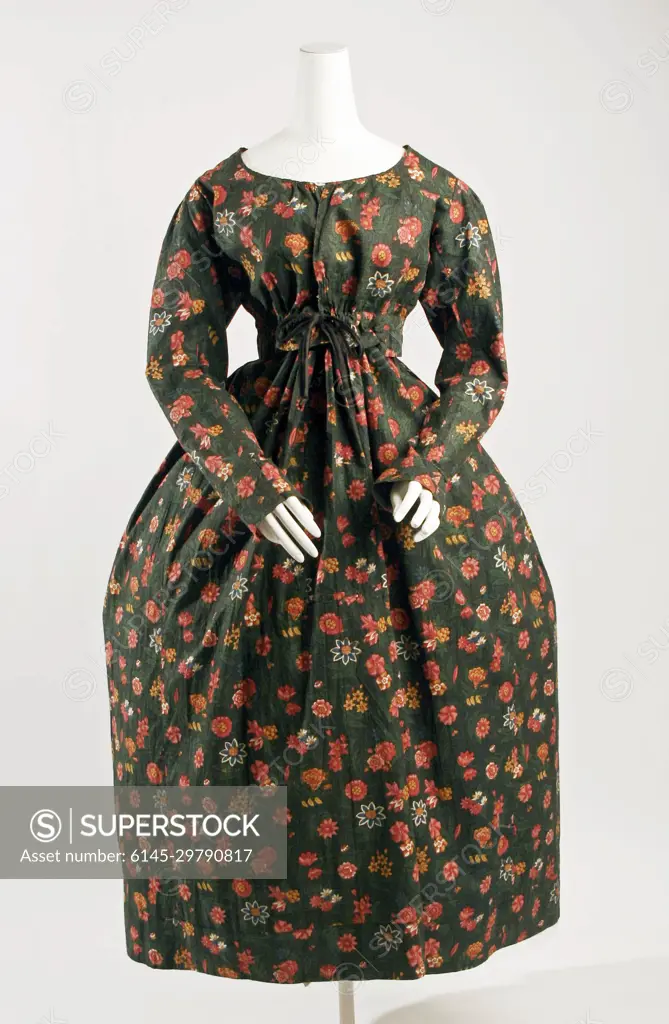
SuperStock offers millions of photos, videos, and stock assets to creatives around the world. This image of Dress ca. 1799 French With the opening of the Eastern markets, Indian printed cottons found their way into France. At first they were very expensive, and French manufacturers tried to copy them by printing designs with wooden blocks on cotton. The silk and wool industries objected, and numerous edicts forbidding the importation or manufacture of printed textiles were issued. The edicts were universally ignored, and by 1759 all restrictions had been removed. Factories for the production of printed cottons opened in Nantes, Rouen, and Lyons, but the most famous center was at Jouy. Its founder, Christophe-Philippe Oberkampf, developed a system of fast-color dyeing and invented the copperplate printing process. The engraver Jean-Baptiste Huet, the principal designer for the Jouy factory between 1783 and 1811, probably designed the pattern on this toile de Jouy day dress, which has been identified as les bonnes herbes.. Dress 82637 by Piemags/PL Photography Limited is available for licensing today.
Looking for a license?
Click here, and we'll help you find it! Questions? Just ask!
Click here, and we'll help you find it! Questions? Just ask!
DETAILS
Image Number: 6145-29790817Royalty FreeCredit Line:Piemags/PL Photography Limited/SuperStockCollection:PL Photography Limited Contributor:Piemags Model Release:NoProperty Release:NoResolution:1760×2692