Dragons, Mulberry paper (kozo washi) treated with fermented persimmon tannin (kakishibu), and silk threads (itoire), Japanese dragons (ryu) originate from Chinese dragons and represent a wingless serpent with three-clawed feet. Each part of the body is a composite of nine different animals: Horns - Deer, Head - Camel, Eyes - Rabbit, Neck - Snake, Abdomen - Cockle, Scales - Carp, Claws - Eagle, Paws - Tiger, and Ears - Ox. Depictions of dragons are symbols of strength, courage, and magic. These five dragons are shown flying in the sky. Silk threads are added to support the stencil structure., Japan, mid 18th - early 19th century, textile designs, Katagami, Katagami
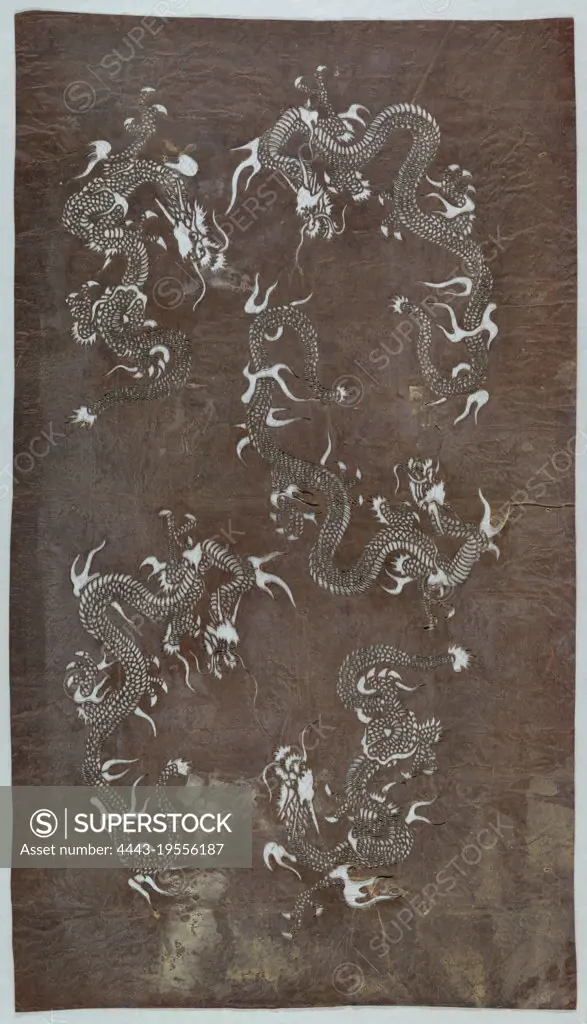
SuperStock offers millions of photos, videos, and stock assets to creatives around the world. This image of Dragons, Mulberry paper (kozo washi) treated with fermented persimmon tannin (kakishibu), and silk threads (itoire), Japanese dragons (ryu) originate from Chinese dragons and represent a wingless serpent with three-clawed feet. Each part of the body is a composite of nine different animals: Horns - Deer, Head - Camel, Eyes - Rabbit, Neck - Snake, Abdomen - Cockle, Scales - Carp, Claws - Eagle, Paws - Tiger, and Ears - Ox. Depictions of dragons are symbols of strength, courage, and magic. These five dragons are shown flying in the sky. Silk threads are added to support the stencil structure., Japan, mid 18th - early 19th century, textile designs, Katagami, Katagami by Artokoloro is available for licensing today.
Looking for a license?
Click here, and we'll help you find it! Questions? Just ask!
Click here, and we'll help you find it! Questions? Just ask!
DETAILS
Image Number: 4443-19556187Rights ManagedCredit Line:Artokoloro/SuperStockCollection:Artokoloro Model Release:NoProperty Release:NoResolution:4016×7000