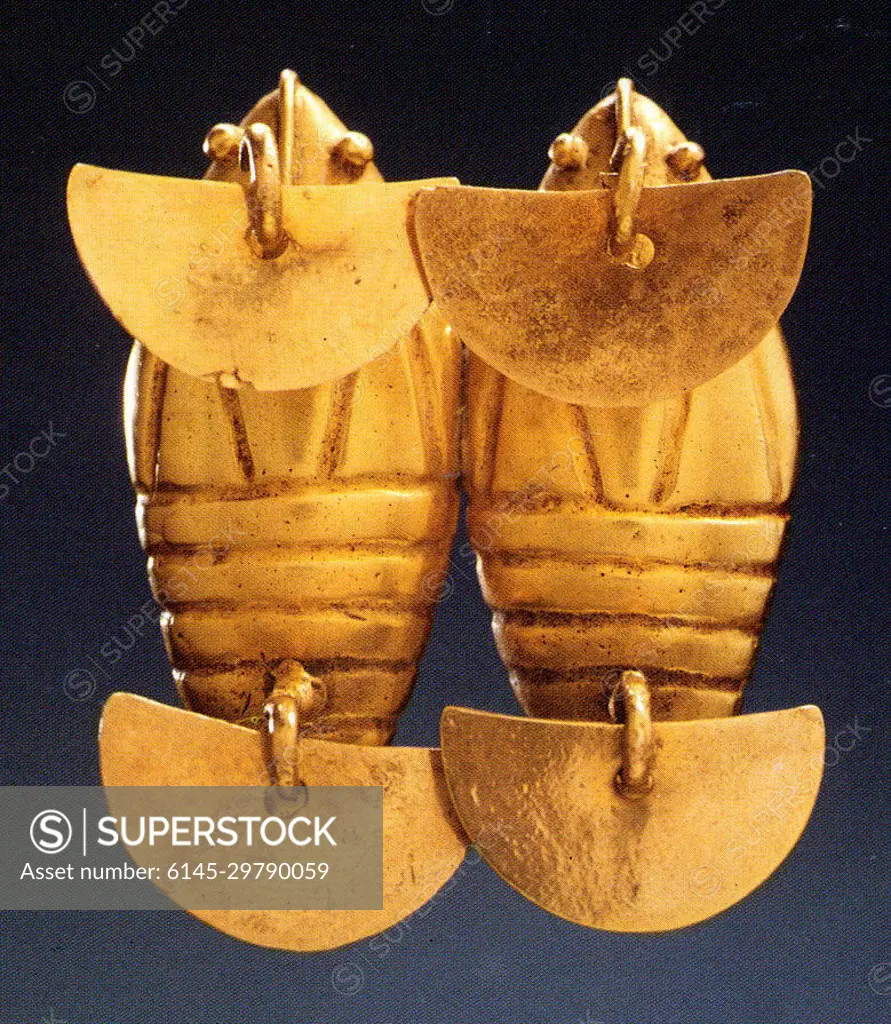
Double Insect Pendant 300 B.C.-A.D. 700 Early Quimbaya Displaying two insects at the pupa stage of their lives, between larvae and adults, this pendant was made by metalworkers in the middle Cauca Valley and Central Cordillera of Colombia. Their work was part of the Early Quimbaya tradition, which spanned from 300 B.C. to A.D. 700. "Quimbaya" refers to the people who lived on the eastern side of the Cauca River at least in the 16th century. In recent centuries, antiquarians and archaeologists expanded the name to encompass the production of materials, particularly metals in Early and Late phases, over this wider geographic area beginning around 300 B.C. (for more on the construction of the Quimbaya tradition, please see Metropolitan Museum of Art 1979.206.554). This pendant is notable for having four hooks and danglers or plaques that connect to the insects bodies. Metalworkers created the pendant through a combination of lost-wax casting and hammering. It is likely made of gold or a
SuperStock offers millions of photos, videos, and stock assets to creatives around the world. This image of Double Insect Pendant 300 B.C.-A.D. 700 Early Quimbaya Displaying two insects at the pupa stage of their lives, between larvae and adults, this pendant was made by metalworkers in the middle Cauca Valley and Central Cordillera of Colombia. Their work was part of the Early Quimbaya tradition, which spanned from 300 B.C. to A.D. 700. "Quimbaya" refers to the people who lived on the eastern side of the Cauca River at least in the 16th century. In recent centuries, antiquarians and archaeologists expanded the name to encompass the production of materials, particularly metals in Early and Late phases, over this wider geographic area beginning around 300 B.C. (for more on the construction of the Quimbaya tradition, please see Metropolitan Museum of Art 1979.206.554). This pendant is notable for having four hooks and danglers or plaques that connect to the insects bodies. Metalworkers created the pendant through a combination of lost-wax casting and hammering. It is likely made of gold or a by Piemags/PL Photography Limited is available for licensing today.
Looking for a license?
Click here, and we'll help you find it! Questions? Just ask!
Click here, and we'll help you find it! Questions? Just ask!
DETAILS
Image Number: 6145-29790059Royalty FreeCredit Line:Piemags/PL Photography Limited/SuperStockCollection:PL Photography Limited Contributor:Piemags Model Release:NoProperty Release:NoResolution:779×895