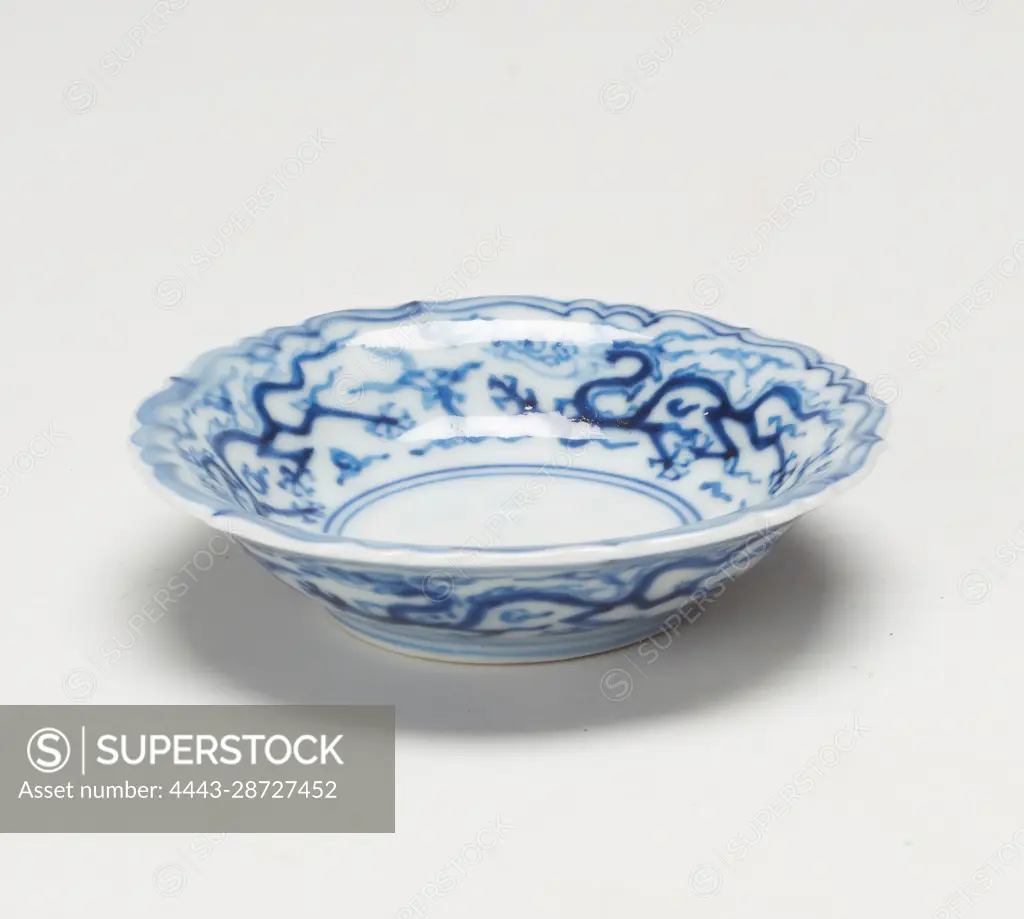
Dish, 16th century, 9/16 x 2 7/8 x 2 7/8 in. (1.43 x 7.3 x 7.3 cm), Glazed porcelain, China, 16th century, Emperor Jiajing was a devout Daoist and Daoist symbolism became a common decorative element during his reign. In Daoist mythology, dragons were symbolic of yang, the male principle, spring, rain, and the East. This small dish shows dragons cavorting amid clouds. A unique feature for Jiajing period is the use of huiqing or Mohammedan blue,’ a form of imported cobalt which is purplish-blue in color tone. However, this form of cobalt tended to smudge during the firing process. By mixing imported cobalt with cobalt was mined locally, potters were able to produce the bright blue seen here, while still maintaining the crisp quality of their painted designs.
SuperStock offers millions of photos, videos, and stock assets to creatives around the world. This image of Dish, 16th century, 9/16 x 2 7/8 x 2 7/8 in. (1.43 x 7.3 x 7.3 cm), Glazed porcelain, China, 16th century, Emperor Jiajing was a devout Daoist and Daoist symbolism became a common decorative element during his reign. In Daoist mythology, dragons were symbolic of yang, the male principle, spring, rain, and the East. This small dish shows dragons cavorting amid clouds. A unique feature for Jiajing period is the use of huiqing or Mohammedan blue,’ a form of imported cobalt which is purplish-blue in color tone. However, this form of cobalt tended to smudge during the firing process. By mixing imported cobalt with cobalt was mined locally, potters were able to produce the bright blue seen here, while still maintaining the crisp quality of their painted designs. by Artokoloro is available for licensing today.
Looking for a license?
Click here, and we'll help you find it! Questions? Just ask!
Click here, and we'll help you find it! Questions? Just ask!
DETAILS
Image Number: 4443-28727452Rights ManagedCredit Line:Artokoloro/SuperStockCollection:Artokoloro Model Release:NoProperty Release:NoResolution:4200×3772