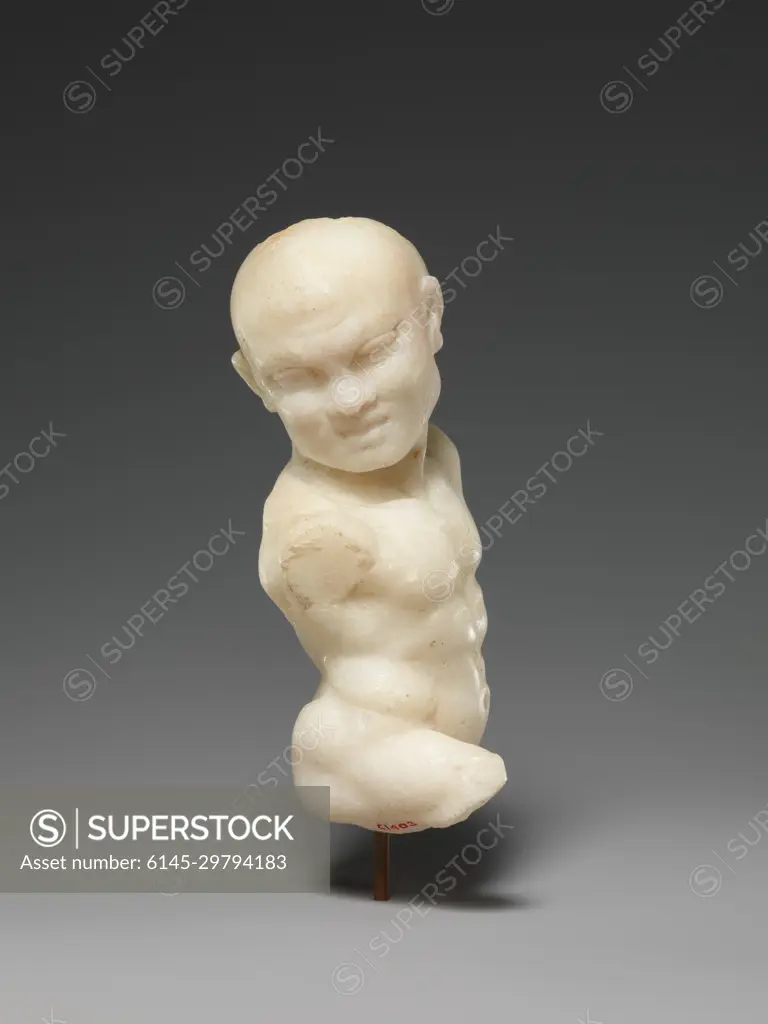
Dancing dwarf 332-150 B.C. Ptolemaic Period The marble dancing dwarf with his fine features is almost certainly from Alexandria. As in so many aspects of Ptolemaic art, the dwarf represents the convergence of different trends. Although in this instance the top of the head, arms and legs are missing, bronze statuettes of dancers and dwarf-dancers often hold castanets, and the origin of the type should probably be associated with the castanet-playing dancers hired for religious or private occasions who are noted in some Ptolemaic papyri. In Greece such dancers had long been associated with ecstatic orgiastic cults like those of Dionysus or Cybele, so it could be that such cults are sometimes involved. However, the employment of such individuals certainly was adopted for private occasions and banquets. The figure, then, might have recalled a particular occasion, or been a more general evocation of festivity.This dwarf is rendered without caricature, which suits the long Egyptian tradition
SuperStock offers millions of photos, videos, and stock assets to creatives around the world. This image of Dancing dwarf 332-150 B.C. Ptolemaic Period The marble dancing dwarf with his fine features is almost certainly from Alexandria. As in so many aspects of Ptolemaic art, the dwarf represents the convergence of different trends. Although in this instance the top of the head, arms and legs are missing, bronze statuettes of dancers and dwarf-dancers often hold castanets, and the origin of the type should probably be associated with the castanet-playing dancers hired for religious or private occasions who are noted in some Ptolemaic papyri. In Greece such dancers had long been associated with ecstatic orgiastic cults like those of Dionysus or Cybele, so it could be that such cults are sometimes involved. However, the employment of such individuals certainly was adopted for private occasions and banquets. The figure, then, might have recalled a particular occasion, or been a more general evocation of festivity.This dwarf is rendered without caricature, which suits the long Egyptian tradition by Piemags/PL Photography Limited is available for licensing today.
Looking for a license?
Click here, and we'll help you find it! Questions? Just ask!
Click here, and we'll help you find it! Questions? Just ask!
DETAILS
Image Number: 6145-29794183Royalty FreeCredit Line:Piemags/PL Photography Limited/SuperStockCollection:PL Photography Limited Contributor:Piemags Model Release:NoProperty Release:NoResolution:3001×4000