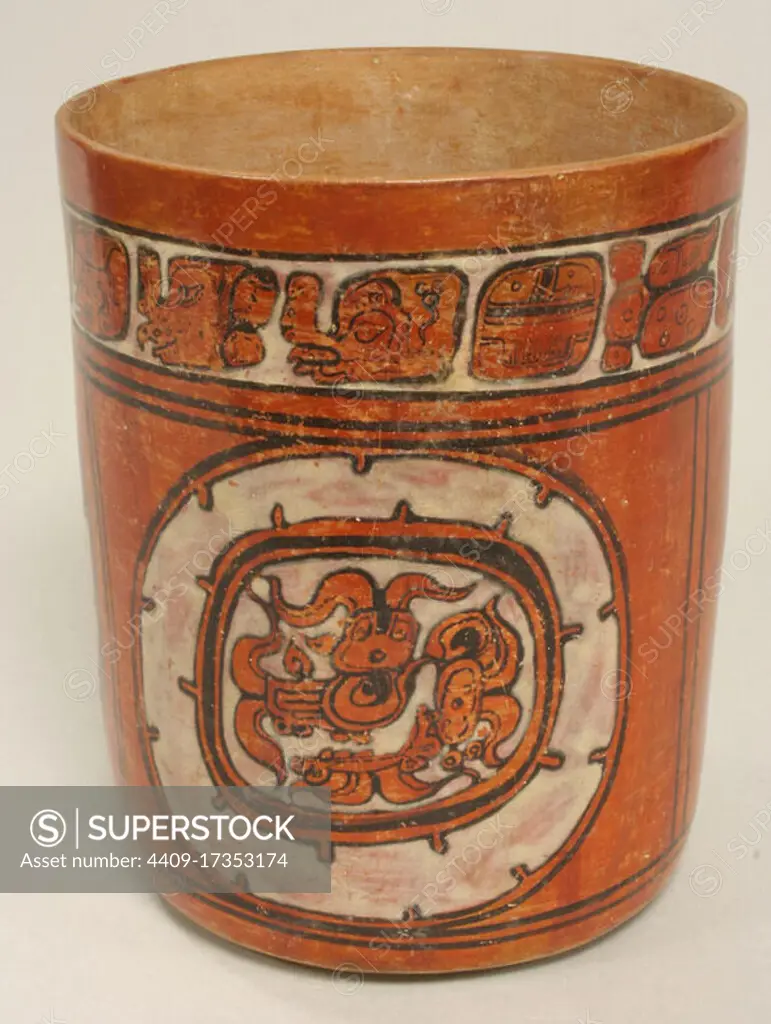
Cylindrical Vessel. Culture: Maya. Dimensions: H. 7 7/8 x Diam. 6 1/4 in. (18.1 x 15.9 cm). Date: 6th-9th century.This polychrome cylindrical vessel is identified by the text around the rim as a Classic Maya (ca. a.d. 250-900) "drinking cup." The design layout is less common than the full figure scenes and deity depictions seen on many Maya vessels. The interpretation of the well drawn profile deity head is that it may be one of many forms of a watery serpent creature, a common image in Maya art, often with smoke clouds issuing from the top, bottom, left and right side of the head. The split scroll motifs could also be read as representing vegetal forms linking the deity to agriculture, spring, and the concept of regeneration and regrowth. Museum: Metropolitan Museum of Art, New York, USA.
This asset has restrictions and cannot be purchased online. Get in touch for more details.
SuperStock offers millions of photos, videos, and stock assets to creatives around the world. This image of Cylindrical Vessel. Culture: Maya. Dimensions: H. 7 7/8 x Diam. 6 1/4 in. (18.1 x 15.9 cm). Date: 6th-9th century.This polychrome cylindrical vessel is identified by the text around the rim as a Classic Maya (ca. a.d. 250-900) "drinking cup." The design layout is less common than the full figure scenes and deity depictions seen on many Maya vessels. The interpretation of the well drawn profile deity head is that it may be one of many forms of a watery serpent creature, a common image in Maya art, often with smoke clouds issuing from the top, bottom, left and right side of the head. The split scroll motifs could also be read as representing vegetal forms linking the deity to agriculture, spring, and the concept of regeneration and regrowth. Museum: Metropolitan Museum of Art, New York, USA. by Album/Metropolitan Museum of Art, NY/Album Archivo is available for licensing today.
Looking for a license?
Click here, and we'll help you find it! Questions? Just ask!
Click here, and we'll help you find it! Questions? Just ask!
DETAILS
Image Number: 4409-17353174Rights ManagedCredit Line:Album/Metropolitan Museum of Art, NY/Album Archivo/SuperStockCollection:Album Archivo Contributor:Album / Metropolitan Museum of Art, NY Model Release:NoProperty Release:NoResolution:2650×3515