Curb Bit 2nd-1st century B.C. Thracian or Celtic The mouthpiece of this bit consists of two spindle-shaped links articulated in the middle. They are connected on either side to lyre-shaped attachments for the bridle's cheekpieces (partly broken). The two shanks, from which hooks hang for the reins, are connected by a horizontal bar acting as a curb. The curb bar would have pressed the horses chin when reins were pulled back. The large lyre-shaped elements helped indicate the direction to the horse and held the bit in place in the mouth. The shape of these cheekpieces, as well as the rein hooks, are inspired from Hellenistic Greek and Macedonian bits, from which they evolved.This object is also an example of the earliest type of curb bit to have been invented. It seems to have developed in the Balkans among Thracian and Scordisci (Eastern Celts) cultures between the 3rd and 1st century B.C. These populations were known for their great equestrian skills, especially at war. Examples of t
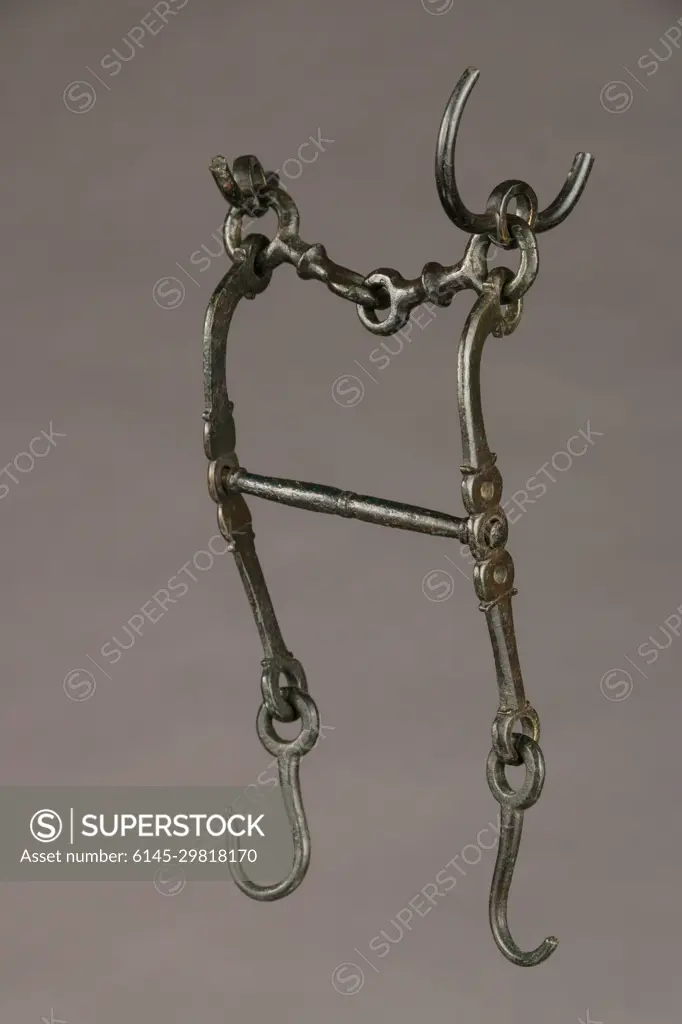
SuperStock offers millions of photos, videos, and stock assets to creatives around the world. This image of Curb Bit 2nd-1st century B.C. Thracian or Celtic The mouthpiece of this bit consists of two spindle-shaped links articulated in the middle. They are connected on either side to lyre-shaped attachments for the bridle's cheekpieces (partly broken). The two shanks, from which hooks hang for the reins, are connected by a horizontal bar acting as a curb. The curb bar would have pressed the horses chin when reins were pulled back. The large lyre-shaped elements helped indicate the direction to the horse and held the bit in place in the mouth. The shape of these cheekpieces, as well as the rein hooks, are inspired from Hellenistic Greek and Macedonian bits, from which they evolved.This object is also an example of the earliest type of curb bit to have been invented. It seems to have developed in the Balkans among Thracian and Scordisci (Eastern Celts) cultures between the 3rd and 1st century B.C. These populations were known for their great equestrian skills, especially at war. Examples of t by Piemags/PL Photography Limited is available for licensing today.
Looking for a license?
Click here, and we'll help you find it! Questions? Just ask!
Click here, and we'll help you find it! Questions? Just ask!
DETAILS
Image Number: 6145-29818170Royalty FreeCredit Line:Piemags/PL Photography Limited/SuperStockCollection:PL Photography Limited Contributor:Piemags Model Release:NoProperty Release:NoResolution:2667×4000