Cuneiform tablet: Old Babylonian balag to the mother goddess Aruru ca. 19th-16th century B.C. Babylonian Liturgical compositions were used in Mesopotamia to appease the gods. Sung or recited by lamentation priests in rituals, they were often composed in the Emesal dialect of the Sumerian language. By the time we know of these texts in writing, the Sumerian language was no longer spoken. No doubt the unusual words and sounds of Emesal liturgy added to the efficacy and appeal of these performances.This text is most likely a balag composition. The word balag - referring to a musical instrument used in ritual performances - was often written at the bottom of such texts. The bottom of this tablet is broken, but its contents are similar to those of other balags. Dedicated to the goddess Aruru, the text celebrates her power before lamenting the destruction of a city. Only the left edge of this tablet is preserved. Written on a clay tablet using the cuneiform script, the form of the signs of t
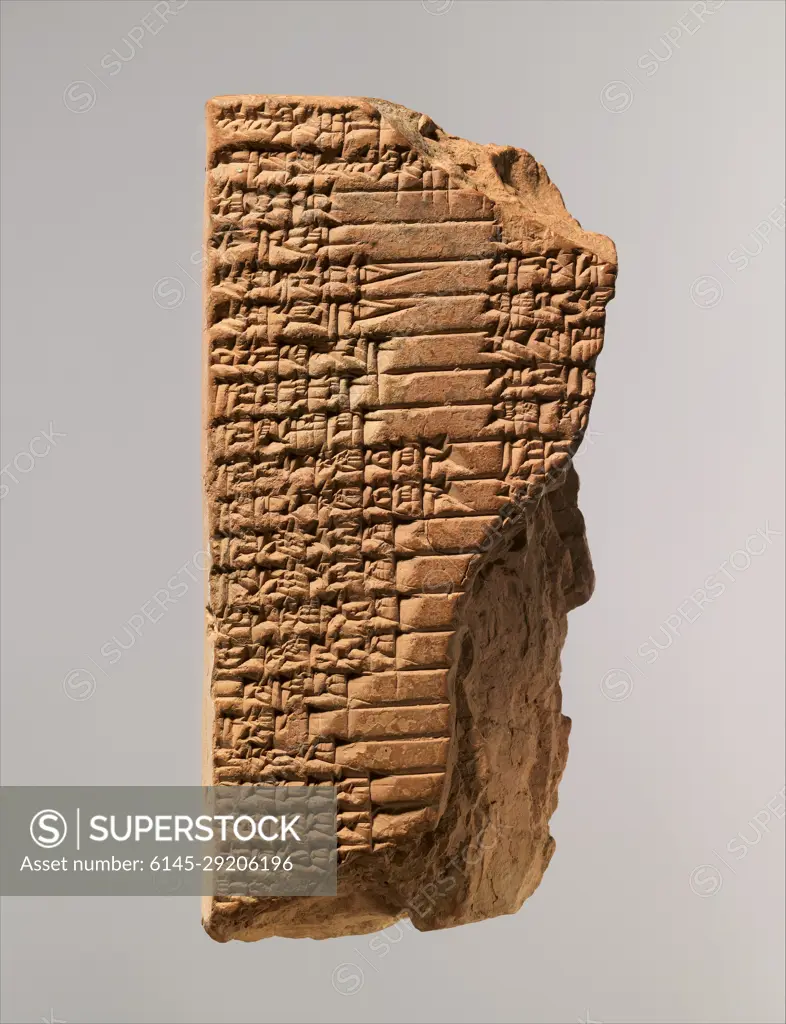
SuperStock offers millions of photos, videos, and stock assets to creatives around the world. This image of Cuneiform tablet: Old Babylonian balag to the mother goddess Aruru ca. 19th-16th century B.C. Babylonian Liturgical compositions were used in Mesopotamia to appease the gods. Sung or recited by lamentation priests in rituals, they were often composed in the Emesal dialect of the Sumerian language. By the time we know of these texts in writing, the Sumerian language was no longer spoken. No doubt the unusual words and sounds of Emesal liturgy added to the efficacy and appeal of these performances.This text is most likely a balag composition. The word balag - referring to a musical instrument used in ritual performances - was often written at the bottom of such texts. The bottom of this tablet is broken, but its contents are similar to those of other balags. Dedicated to the goddess Aruru, the text celebrates her power before lamenting the destruction of a city. Only the left edge of this tablet is preserved. Written on a clay tablet using the cuneiform script, the form of the signs of t by Piemags/PL Photography Limited is available for licensing today.
Looking for a license?
Click here, and we'll help you find it! Questions? Just ask!
Click here, and we'll help you find it! Questions? Just ask!
DETAILS
Image Number: 6145-29206196Royalty FreeCredit Line:Piemags/PL Photography Limited/SuperStockCollection:PL Photography Limited Contributor:Piemags Model Release:NoProperty Release:NoResolution:2955×3847