Cowroid Seal Amulet Inscribed with a Geometric Pattern ca. 1479-1458 B.C. New Kingdom Most of the amulets found in the foundation deposits of Hatshepsut's funerary temple were scarabs, but a hand full were carved in the shape of a cowrie shell. Like this one, the backs of most of these cowroids have been incised with a decorative pattern that suggests the setting of a swivel ring bezel (see 36.3.46). Others (27.3.180) have also been inscribed with the image of a bolti fish (a tilapia), and two have been carved with the image of a falcon, with its wings outstretched and wearing an atef-crown (27.3.164, 27.3.396).The design on the base of this cowroid consists of two open papyrus umbels and a geometric loop pattern in the center.. Cowroid Seal Amulet Inscribed with a Geometric Pattern. ca. 1479-1458 B.C.. Steatite (glazed). New Kingdom. From Egypt, Upper Egypt, Thebes, Deir el-Bahri, Temple of Hatshepsut, Foundation Deposit 9 (I), MMA excavations, 1926-27. Dynasty 18, early
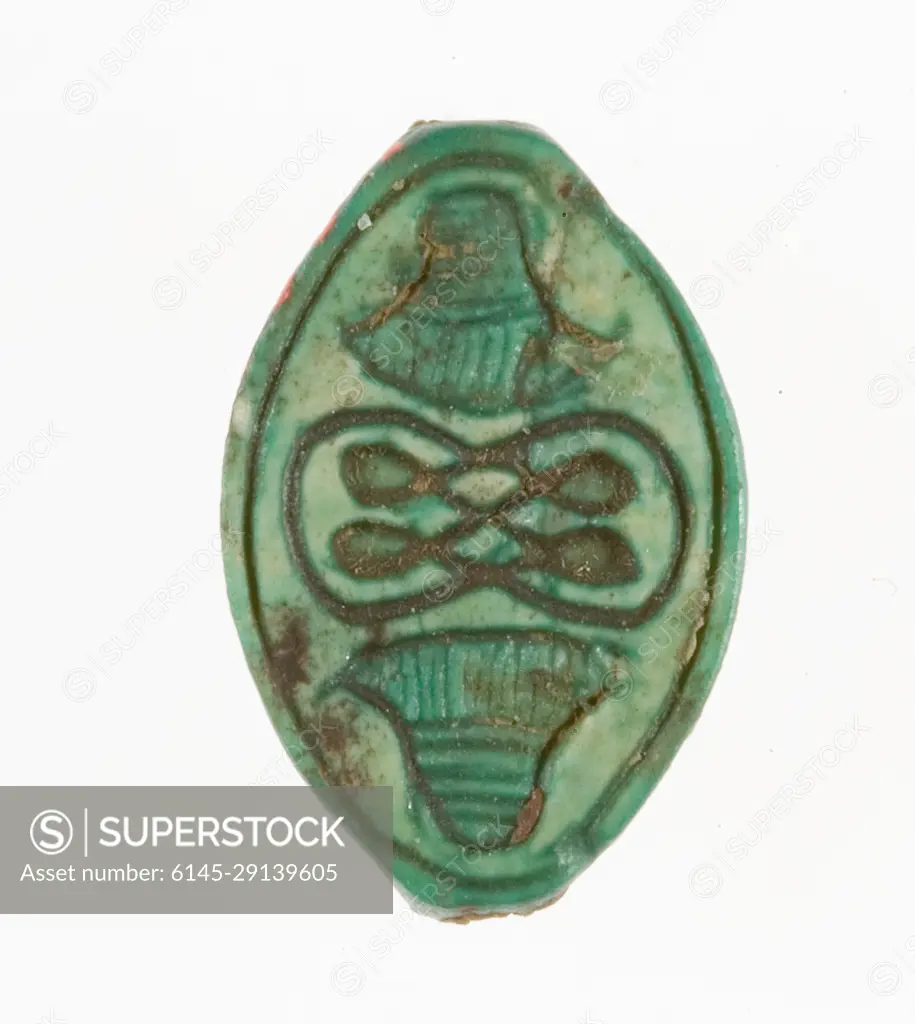
SuperStock offers millions of photos, videos, and stock assets to creatives around the world. This image of Ancient Egyptian Faience Scarab: Exquisite Artifact with Symbolic Hieroglyphics by Piemags/PL Photography Limited is available for licensing today.
Looking for a license?
Click here, and we'll help you find it! Questions? Just ask!
Click here, and we'll help you find it! Questions? Just ask!
DETAILS
Image Number: 6145-29139605Royalty FreeCredit Line:Piemags/PL Photography Limited/SuperStockCollection:PL Photography Limited Contributor:Piemags Model Release:NoProperty Release:NoResolution:1697×1899