Corpus of Christ, from the Altarpiece of the Crucifixion 1391-1399 Flanders. Corpus of Christ was originally the focal point of a large triptych combining painting and sculpture that was commissioned in 1390 by Philip the Bold, Duke of Burgundy, for the newly founded Charterhouse of Champol outside Dijon. Philip intended this monastery as a dynastic burial place, and he and his successors endowed it with artistic treasures. The triptych was a collaboration between two important artists from the Flemish territories controlled by Philip the Bold the sculptor Jacques de Baerze and the painter Melchior Broederlam. When open, the altarpiece showed carved reliefs of the Crucifixion, the Adoration of the Magi, and the Entombment together with standing figures of saints. The gilded center could be covered by movable wings whose backs, painted with scenes from the Infancy of Christ by Broederlam, were visible when the altarpiece was closed. The triptych still survives in Dijon (MusÈe des Beaux-
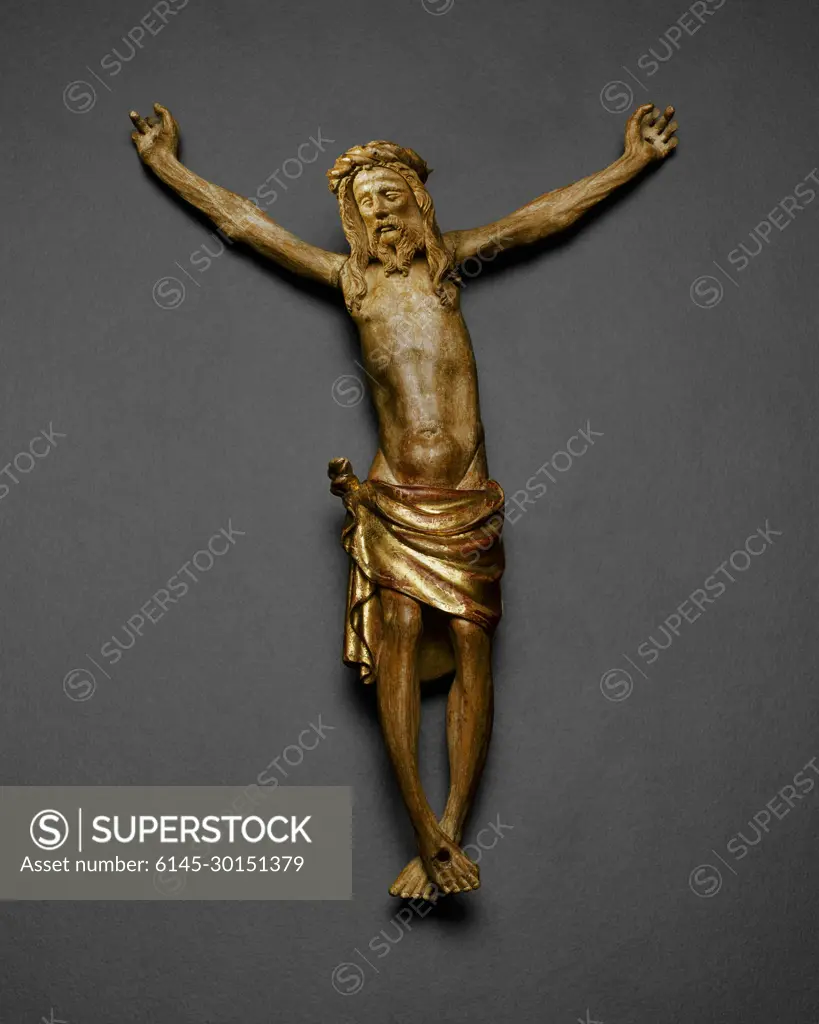
SuperStock offers millions of photos, videos, and stock assets to creatives around the world. This image of Corpus of Christ, from the Altarpiece of the Crucifixion 1391-1399 Flanders. Corpus of Christ was originally the focal point of a large triptych combining painting and sculpture that was commissioned in 1390 by Philip the Bold, Duke of Burgundy, for the newly founded Charterhouse of Champol outside Dijon. Philip intended this monastery as a dynastic burial place, and he and his successors endowed it with artistic treasures. The triptych was a collaboration between two important artists from the Flemish territories controlled by Philip the Bold the sculptor Jacques de Baerze and the painter Melchior Broederlam. When open, the altarpiece showed carved reliefs of the Crucifixion, the Adoration of the Magi, and the Entombment together with standing figures of saints. The gilded center could be covered by movable wings whose backs, painted with scenes from the Infancy of Christ by Broederlam, were visible when the altarpiece was closed. The triptych still survives in Dijon (MusÈe des Beaux- by Piemags/PL Photography Limited is available for licensing today.
Looking for a license?
Click here, and we'll help you find it! Questions? Just ask!
Click here, and we'll help you find it! Questions? Just ask!
DETAILS
Image Number: 6145-30151379Royalty FreeCredit Line:Piemags/PL Photography Limited/SuperStockCollection:PL Photography Limited Contributor:Piemags Model Release:NoProperty Release:NoResolution:2400×3000