Coronal holes appear as dark areas of the corona when viewed in ultraviolet light (at 284 angstroms). This extended hole has lasted through three solar rotations (almost 3 months- longer than most) and is one of the largest seen by the Solar and Heliospheric Observatory (SOHO). Although they are usually located at the poles of the Sun, coronal holes can occur other places as well. The magnetic field lines in a coronal hole extend out into the solar wind rather than coming back down to the Sun's
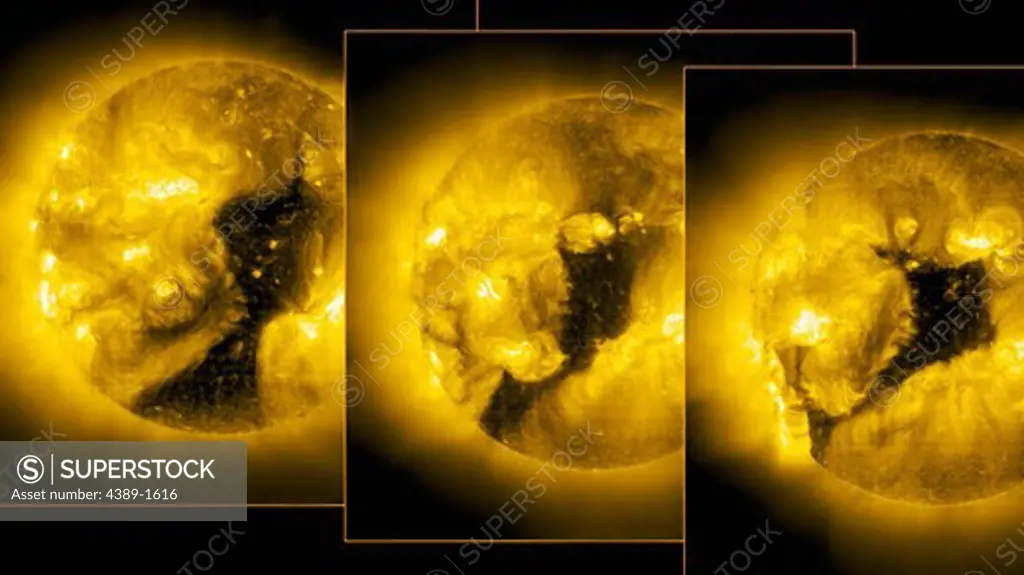
SuperStock offers millions of photos, videos, and stock assets to creatives around the world. This image of Coronal holes appear as dark areas of the corona when viewed in ultraviolet light (at 284 angstroms). This extended hole has lasted through three solar rotations (almost 3 months- longer than most) and is one of the largest seen by the Solar and Heliospheric Observatory (SOHO). Although they are usually located at the poles of the Sun, coronal holes can occur other places as well. The magnetic field lines in a coronal hole extend out into the solar wind rather than coming back down to the Sun's by NASA is available for licensing today.
Looking for a license?
Click here, and we'll help you find it! Questions? Just ask!
Click here, and we'll help you find it! Questions? Just ask!
DETAILS
Image Number: 4389-1616Rights ManagedCredit Line:NASA/SuperStockCollection:NASA Model Release:NoProperty Release:NoResolution:5858×3286