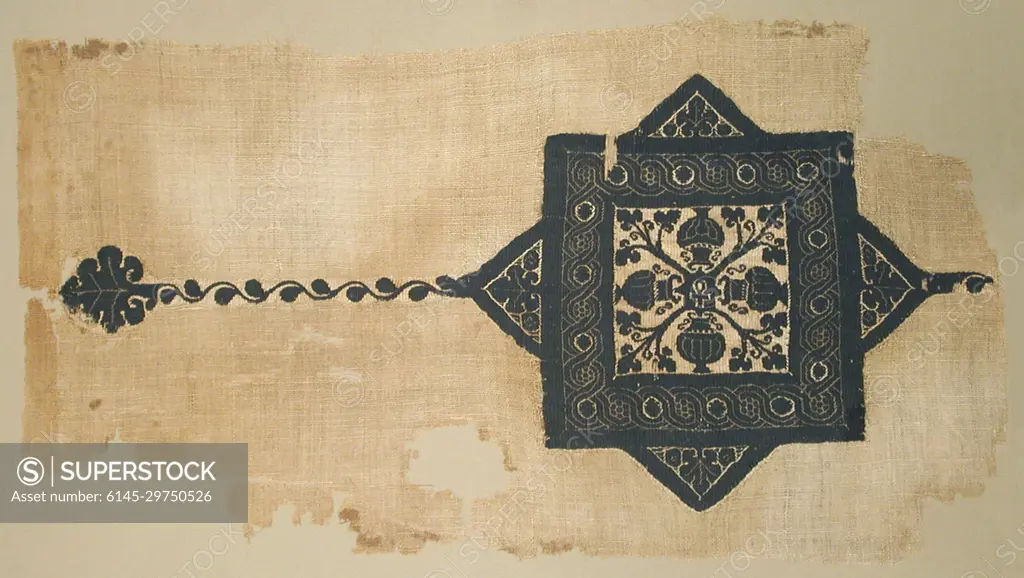
Coptic Textile Fragment late 3rd-5th century Textiles like this one are thought to have been produced by Copts (Christian Egyptians) and other weavers throughout the Byzantine Empire. The designs and motifs of Coptic and Byzantine textiles influenced the visual repertoire of the early Islamic period. This fragment was probably part of the shoulder decoration of a tunic, the quintessential garment of the Late Antique world. The people of late antiquity were also buried in these garments, and most surviving examples have been found in cemeteries. This example contains a large eight-pointed star formed by overlaid squares filled with sprouting urns, vine scrolls, and geometric interlaces motifs also seen in Byzantine floor mosaics.. Coptic Textile Fragment. late 3rd-5th century. Linen, wool; plain weave, tapestry weave, brocaded. Made in Egypt. Textiles
SuperStock offers millions of photos, videos, and stock assets to creatives around the world. This image of Coptic Textile Fragment late 3rd-5th century Textiles like this one are thought to have been produced by Copts (Christian Egyptians) and other weavers throughout the Byzantine Empire. The designs and motifs of Coptic and Byzantine textiles influenced the visual repertoire of the early Islamic period. This fragment was probably part of the shoulder decoration of a tunic, the quintessential garment of the Late Antique world. The people of late antiquity were also buried in these garments, and most surviving examples have been found in cemeteries. This example contains a large eight-pointed star formed by overlaid squares filled with sprouting urns, vine scrolls, and geometric interlaces motifs also seen in Byzantine floor mosaics.. Coptic Textile Fragment. late 3rd-5th century. Linen, wool; plain weave, tapestry weave, brocaded. Made in Egypt. Textiles by Piemags/PL Photography Limited is available for licensing today.
Looking for a license?
Click here, and we'll help you find it! Questions? Just ask!
Click here, and we'll help you find it! Questions? Just ask!
DETAILS
Image Number: 6145-29750526Royalty FreeCredit Line:Piemags/PL Photography Limited/SuperStockCollection:PL Photography Limited Contributor:Piemags Model Release:NoProperty Release:NoResolution:1620×915