Commode ca. 1760 Pietro Piffetti One of a pair made by Pietro Piffetti (royal cabinetmaker to King Carlo Emanuele III) to furnish his private apartment at the Turin School of Ebanisti e Minusieri, this sumptuous commode is a superior example of its makers skill, as well as of his personal taste in decorative art. Its serpentine form references the established rococo style, while the stripes in the back corners offer a touch of quietness at the dawn of neoclassicism. The ormolu mounts were likely contributed by Francesco Ladatte (1706-1787), an Italian sculptor with whom Piffetti frequently collaborated. The dots of darker colored wood that pepper the walnut briar veneer are not simply an element of the commodes design; they are wooden nails that secure the veneer to the commodes dramatically curved form, a technique invented by Piffetti and employed here for the first time. Given that Piffetti made the commode to furnish his own apartments, it may be an important example of the arti
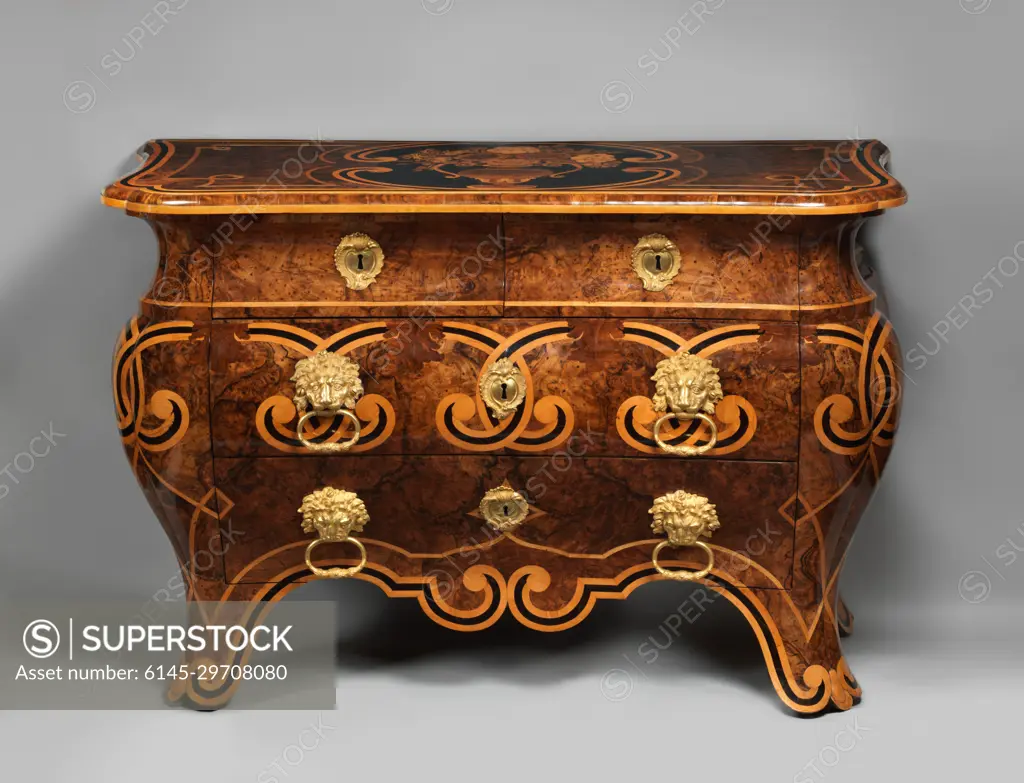
SuperStock offers millions of photos, videos, and stock assets to creatives around the world. This image of Commode ca. 1760 Pietro Piffetti One of a pair made by Pietro Piffetti (royal cabinetmaker to King Carlo Emanuele III) to furnish his private apartment at the Turin School of Ebanisti e Minusieri, this sumptuous commode is a superior example of its makers skill, as well as of his personal taste in decorative art. Its serpentine form references the established rococo style, while the stripes in the back corners offer a touch of quietness at the dawn of neoclassicism. The ormolu mounts were likely contributed by Francesco Ladatte (1706-1787), an Italian sculptor with whom Piffetti frequently collaborated. The dots of darker colored wood that pepper the walnut briar veneer are not simply an element of the commodes design; they are wooden nails that secure the veneer to the commodes dramatically curved form, a technique invented by Piffetti and employed here for the first time. Given that Piffetti made the commode to furnish his own apartments, it may be an important example of the arti by Piemags/PL Photography Limited is available for licensing today.
Looking for a license?
Click here, and we'll help you find it! Questions? Just ask!
Click here, and we'll help you find it! Questions? Just ask!
DETAILS
Image Number: 6145-29708080Royalty FreeCredit Line:Piemags/PL Photography Limited/SuperStockCollection:PL Photography Limited Contributor:Piemags Model Release:NoProperty Release:NoResolution:4000×3061