Column Capital in the form of a Bes-image. Dimensions: h. 39.5 cm (15 9/16 in); w. 52 cm (20 1/2 in); d. 21.5 cm (8 7/16 in). Date: 332-30 B.C..This large head unmistakably depicts the god known as Bes, or, more accurately, what is known as a "Bes-image," since Bes's appearance was sometimes adopted for other gods, and there is no name preserved on the statue. From the Kushite Period onward, images of Bes appeared on architectural support elements such as abaci, column shafts, or, rarely, large two-sided pillars. These architectural images are especially associated with mammisis, or temples celebrating the birth of a child-god; it is thought that this is related to the long association of the deity with domestic concerns and fertility. Such Bes figures are typically frontal and carved in high relief, but the depth of this figure against an abacus or shaft surface, if that is actually its origin, would have been quite unusual. Another possibility is that the head originally belonged t
This asset has restrictions and cannot be purchased online. Get in touch for more details.
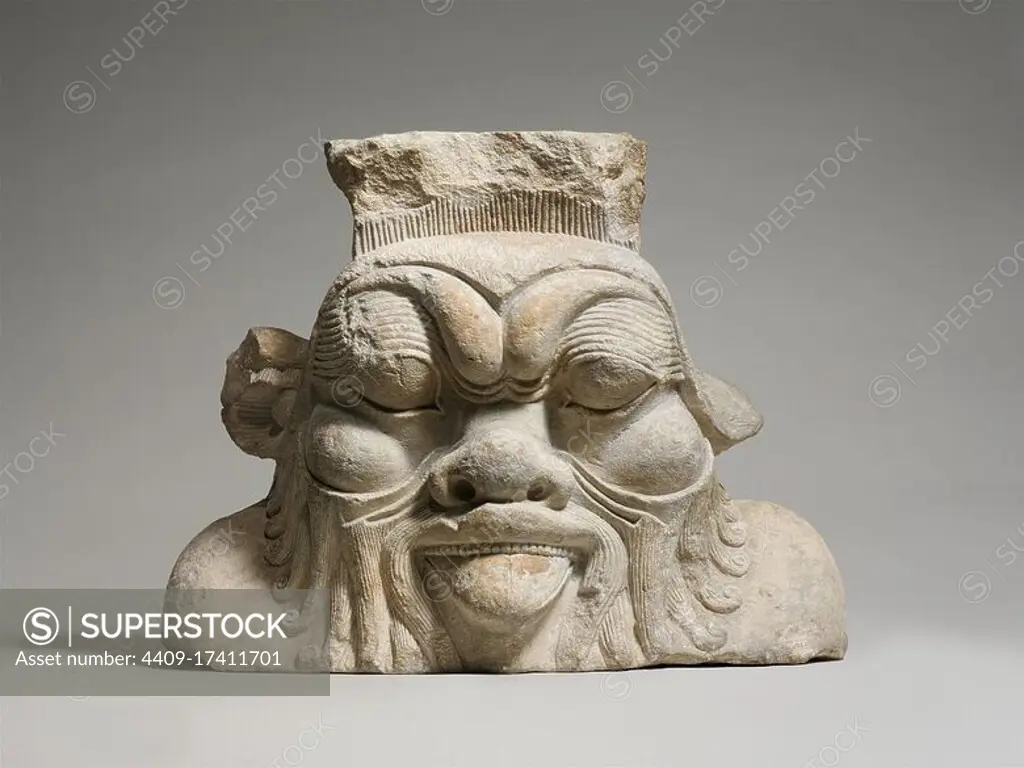
SuperStock offers millions of photos, videos, and stock assets to creatives around the world. This image of Column Capital in the form of a Bes-image. Dimensions: h. 39.5 cm (15 9/16 in); w. 52 cm (20 1/2 in); d. 21.5 cm (8 7/16 in). Date: 332-30 B.C..This large head unmistakably depicts the god known as Bes, or, more accurately, what is known as a "Bes-image," since Bes's appearance was sometimes adopted for other gods, and there is no name preserved on the statue. From the Kushite Period onward, images of Bes appeared on architectural support elements such as abaci, column shafts, or, rarely, large two-sided pillars. These architectural images are especially associated with mammisis, or temples celebrating the birth of a child-god; it is thought that this is related to the long association of the deity with domestic concerns and fertility. Such Bes figures are typically frontal and carved in high relief, but the depth of this figure against an abacus or shaft surface, if that is actually its origin, would have been quite unusual. Another possibility is that the head originally belonged t by Album/Metropolitan Museum of Art, NY/Album Archivo is available for licensing today.
Looking for a license?
Click here, and we'll help you find it! Questions? Just ask!
Click here, and we'll help you find it! Questions? Just ask!
DETAILS
Image Number: 4409-17411701Rights ManagedCredit Line:Album/Metropolitan Museum of Art, NY/Album Archivo/SuperStockCollection:Album Archivo Contributor:Album / Metropolitan Museum of Art, NY Model Release:NoProperty Release:NoResolution:4200×3150