Coiled Serpent 15th-early 16th century Aztec Serpents held an important place in the belief systems of many peoples in ancient Mexico and they are the most frequently portrayed animals in art. Serpents had multiple connotations and inspired sky and earth imagery alike. Above all, they were fertility symbols, probably suggested by their terrestrial habitat and periodic skin shedding. At the Main Temple in the Aztec imperial capital Tenochtitlan, serpent depictions proliferate: monumental snake heads, probably representing different specieswith open fanged mouths and forked tonguesflank braziers and stairways leading to the sanctuaries. The temple itself is said to have been surrounded at the time of the Spanish conquest by a serpent wall, or Coatepantli, formed by hundreds of adjoining sculptures of snakes. In three-dimensional stone sculpture, serpents are most frequently shown coiled or knotted, as in this example. Carved from a porous stone, the body of the reptile is a tightly wou
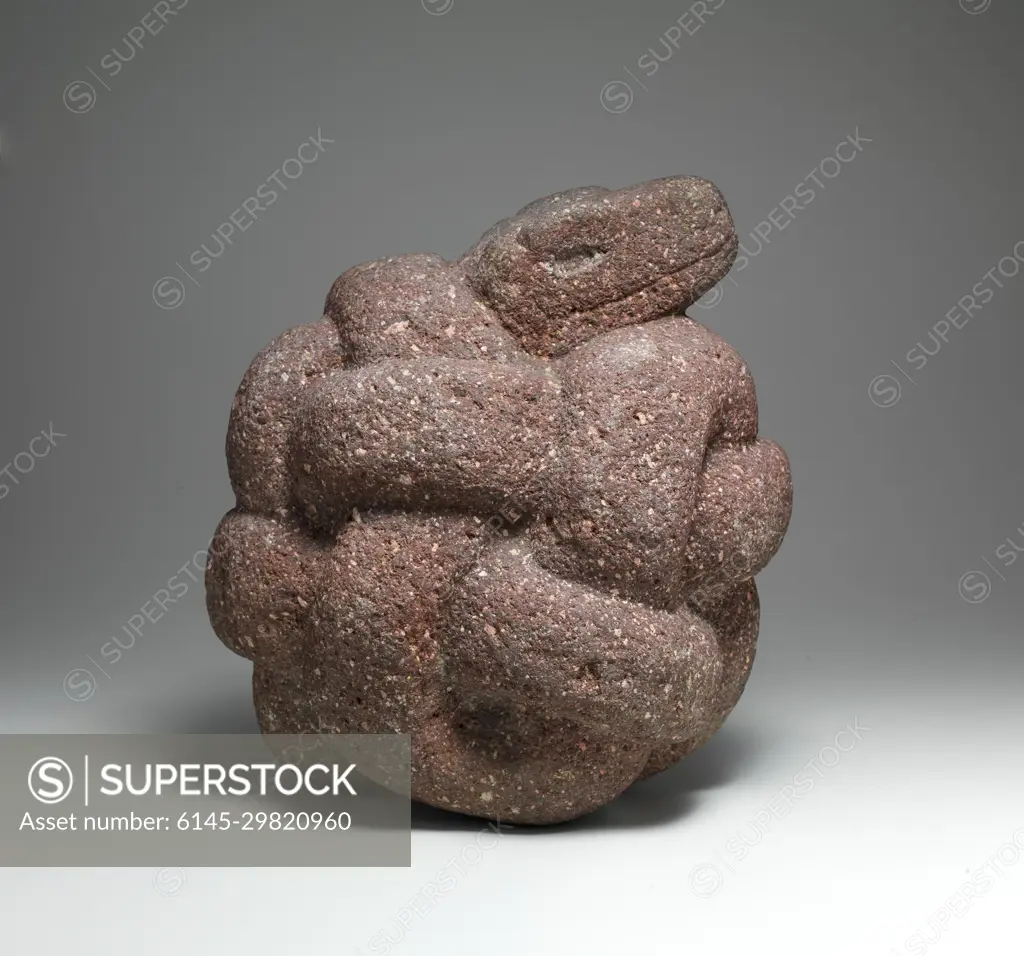
SuperStock offers millions of photos, videos, and stock assets to creatives around the world. This image of Coiled Serpent 15th-early 16th century Aztec Serpents held an important place in the belief systems of many peoples in ancient Mexico and they are the most frequently portrayed animals in art. Serpents had multiple connotations and inspired sky and earth imagery alike. Above all, they were fertility symbols, probably suggested by their terrestrial habitat and periodic skin shedding. At the Main Temple in the Aztec imperial capital Tenochtitlan, serpent depictions proliferate: monumental snake heads, probably representing different specieswith open fanged mouths and forked tonguesflank braziers and stairways leading to the sanctuaries. The temple itself is said to have been surrounded at the time of the Spanish conquest by a serpent wall, or Coatepantli, formed by hundreds of adjoining sculptures of snakes. In three-dimensional stone sculpture, serpents are most frequently shown coiled or knotted, as in this example. Carved from a porous stone, the body of the reptile is a tightly wou by Piemags/PL Photography Limited is available for licensing today.
Looking for a license?
Click here, and we'll help you find it! Questions? Just ask!
Click here, and we'll help you find it! Questions? Just ask!
DETAILS
Image Number: 6145-29820960Royalty FreeCredit Line:Piemags/PL Photography Limited/SuperStockCollection:PL Photography Limited Contributor:Piemags Model Release:NoProperty Release:NoResolution:4000×3735