Cocoon-shaped Jar, 3rd-early 2nd century BCE, 12 1/8 x 13 1/4 x 8 1/2in. (30.8 x 33.7 x 21.6cm), Earthenware with traces of pigment, China, 3rd-2nd century BCE, Silk production, from the rearing of silkworms to weaving silk cloth, was an important source of income to Chinese farming families. This type of jar with its elegant cocoon shape was extremely popular during the Chin (221-206 b.c.) and Western Han periods (206 b.c.-a.d. 25). Plain grey earthenware was often painted during Han. The colors used were red, brown, green, yellow, black, white, orange, and blue. Jars like this may have been used in the ritual practices of sericulture as the rearing of silkworms was fraught with superstitions during the Han period.
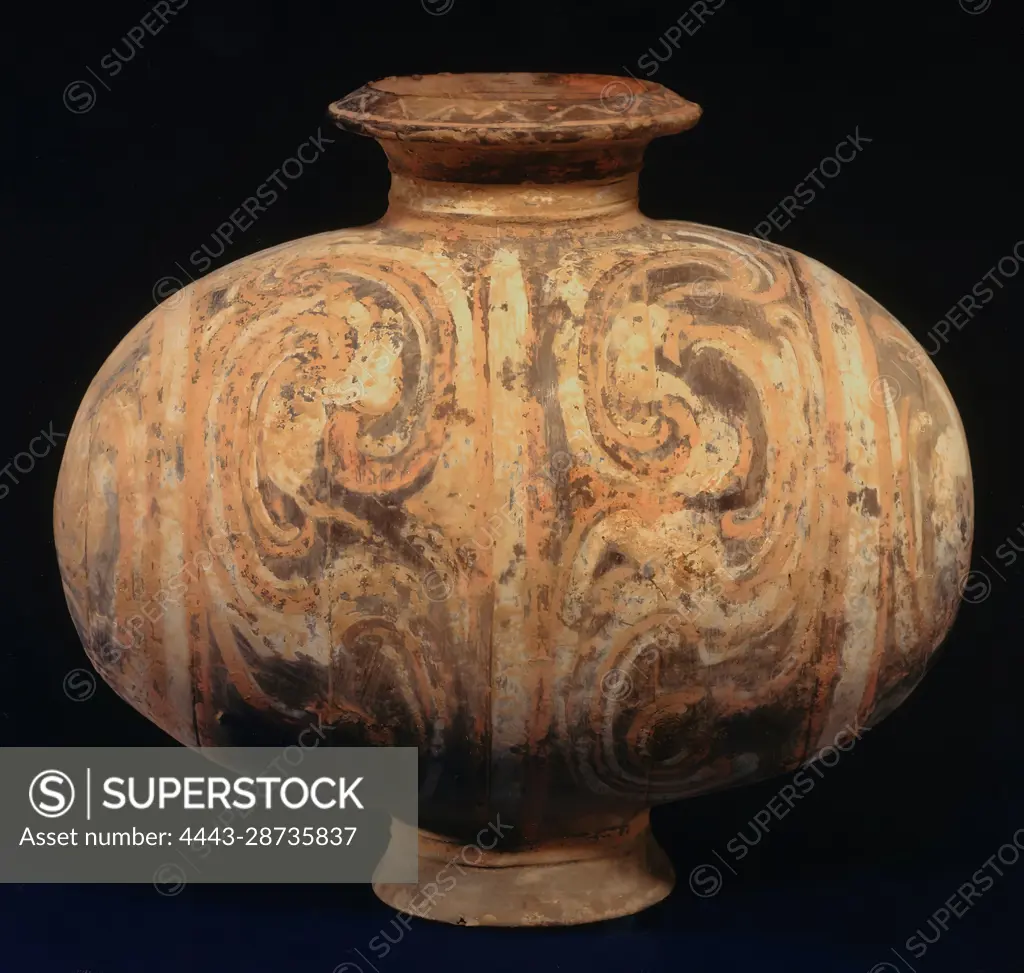
SuperStock offers millions of photos, videos, and stock assets to creatives around the world. This image of Cocoon-shaped Jar, 3rd-early 2nd century BCE, 12 1/8 x 13 1/4 x 8 1/2in. (30.8 x 33.7 x 21.6cm), Earthenware with traces of pigment, China, 3rd-2nd century BCE, Silk production, from the rearing of silkworms to weaving silk cloth, was an important source of income to Chinese farming families. This type of jar with its elegant cocoon shape was extremely popular during the Chin (221-206 b.c.) and Western Han periods (206 b.c.-a.d. 25). Plain grey earthenware was often painted during Han. The colors used were red, brown, green, yellow, black, white, orange, and blue. Jars like this may have been used in the ritual practices of sericulture as the rearing of silkworms was fraught with superstitions during the Han period. by Artokoloro is available for licensing today.
Looking for a license?
Click here, and we'll help you find it! Questions? Just ask!
Click here, and we'll help you find it! Questions? Just ask!
DETAILS
Image Number: 4443-28735837Rights ManagedCredit Line:Artokoloro/SuperStockCollection:Artokoloro Model Release:NoProperty Release:NoResolution:2918×2774