Clytie 1869-70; carved 1872 William Henry Rinehart American American Neoclassical sculptors frequently mined classical mythology for thematic inspiration. In book 4 of the Metamorphoses,” the Roman poet Ovid tells the story of Clytie, a water nymph who was abandoned by Apollo, the sun god. Clytie gazed inconsolably at the sun for nine days, languishing nude, without food or drink. For her constancy, she was changed into a sunflower so that her face would forever follow the sun as it moved across the sky. Rinehart subtly evoked Ovid’s story by depicting a drooping sunflower in Clytie’s right hand. The tree stump with live sunflower plants serves both to enhance the narrative and to offer tensile support for the marble figure.. Clytie. William Henry Rinehart (American, Union Bridge, Maryland 1825-1874 Rome). American. 1869-70; carved 1872. Marble
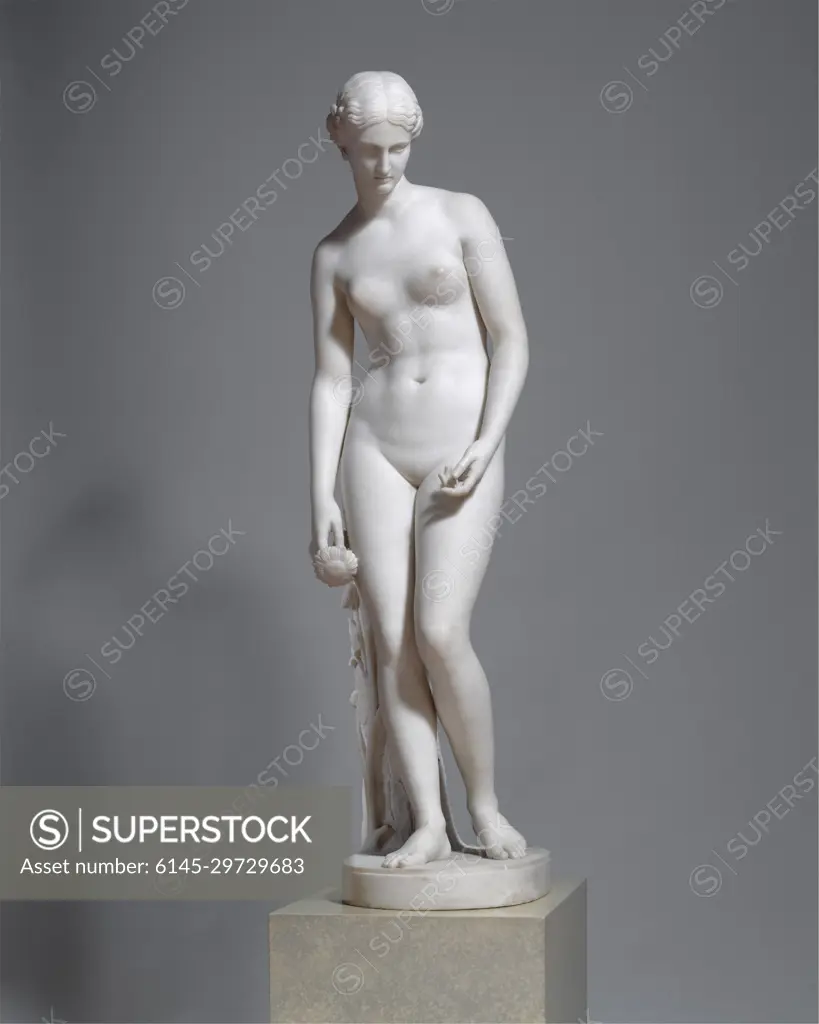
SuperStock offers millions of photos, videos, and stock assets to creatives around the world. This image of Clytie 1869-70; carved 1872 William Henry Rinehart American American Neoclassical sculptors frequently mined classical mythology for thematic inspiration. In book 4 of the Metamorphoses,” the Roman poet Ovid tells the story of Clytie, a water nymph who was abandoned by Apollo, the sun god. Clytie gazed inconsolably at the sun for nine days, languishing nude, without food or drink. For her constancy, she was changed into a sunflower so that her face would forever follow the sun as it moved across the sky. Rinehart subtly evoked Ovid’s story by depicting a drooping sunflower in Clytie’s right hand. The tree stump with live sunflower plants serves both to enhance the narrative and to offer tensile support for the marble figure.. Clytie. William Henry Rinehart (American, Union Bridge, Maryland 1825-1874 Rome). American. 1869-70; carved 1872. Marble by Piemags/PL Photography Limited is available for licensing today.
Looking for a license?
Click here, and we'll help you find it! Questions? Just ask!
Click here, and we'll help you find it! Questions? Just ask!
DETAILS
Image Number: 6145-29729683Royalty FreeCredit Line:Piemags/PL Photography Limited/SuperStockCollection:PL Photography Limited Contributor:Piemags Model Release:NoProperty Release:NoResolution:2978×3722