Cloisonne furniture plaque with an infant on a lotus flower. Culture: Assyrian. Dimensions: 4.37 x 1.54 x 0.53 in. (11.1 x 3.91 x 1.35 cm). Date: ca. 8th century B.C..An infant sits in profile on an elaborately carved lotus flower that emerges from a double volute in this fragmentary plaque. Wearing a long robe, he presses one finger to his lips. This Egyptianizing motif, as well as the slender, flowing carving style and embellishments with the cloisonné inlay technique, are all characteristic of Phoenician artistry. Several other elements also drawn from Egyptian art include the wesekh broad collar, sidelock, and crown with a horizontal ram's horn. The motif of an infant sitting on a lotus flower is known from Egyptian art where it evokes the birth of Horus, the Egyptian sky god, and is also associated with the birth of Ra, the Egyptian sun god. This imagery became significant in the Nile Valley during the Third Intermediate Period, a time that coincided with Phoenician presence in th
This asset has restrictions and cannot be purchased online. Get in touch for more details.
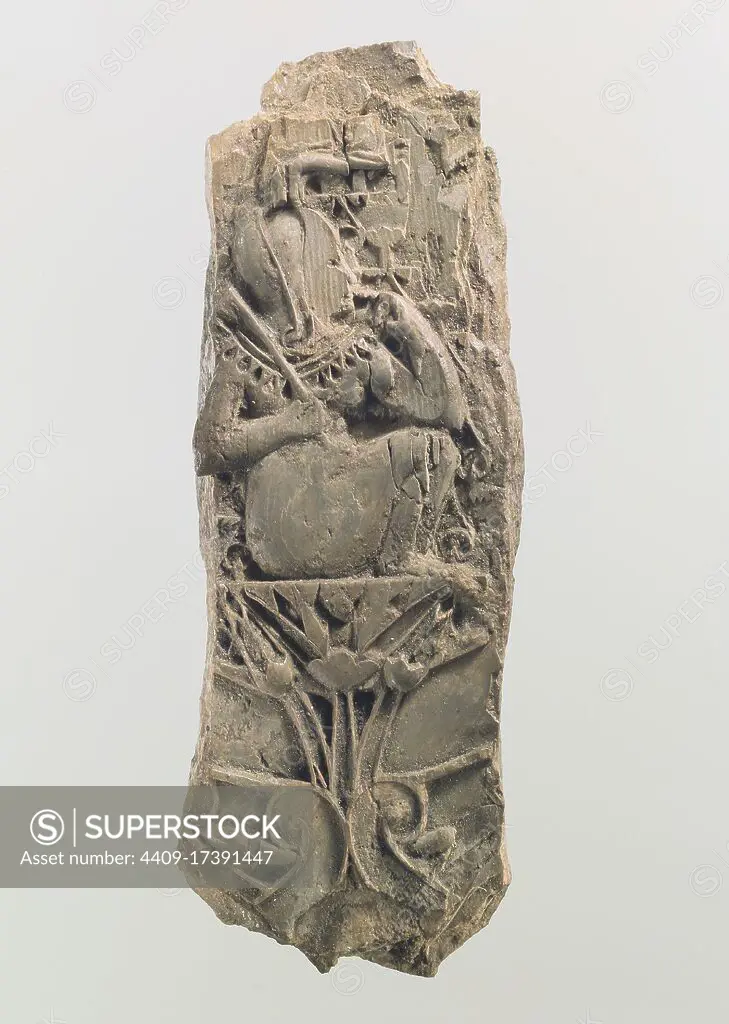
SuperStock offers millions of photos, videos, and stock assets to creatives around the world. This image of Cloisonne furniture plaque with an infant on a lotus flower. Culture: Assyrian. Dimensions: 4.37 x 1.54 x 0.53 in. (11.1 x 3.91 x 1.35 cm). Date: ca. 8th century B.C..An infant sits in profile on an elaborately carved lotus flower that emerges from a double volute in this fragmentary plaque. Wearing a long robe, he presses one finger to his lips. This Egyptianizing motif, as well as the slender, flowing carving style and embellishments with the cloisonné inlay technique, are all characteristic of Phoenician artistry. Several other elements also drawn from Egyptian art include the wesekh broad collar, sidelock, and crown with a horizontal ram's horn. The motif of an infant sitting on a lotus flower is known from Egyptian art where it evokes the birth of Horus, the Egyptian sky god, and is also associated with the birth of Ra, the Egyptian sun god. This imagery became significant in the Nile Valley during the Third Intermediate Period, a time that coincided with Phoenician presence in th by Album/Album Archivo is available for licensing today.
Looking for a license?
Click here, and we'll help you find it! Questions? Just ask!
Click here, and we'll help you find it! Questions? Just ask!
DETAILS
Image Number: 4409-17391447Rights ManagedCredit Line:Album/Album Archivo/SuperStockCollection:Album Archivo Contributor:Album Model Release:NoProperty Release:NoResolution:2974×4175