Claude Bernard, 19th century French physiologist, 1913. Obverse of a silver plaquette commemorating the centenary of his birth. Bernard (1813-1878) investigated the liver, discovering glycogen, and determined that most of the process of digestion occurs in the small intestine, rather that the stomach. He showed that haemoglobin carries oxygen in red blood cells, and demonstated how carbon monoxide poisoning disrupted this process. When Bernard died in 1878, the French government organised his funeral, making him the first French scientist to be honoured in this way.
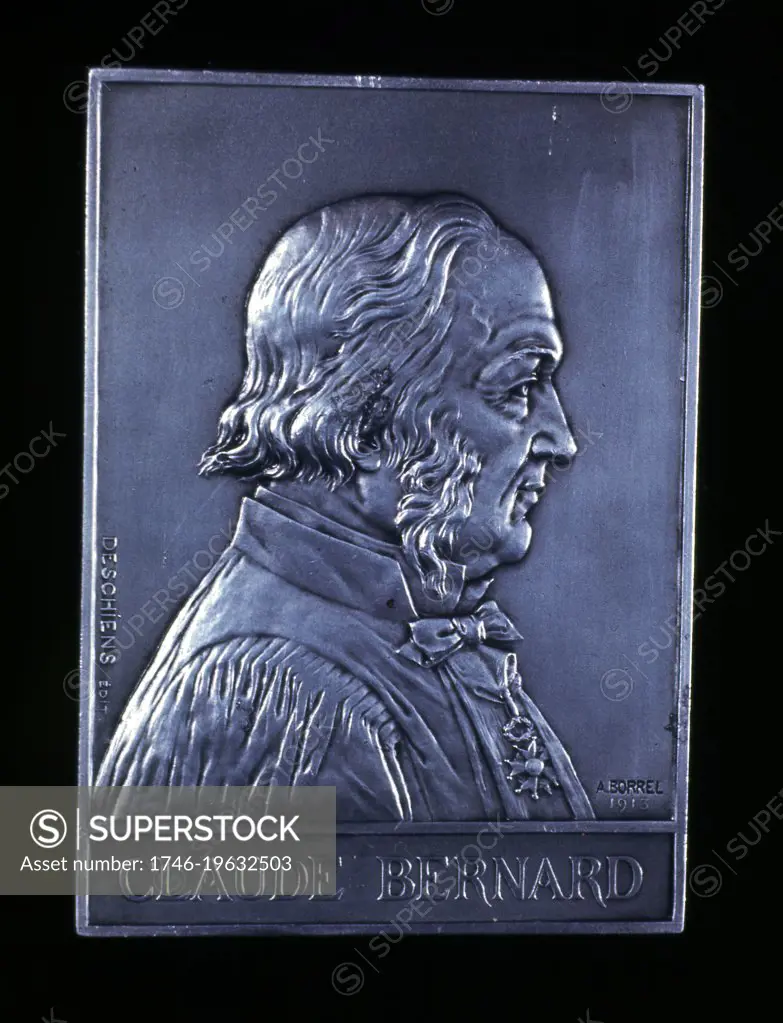
SuperStock offers millions of photos, videos, and stock assets to creatives around the world. This image of Claude Bernard, 19th century French physiologist, 1913. Obverse of a silver plaquette commemorating the centenary of his birth. Bernard (1813-1878) investigated the liver, discovering glycogen, and determined that most of the process of digestion occurs in the small intestine, rather that the stomach. He showed that haemoglobin carries oxygen in red blood cells, and demonstated how carbon monoxide poisoning disrupted this process. When Bernard died in 1878, the French government organised his funeral, making him the first French scientist to be honoured in this way. by World History Archive/Image Asset Management is available for licensing today.
Looking for a license?
Click here, and we'll help you find it! Questions? Just ask!
Click here, and we'll help you find it! Questions? Just ask!
DETAILS
Image Number: 1746-19632503Rights ManagedCredit Line:World History Archive/Image Asset Management/SuperStockCollection:Image Asset Management Contributor:World History Archive Model Release:NoProperty Release:NoResolution:6000×7837