Classic Kerma Beaker ca. 1802-1640 B.C. Middle Kingdom The bell-shaped Kerma beaker is a hallmark of the Classical Kerma civilization. Found stacked together in tombs in groups of as many as seven, the Kerma beaker is the most common form of classic Kerma ware. The outgrowth of a long Nilotic tradition of black-topped red polished ware, these delicate, thin-walled vessels mark a zenith in ceramic technology. Their production required a highly controlled kiln temperature and atmosphere. Formed by hand, each pot was covered with red ocher and polished before firing. To achieve the black top and interior, the vessels were inverted in a combustible material to create a reducing atmosphere during firing. The irregular opalescent band between the black and red surfaces seems to be a glazelike material that was painted on before firing. These graceful, finely modeled cups, with their highly polished surface and opalescent ring, are among the greatest works of ceramic art.This beaker was found
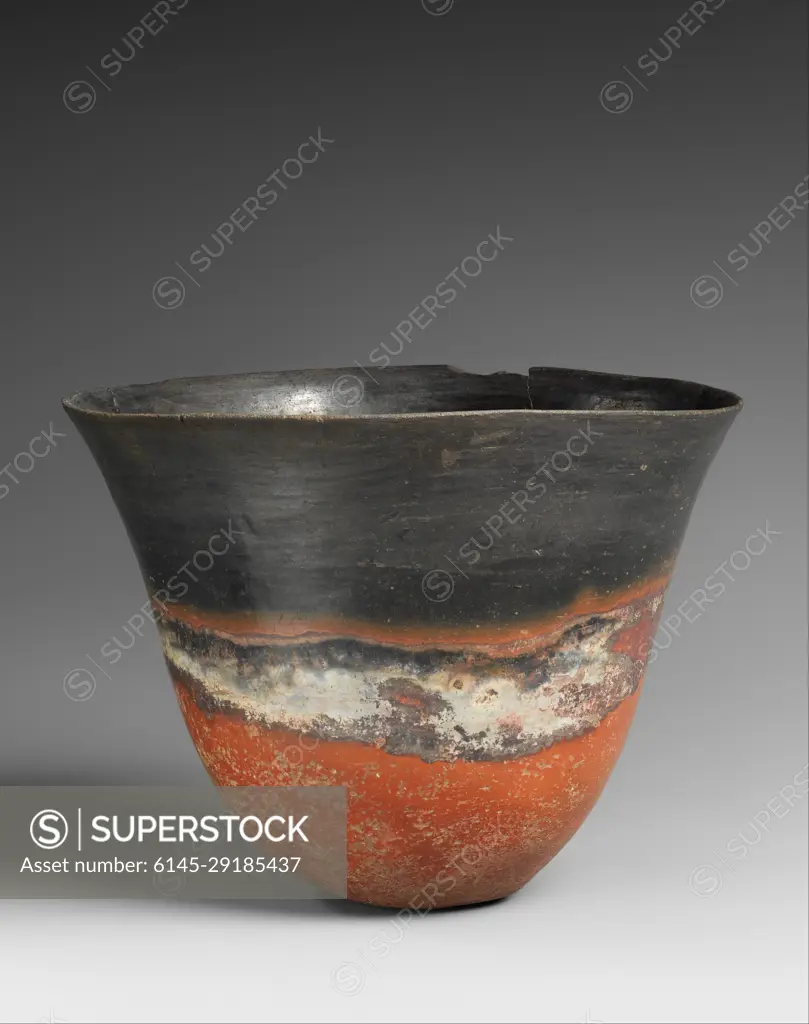
SuperStock offers millions of photos, videos, and stock assets to creatives around the world. This image of Classic Kerma Beaker ca. 1802-1640 B.C. Middle Kingdom The bell-shaped Kerma beaker is a hallmark of the Classical Kerma civilization. Found stacked together in tombs in groups of as many as seven, the Kerma beaker is the most common form of classic Kerma ware. The outgrowth of a long Nilotic tradition of black-topped red polished ware, these delicate, thin-walled vessels mark a zenith in ceramic technology. Their production required a highly controlled kiln temperature and atmosphere. Formed by hand, each pot was covered with red ocher and polished before firing. To achieve the black top and interior, the vessels were inverted in a combustible material to create a reducing atmosphere during firing. The irregular opalescent band between the black and red surfaces seems to be a glazelike material that was painted on before firing. These graceful, finely modeled cups, with their highly polished surface and opalescent ring, are among the greatest works of ceramic art.This beaker was found by Piemags/PL Photography Limited is available for licensing today.
Looking for a license?
Click here, and we'll help you find it! Questions? Just ask!
Click here, and we'll help you find it! Questions? Just ask!
DETAILS
Image Number: 6145-29185437Royalty FreeCredit Line:Piemags/PL Photography Limited/SuperStockCollection:PL Photography Limited Contributor:Piemags Model Release:NoProperty Release:NoResolution:3047×3855