Clarinet in D 1750-70 German The clarinet was invented by J. C. Denner of Nuremberg around the year 1700. The first form of the instrument had two keys, like those found on this clarinet (which are modern replacements). The two-keyed version of the instrument survived until about 1770. Two-keyed clarinets are extraordinarily rare, and this is the only known example in the western hemisphere. The body of this instrument is made of three boxwood sections, the mouthpiece and barrel, an undivided middle section, and the stock and bell. The instrument is unsigned, and the mouthpiece and barrel section are probably from another instrument though of the same period and were probably joined with the other sections at an early date.. Clarinet in D. German. 1750-70. Boxwood, brass. Germany. Aerophone-Reed Vibrated-single reed cylindrical
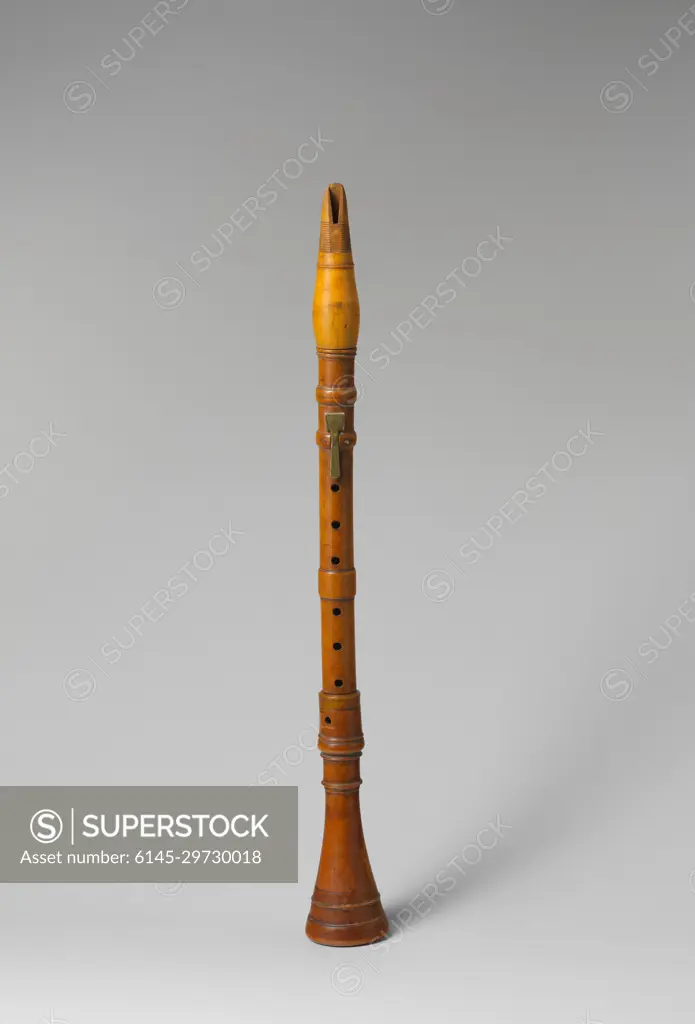
SuperStock offers millions of photos, videos, and stock assets to creatives around the world. This image of Clarinet in D 1750-70 German The clarinet was invented by J. C. Denner of Nuremberg around the year 1700. The first form of the instrument had two keys, like those found on this clarinet (which are modern replacements). The two-keyed version of the instrument survived until about 1770. Two-keyed clarinets are extraordinarily rare, and this is the only known example in the western hemisphere. The body of this instrument is made of three boxwood sections, the mouthpiece and barrel, an undivided middle section, and the stock and bell. The instrument is unsigned, and the mouthpiece and barrel section are probably from another instrument though of the same period and were probably joined with the other sections at an early date.. Clarinet in D. German. 1750-70. Boxwood, brass. Germany. Aerophone-Reed Vibrated-single reed cylindrical by Piemags/PL Photography Limited is available for licensing today.
Looking for a license?
Click here, and we'll help you find it! Questions? Just ask!
Click here, and we'll help you find it! Questions? Just ask!
DETAILS
Image Number: 6145-29730018Royalty FreeCredit Line:Piemags/PL Photography Limited/SuperStockCollection:PL Photography Limited Contributor:Piemags Model Release:NoProperty Release:NoResolution:2717×4000