Child's Tunic 5th-9th century This simple, shaped tunic ties at the proper left shoulder. Like the largest proportion of textiles found in Egypt, it is made from fibers of flax (linum usitatissimum). Linen textiles are generally woven in tabby (plain) cloth - a weave in which one weft thread passes over and under alternate warp threads; the next weft thread reverses the order-and they vary in texture from very fine to coarse and heavy. Flax was harvested at different stages of its growth, depending on its use. The cultivation of flax and production of linen dates to at least as early as the Dynastic period in Egypt (ca. 3100 B.C.) and is documented in paintings and reliefs. Linen production continued, and the fabric was exported to Mediterranean countries as well as to Arabia and India.. Child's Tunic 443530
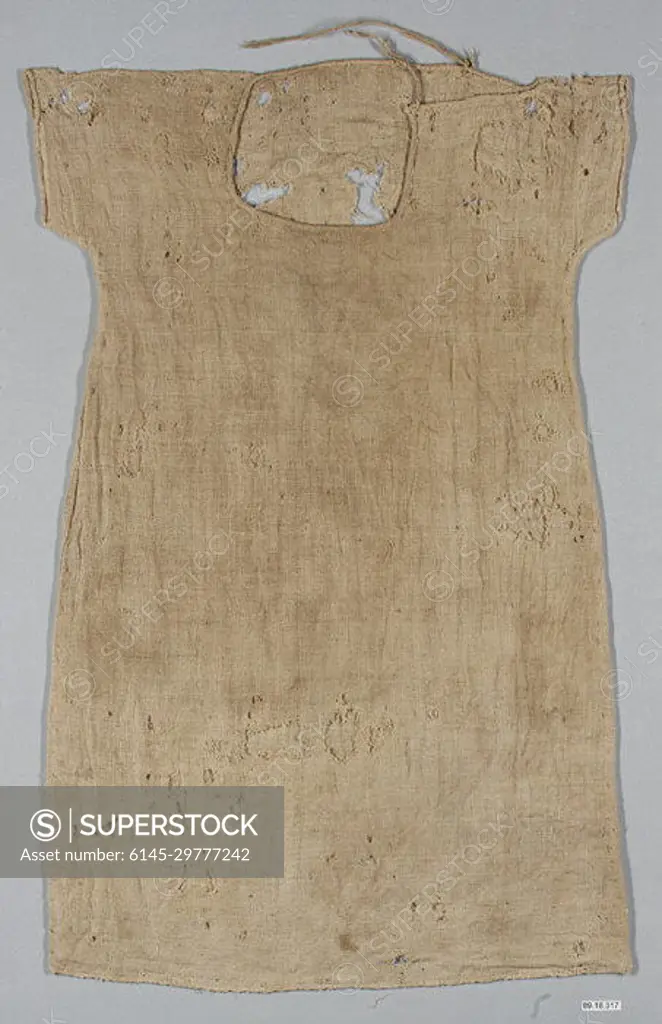
SuperStock offers millions of photos, videos, and stock assets to creatives around the world. This image of Child's Tunic 5th-9th century This simple, shaped tunic ties at the proper left shoulder. Like the largest proportion of textiles found in Egypt, it is made from fibers of flax (linum usitatissimum). Linen textiles are generally woven in tabby (plain) cloth - a weave in which one weft thread passes over and under alternate warp threads; the next weft thread reverses the order-and they vary in texture from very fine to coarse and heavy. Flax was harvested at different stages of its growth, depending on its use. The cultivation of flax and production of linen dates to at least as early as the Dynastic period in Egypt (ca. 3100 B.C.) and is documented in paintings and reliefs. Linen production continued, and the fabric was exported to Mediterranean countries as well as to Arabia and India.. Child's Tunic 443530 by Piemags/PL Photography Limited is available for licensing today.
Looking for a license?
Click here, and we'll help you find it! Questions? Just ask!
Click here, and we'll help you find it! Questions? Just ask!
DETAILS
Image Number: 6145-29777242Royalty FreeCredit Line:Piemags/PL Photography Limited/SuperStockCollection:PL Photography Limited Contributor:Piemags Model Release:NoProperty Release:NoResolution:453×700